Commodore 64 ‘breadbin’ repair log #2

 Computer Repair Logs, Repair Logs  Comments Off on Commodore 64 ‘breadbin’ repair log #2
Aug 062011
 

Had black screen on power up.
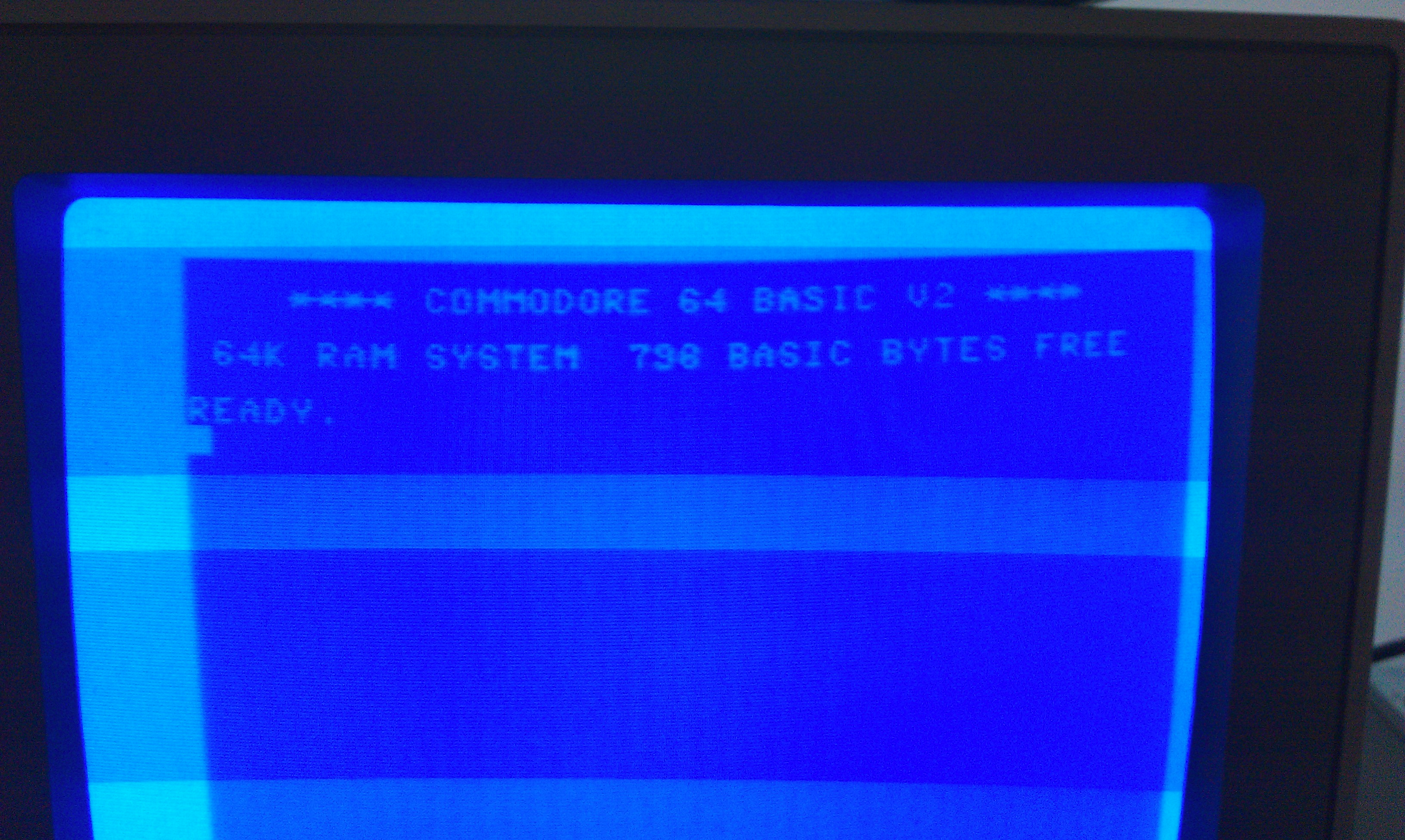
Tested the PLA, this was fine. The VIC has getting really hot, replaced and system powered up but only showed 796 bytes of RAM free.

Using a homemade diagnostic cartridge, I found that a RAM at U11 was to blame. I pulled this and tested it but it passed. I set the tester to “PASS LOOP” which will rerun the RAM tests as long as the outcome is a PASS. This chip was now showing failures after a few cycles.

I replaced the RAM and retested, all RAM is available once again.

Commodore 64 ‘breadbin’ repair log #1

 Computer Repair Logs, Repair Logs  Comments Off on Commodore 64 ‘breadbin’ repair log #1
Aug 032011
 

Brought 5 broken C64’s back from the RCM to try and ressurect.
This one just booted to a black screen.

On my initial checks I found that the 6510 CPU did not have a clock. The clock for this is outputted from pin 17 on the VIC chip. Although this was getting a clock input, it was dead on the output and was getting very hot. I replaced this with a known good one and fired it up again. Still got a black screen but clocks were now present.

A black screen is commonly associated with a dodgy PLA. I removed the PLA and replaced it with a known good one and the C64 now loaded up.
Next problem, there was no cursor and the keyboard would not type anything. These are handled by IC U1 which is a CIA. Again, I removed this chip and fitted a known good one.

The Commodore now fires up and works fine.
One down, 4 more to go (and a VIC20 but dont have a PSU for it)

NAOMI Netbooting

 General  Comments Off on NAOMI Netbooting
Jul 232011
 

Was unsure whether or not to post this but here it is anyway but without links to any of the utilities needed. I actually own a fair amount of GD-ROM games and netbooting gives me a more convenient way of loading my games now my GD drive is dead.

As most owners of a Net DIMM will know, it is possible to load code from a PC via ethernet.
To start with there are some jumpers to change on the DIMM board to set it to network mode.
My net DIMM had version 3.03 firmware which is fine for netbooting but as my ultimate goal was to build my own compact flash booting device I need the latest firmware, 4.01.

My first problem came with the DIMM boards I have. They were not recognised by my NAOMI.
My BIOS was 21577D which is too old for network support.
A newer BIOS was needed so I burned a new 27c160 EPROM with the latest available export bios.
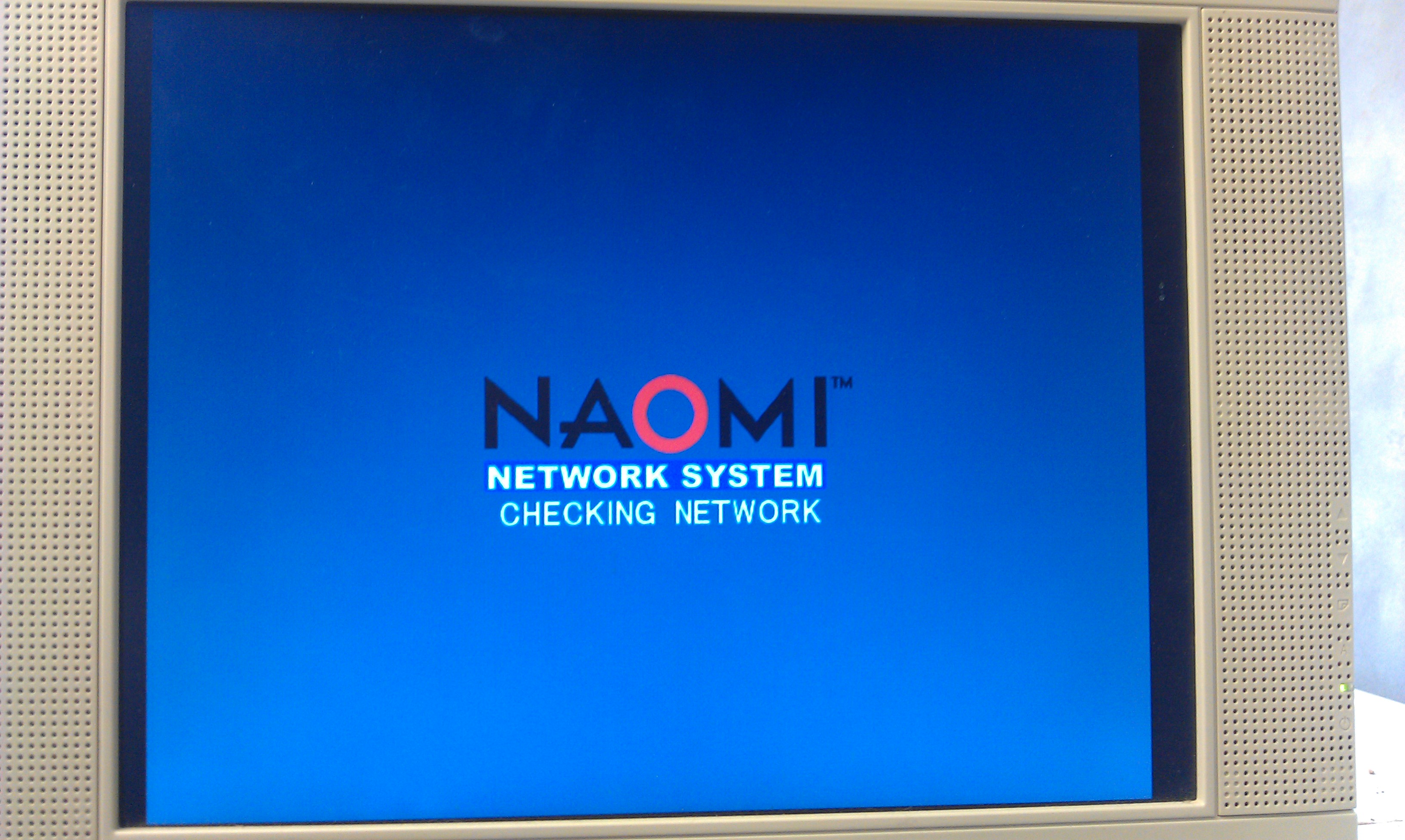
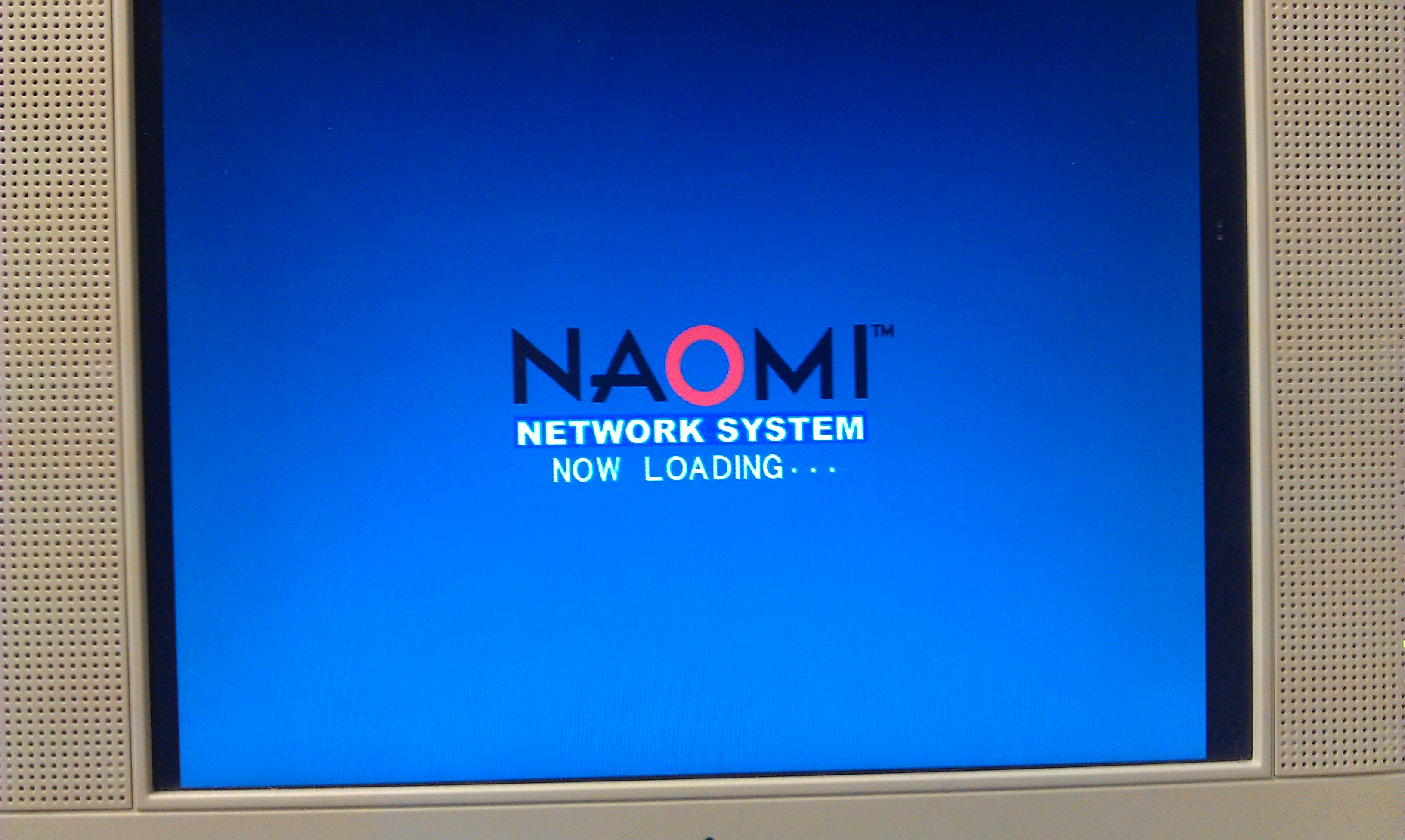
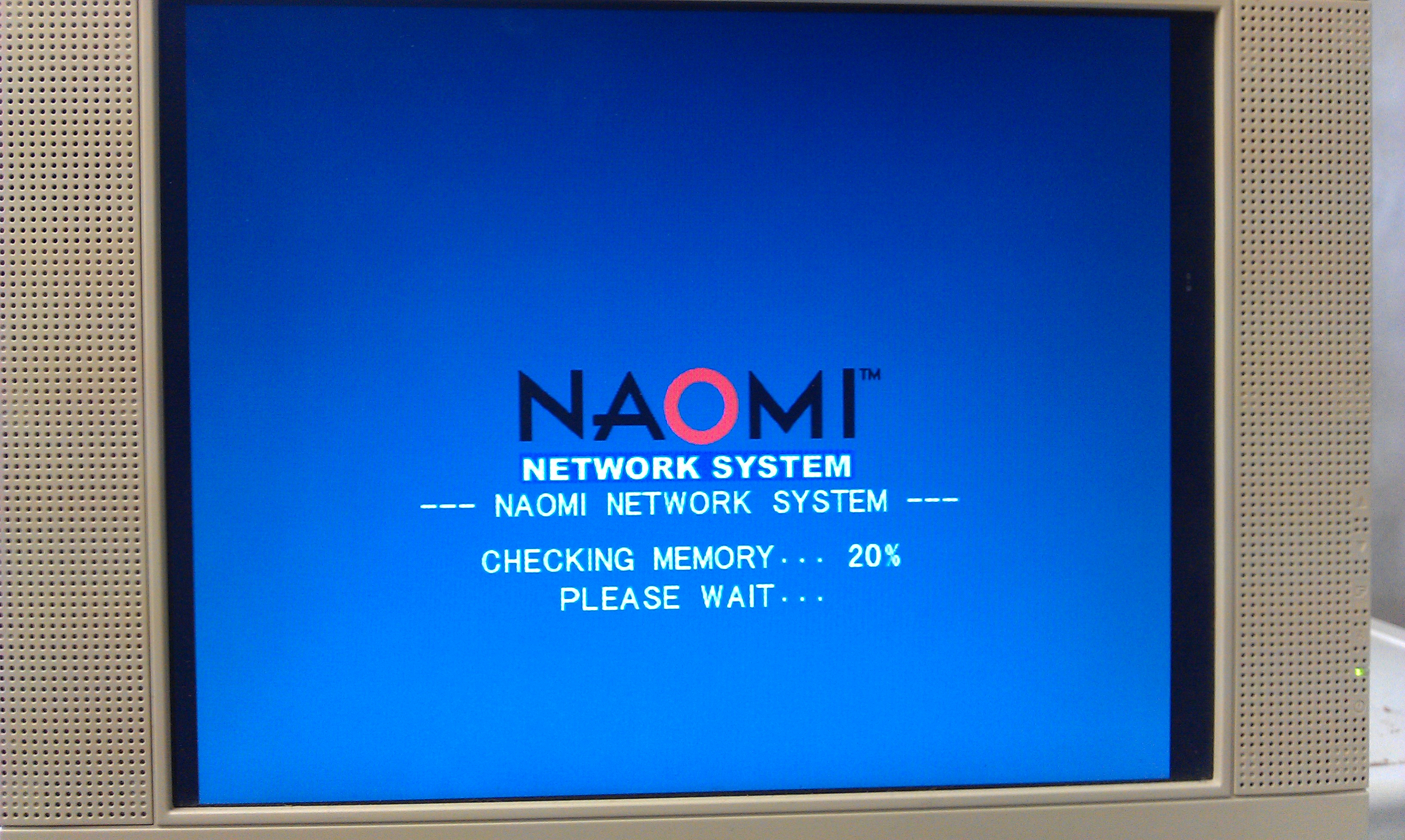
This let me access the DIMM module in the test menu.

In the test menu you can setup the network settings.
The device must be set to ETHER
The network IP and subnet need to be correctly set too.

My second problem came with my ethernet cable.
As I wasn’t using a router or similar, I needed a crossover cable and the one I very quickly knocked together ended up being useless.
The second one I made up worked a treat and I could then PING the system.

First job was to update that firmware.
There are 2 tools available for uploading to the DIMM.
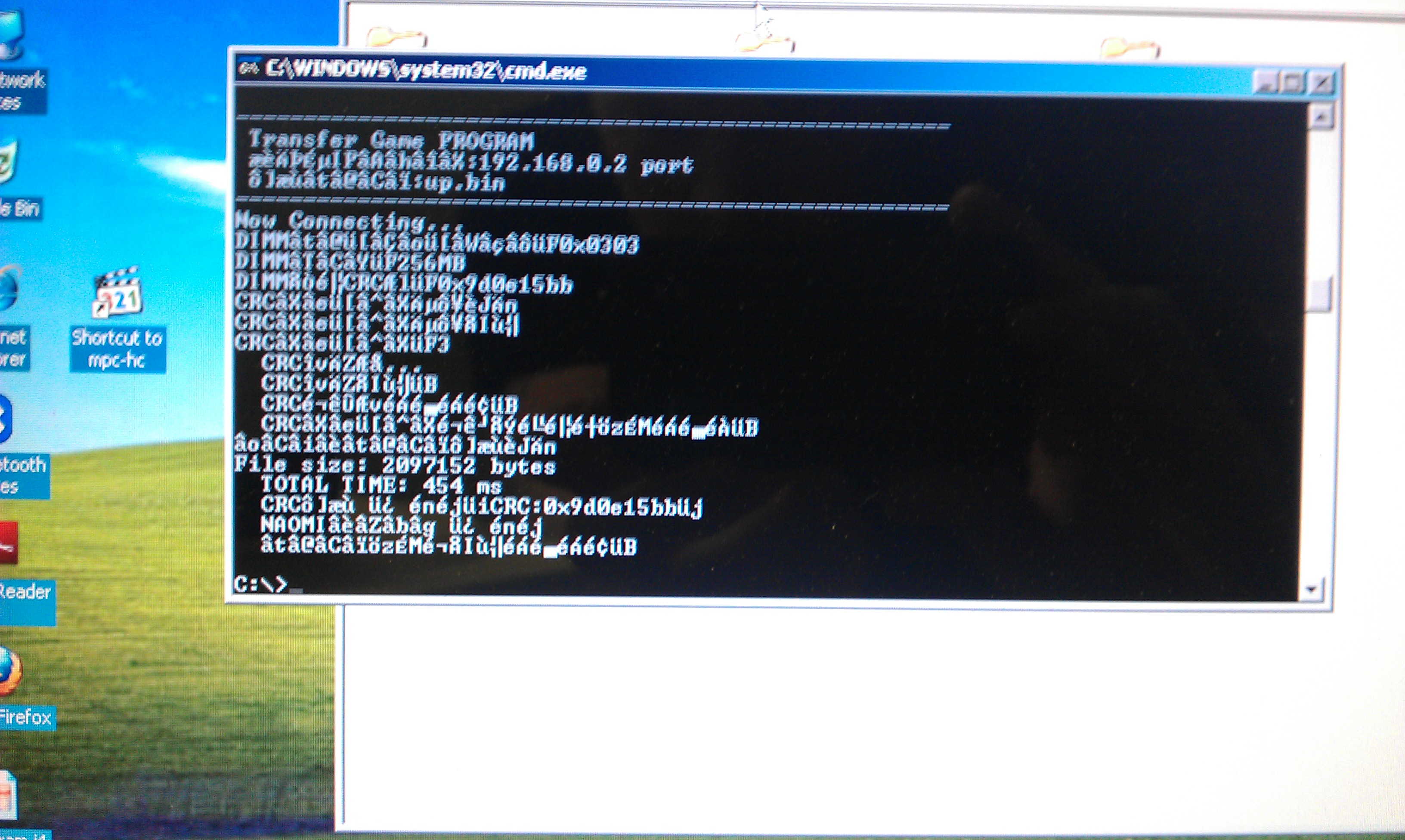
The first one is the official SEGA one called “transfergame.exe”

I had no luck at all with this program, probably because I didnt know what security net pic to use.
I had burned several different replacement pics but none seemed to work correctly.
I gave up with the official software and downloaded the very excellent triforcetools python script.
To use this you need to download all the associated Python files.
This script runs pretty much the same way as transfergame.exe in terms of usage but sets the DES key to zero so any net pic can be used.
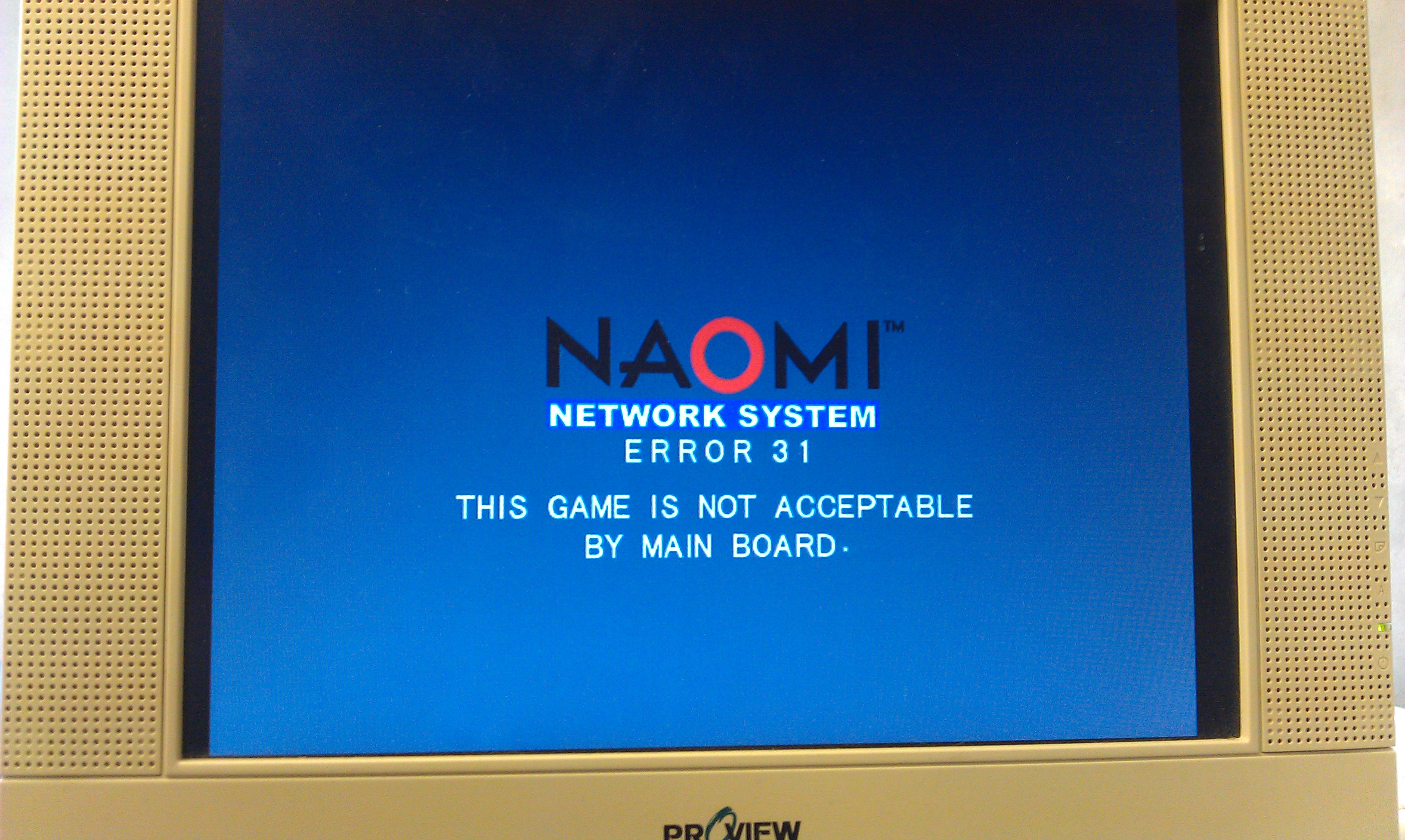
As it happens I didnt get much further with this at first as it kept giving me a Error 31.

With no ideas I gave up for a day.

Whilst doing a lot of searching around the internet I found a modified version of the python script which claimed to remove the need for any security pic to be inserted at all, and it works a treat too.

Using this I managed to upload the new firmware and update the DIMM to v4.02 (this version lets a user use any CF card and not just an official SEGA one).

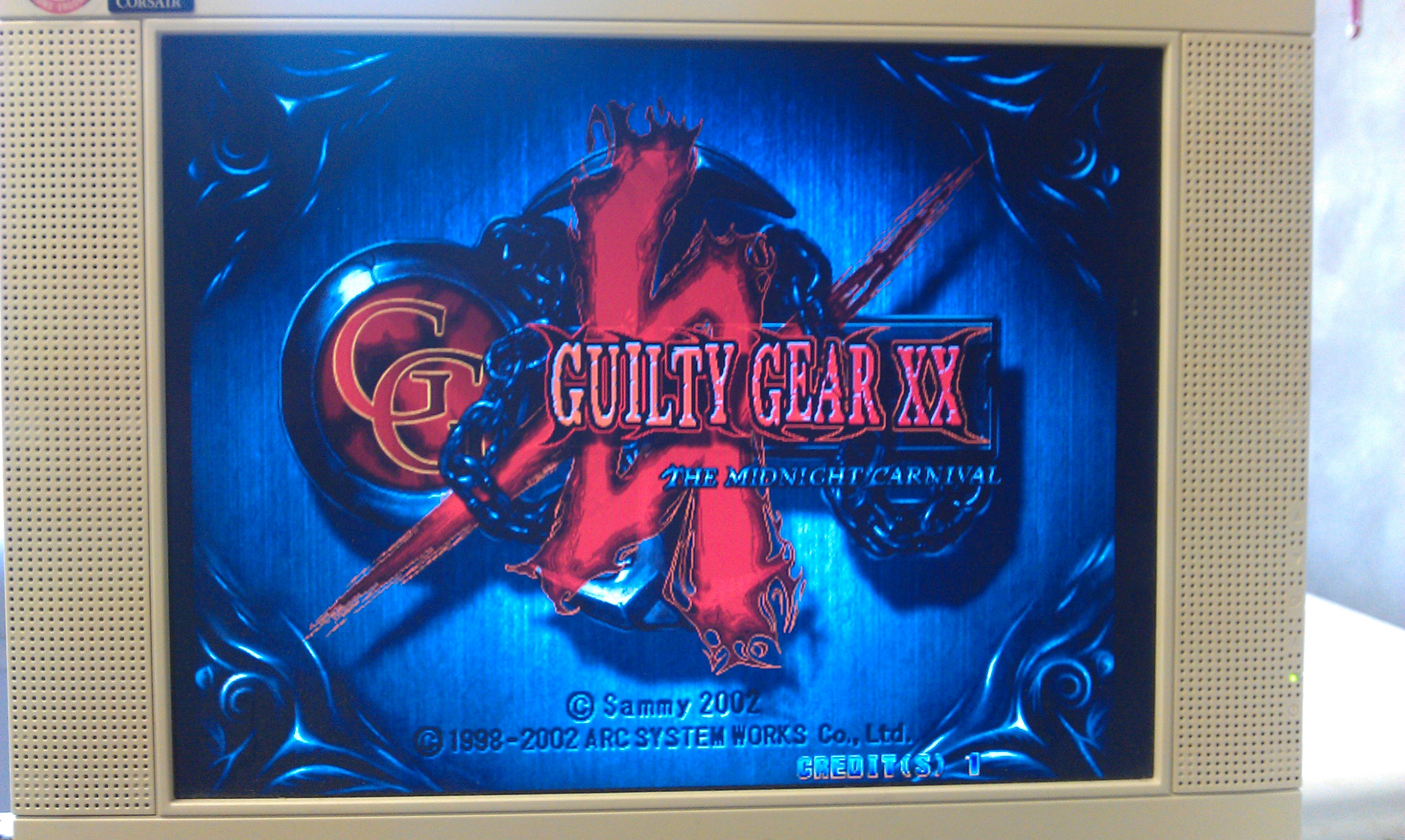
I also managed to boot Guilty Gear XX too. All works fine. Now I have this working I am starting to think I dont need to build the CF adapter but since I have all the parts needed I might as well do it.

Silent Scope repair log

 PCB Repair Logs, Repair Logs  Comments Off on Silent Scope repair log
Jul 112011
 

Bought a Silent Scope PCB recently.
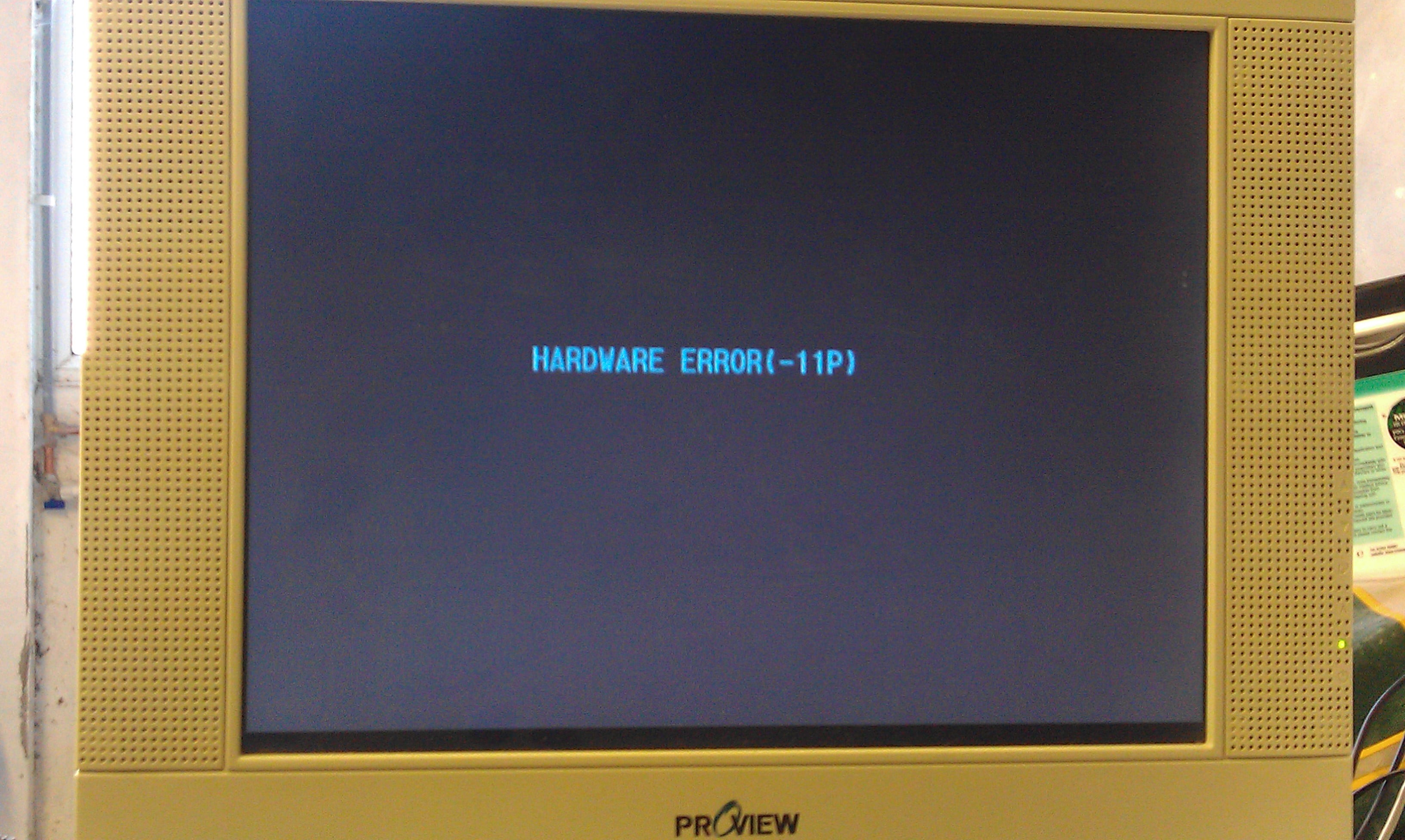
It had the “Hardware Error 11P” fault which is known to be cause by the battery failing in the TimeKeeper RAM.
Since the contents of these RAMs are in MAME I thought id fix one up which was probably a stupid idea as I dont have the setup to actually use it, but at least I know I can fix these now.

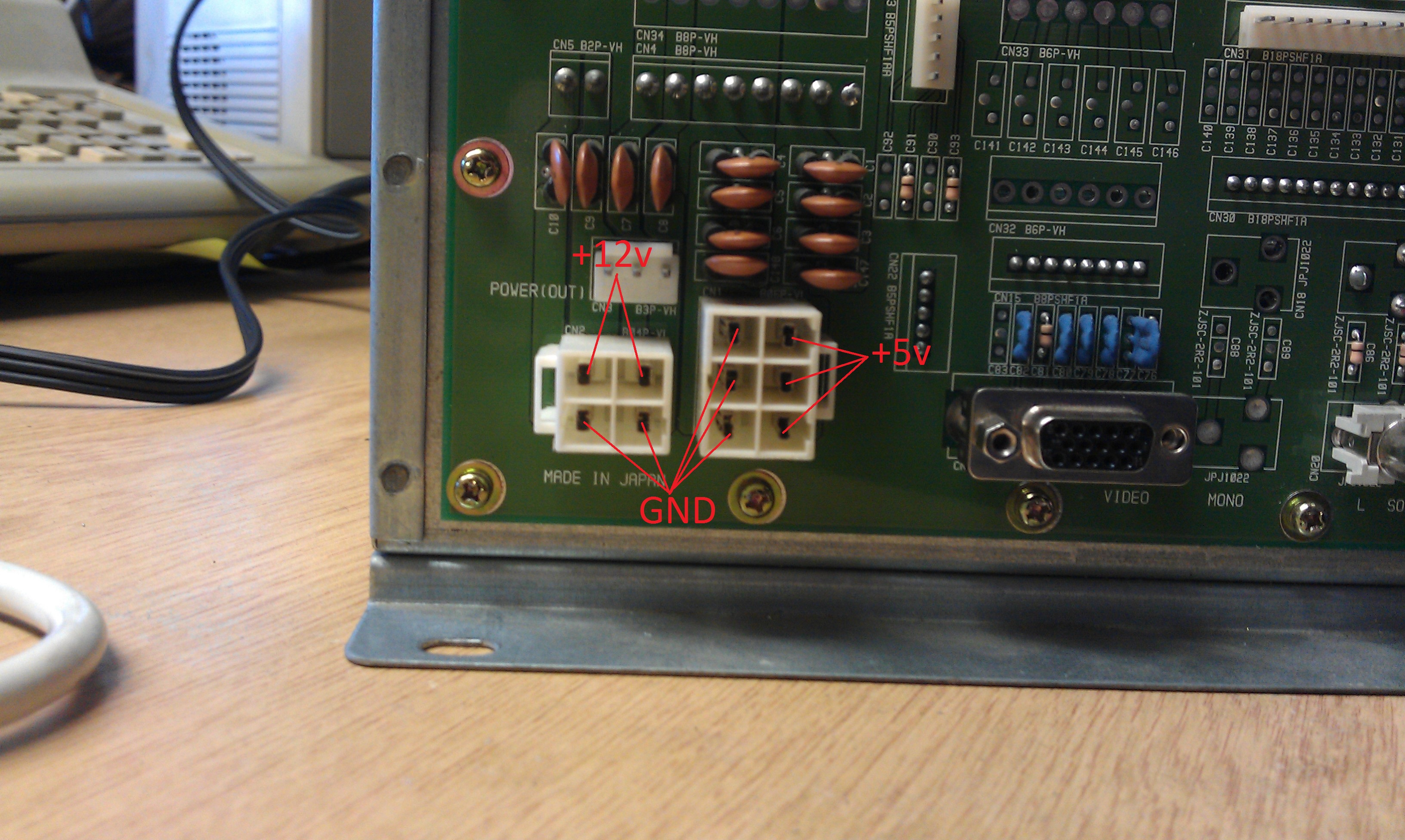
To get this thing booted up I modified my ATX power supply that I had previously modded to run my NAOMI setup. The power connection are labelled in the picture.

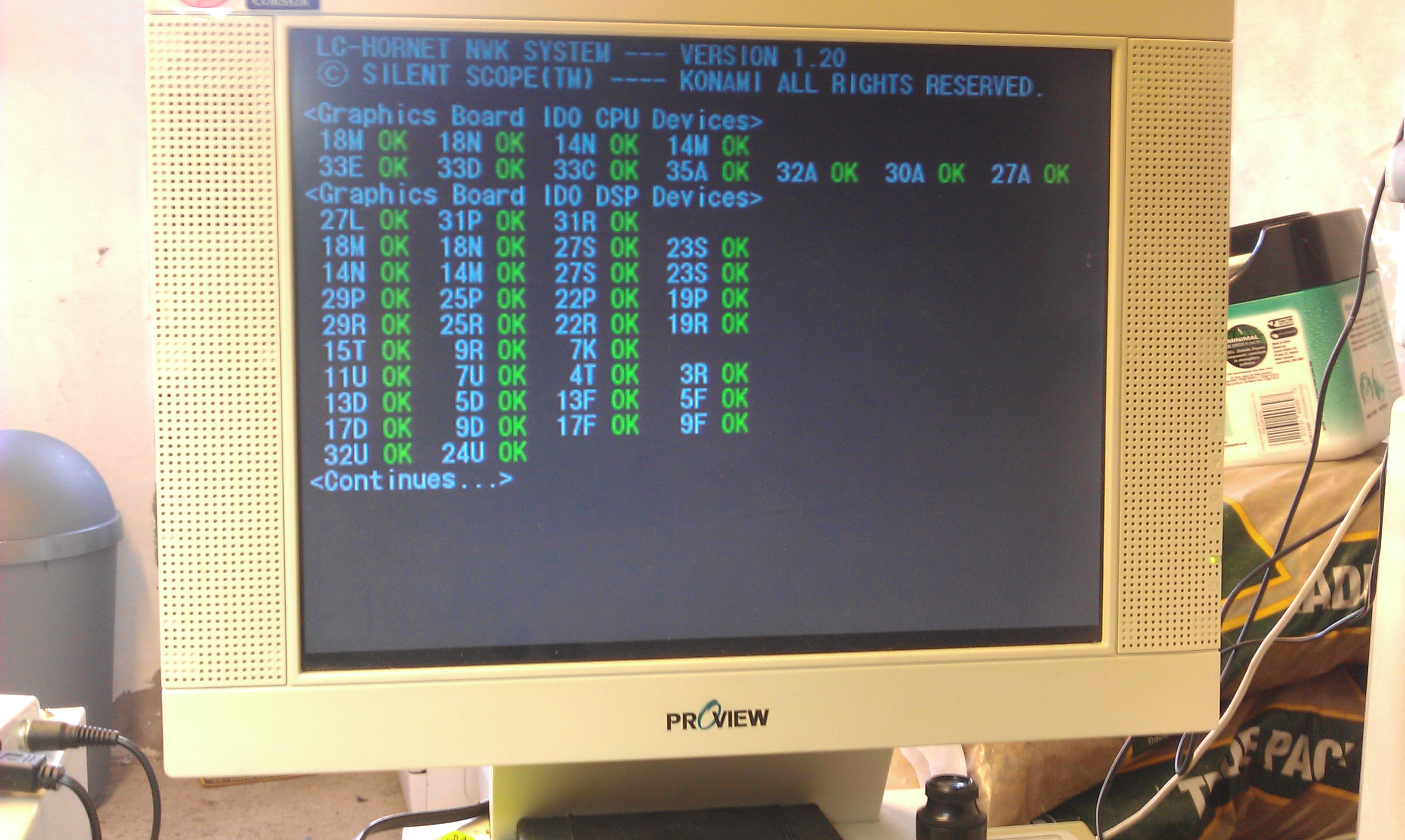
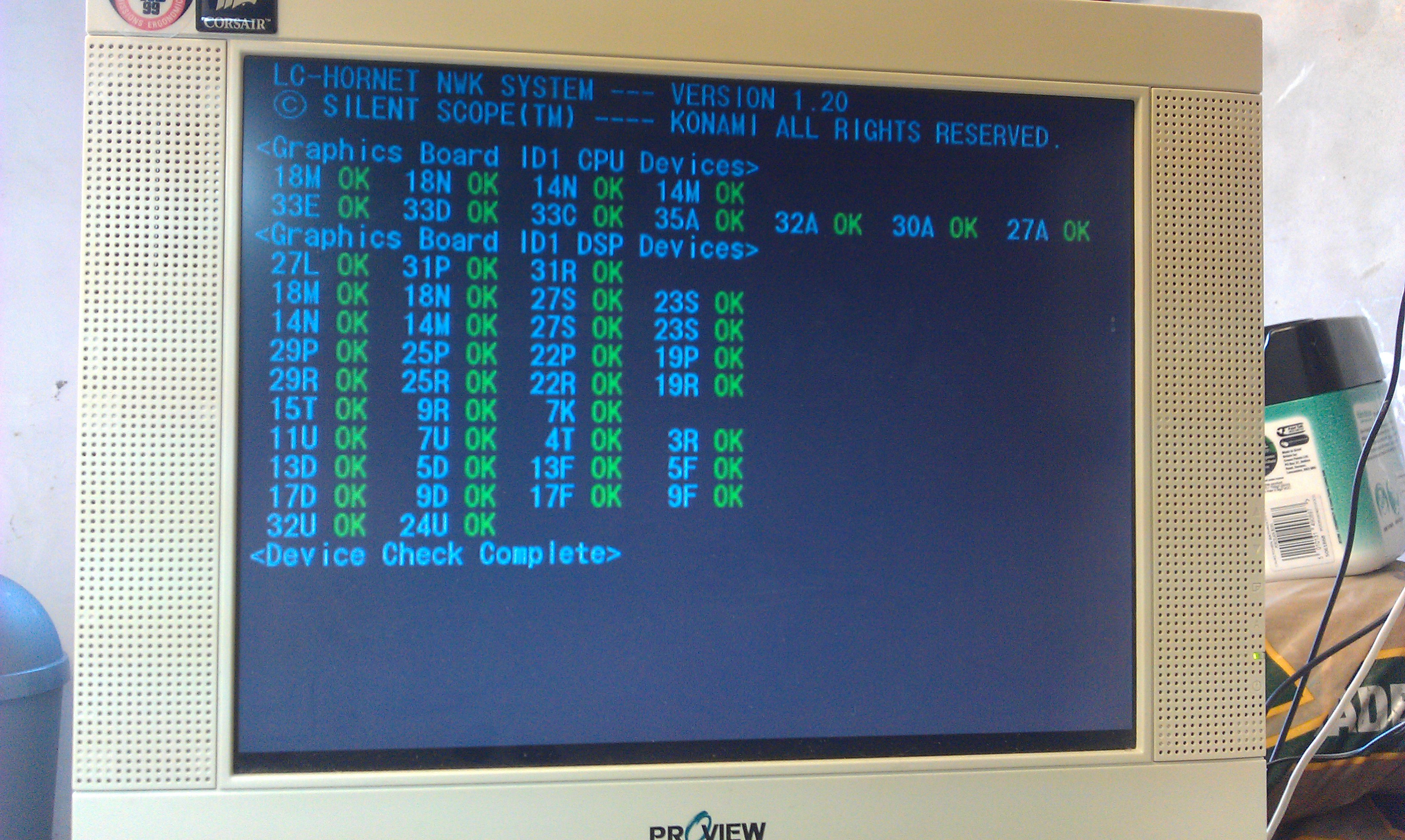
I had to run the VGA output through a standards converter too, it must be 31kHz. Once it was all fired up I was greeted to the startup procedure which consists of what look like RAM/ROM checks. All these passed but then it just hangs on the fault screen for a bit then resets.


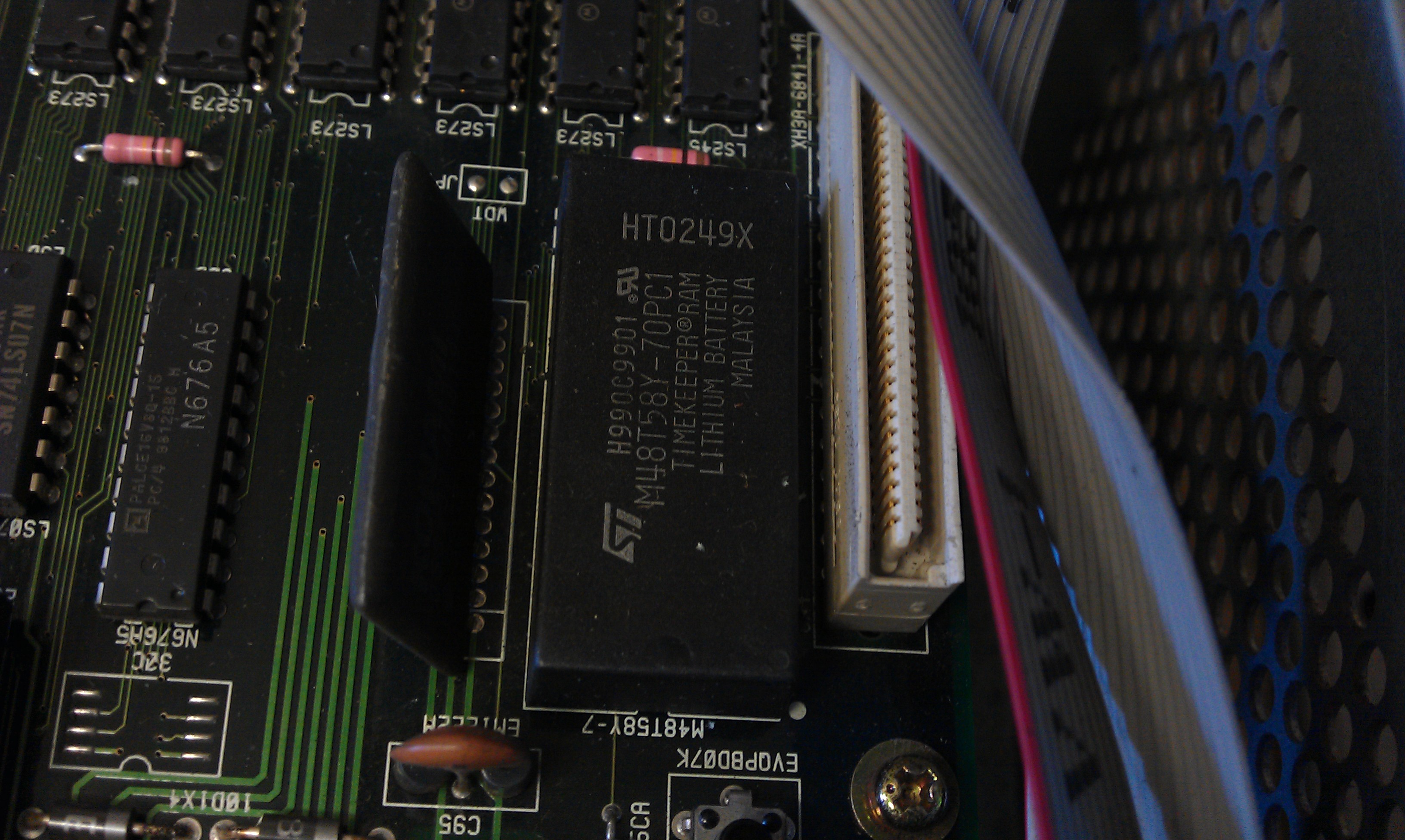
The TimeKeeper RAM is located on the top board of a 3 board stack.

I removed the board and set to work desoldering the old RAM chip. It went smoothly considering it had the signature Konami thin traces and small through holes, the RAM just dropped out.

Thought it best to fit a socket in case of any problems with it in the future.
As this version shows up as v1.20, the RAM dump needed if from set UAB.
I did try reprogramming the original but it didn’t hold the data.
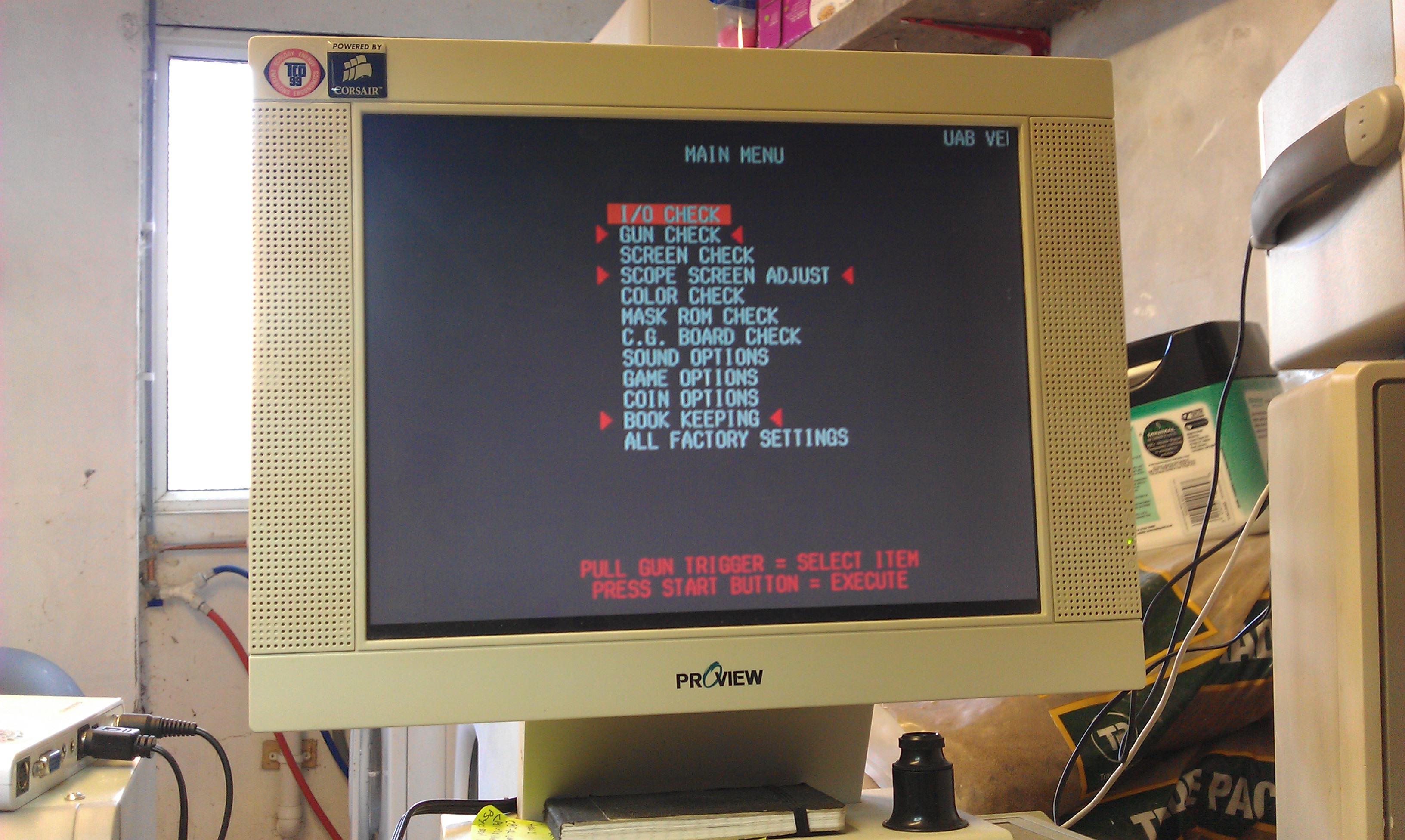
After fitting the new RAM the game booted to the test menu.


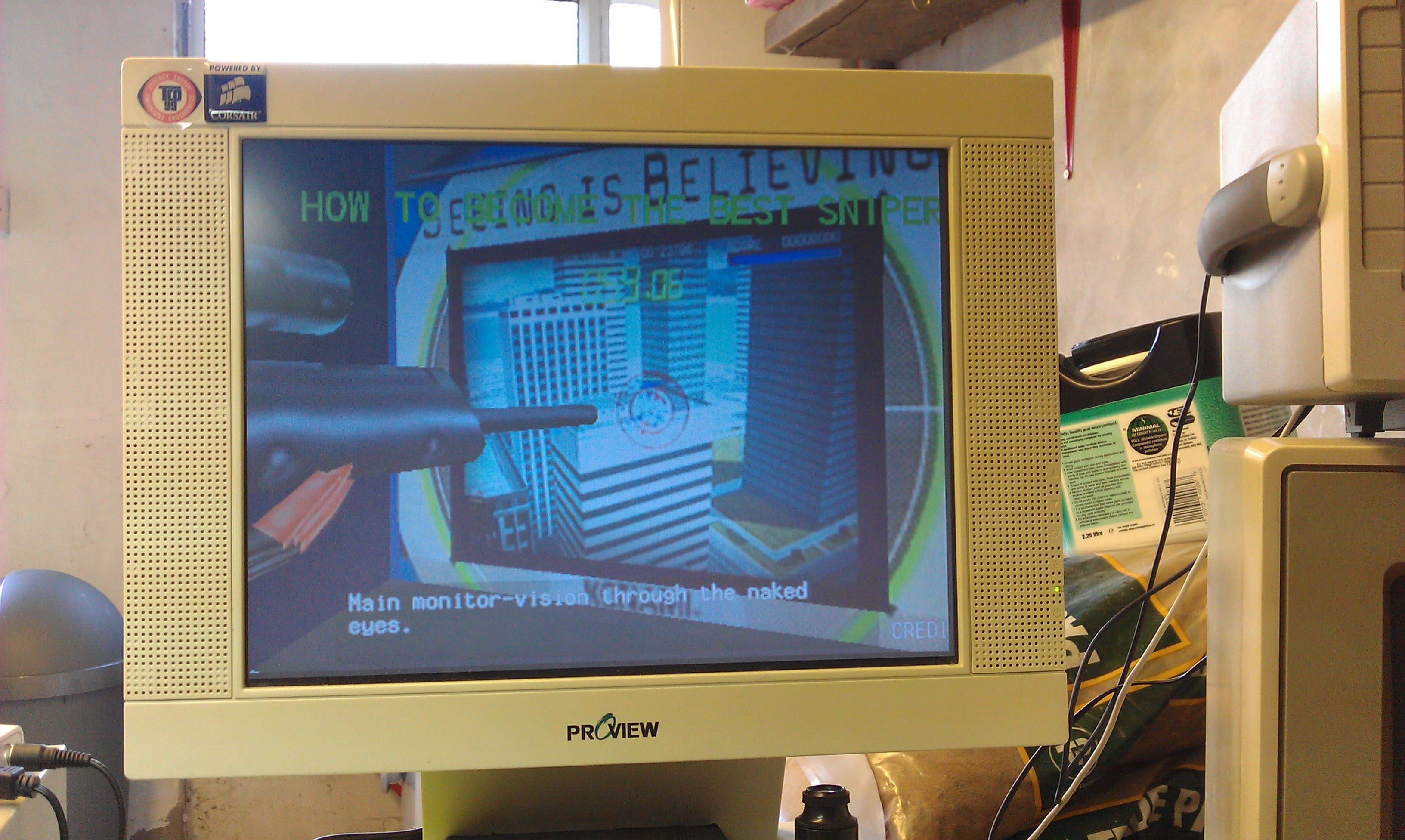
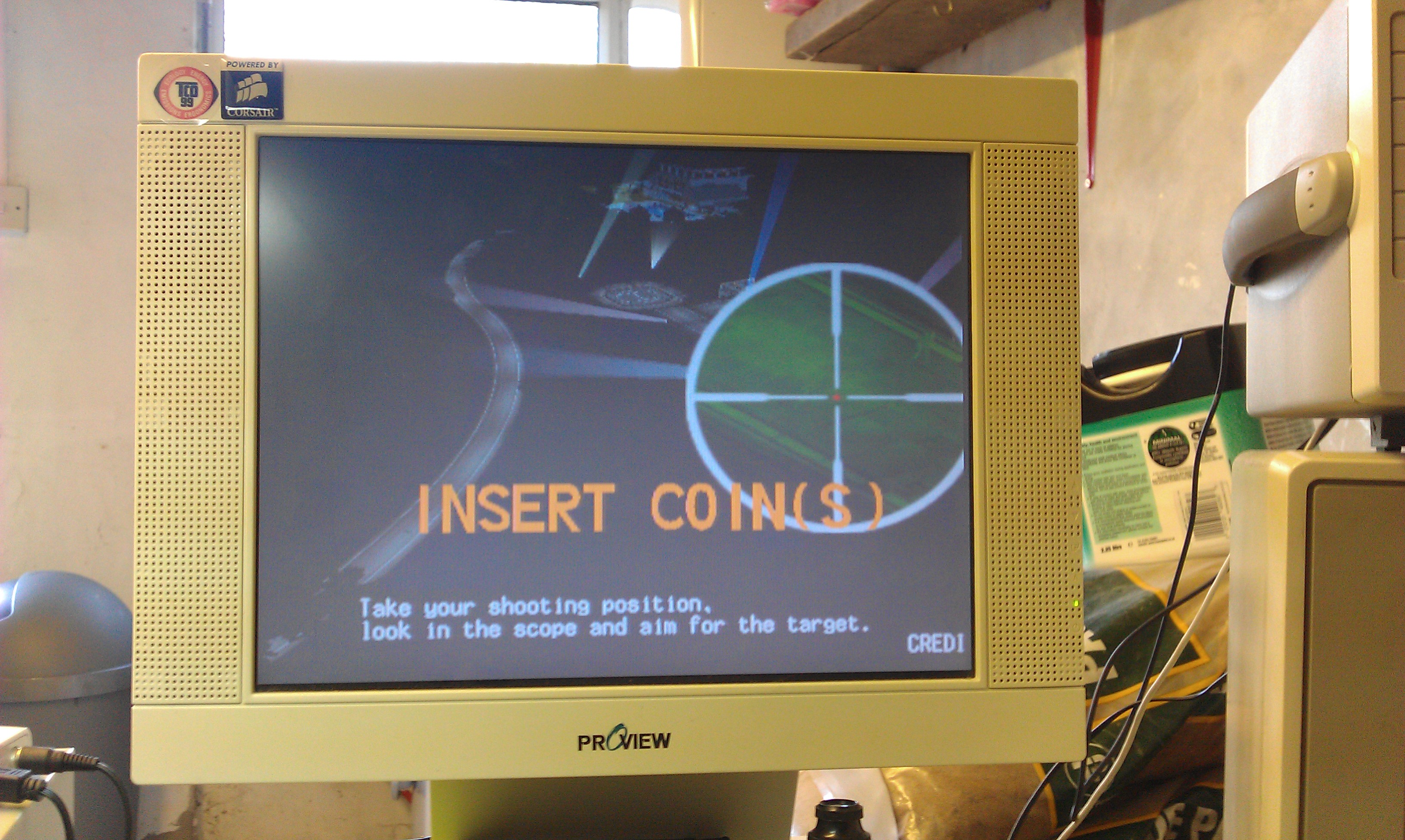
After working my way through the menus using the pins on the I/O board I was able to finally fire the game up.


So, I have verified that the sound works, the game boots and the digital inputs are working. I have no reason to believe that the rifle wouldn’t work if connected.

UPDATE (06/07/2015):
If you have an Arduino and fancy testing out my Timekeeper programmer ‘sketch’ then you can download it from the Downloads section.
It worked for me but I make no promises it will work for you. Its a basic proof of concept and could do with being developed.

Nintendo Super System – stereo to mono

 Guides  Comments Off on Nintendo Super System – stereo to mono
Jul 032011
 

Not really a repair but useful information.
My NSS board by default is set to stereo sound output.
This is no good for me but fortunately it can be switched for mono output via the on board jumper pads and the silk screen clearly states what needs to be done.
Although most people will not need a guide on how to do this, I thought id write it up anyway for just for the sake of it.

Silk screen instruction clearly show for mono output jumpers SL1, 2 and 3 and CL1 and 2 need to be closed.

On my board the CL jumpers were already shorted but non of the SL ones were.

I used a tiny off cut from a recently soldered capacitor to make up small links to solder in and within a couple of minutes all was complete.

The board now outputs mono sound.
I also noticed my BIOS ROM was labelled up “NSS V3” and I am pretty sure MAME only has V2. I dumped it and sure enough it wasn’t recognised by MAME.
Ill have to get it sent off or you can download it here