Decrypted UpdatesComments Off on Sukeban Jansi Ryuko (317-5021) decrypted
Oct212017
Hi there !
System 16B version of Sukeban Jansi Ryuko (317-5021), using a FD1089B is now available , you can grab it from the dedicated page. I don’t think a lot of people will be interested in it, as it’s a mah-jong game using a dedicated controller …
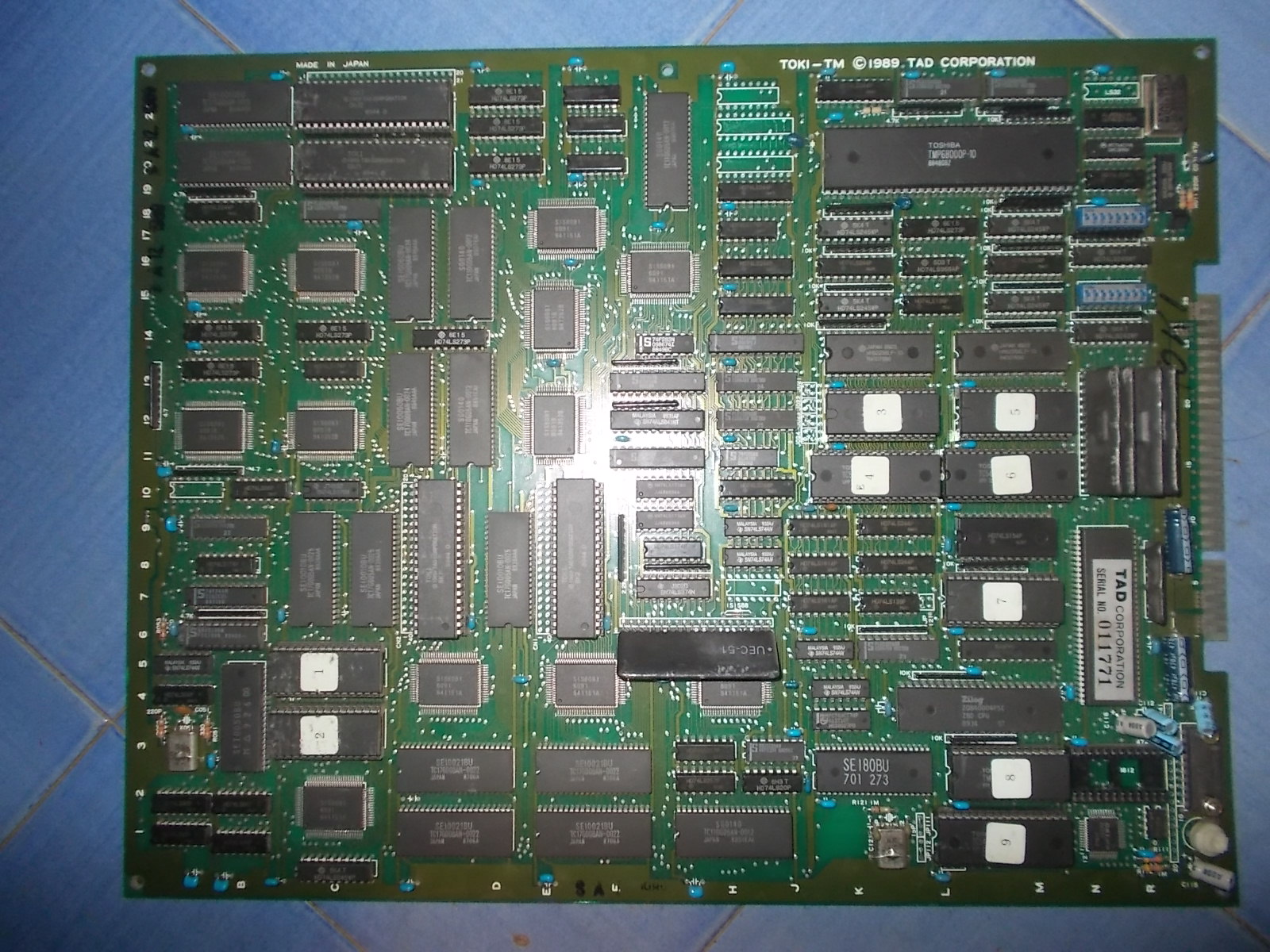
A quick double repair log of Toki, a funny and addictive platform game released by TAD Corporation in 1989.
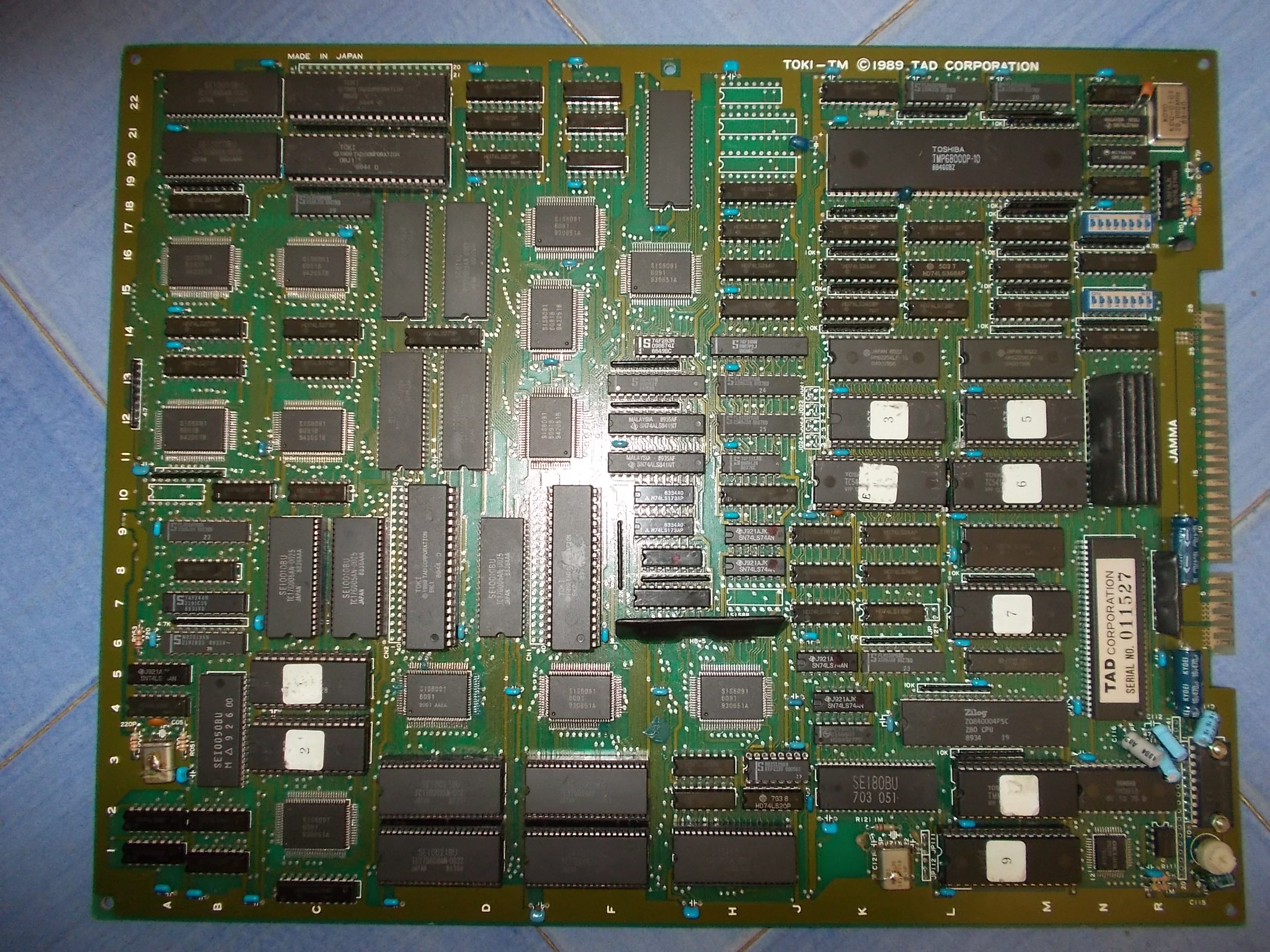
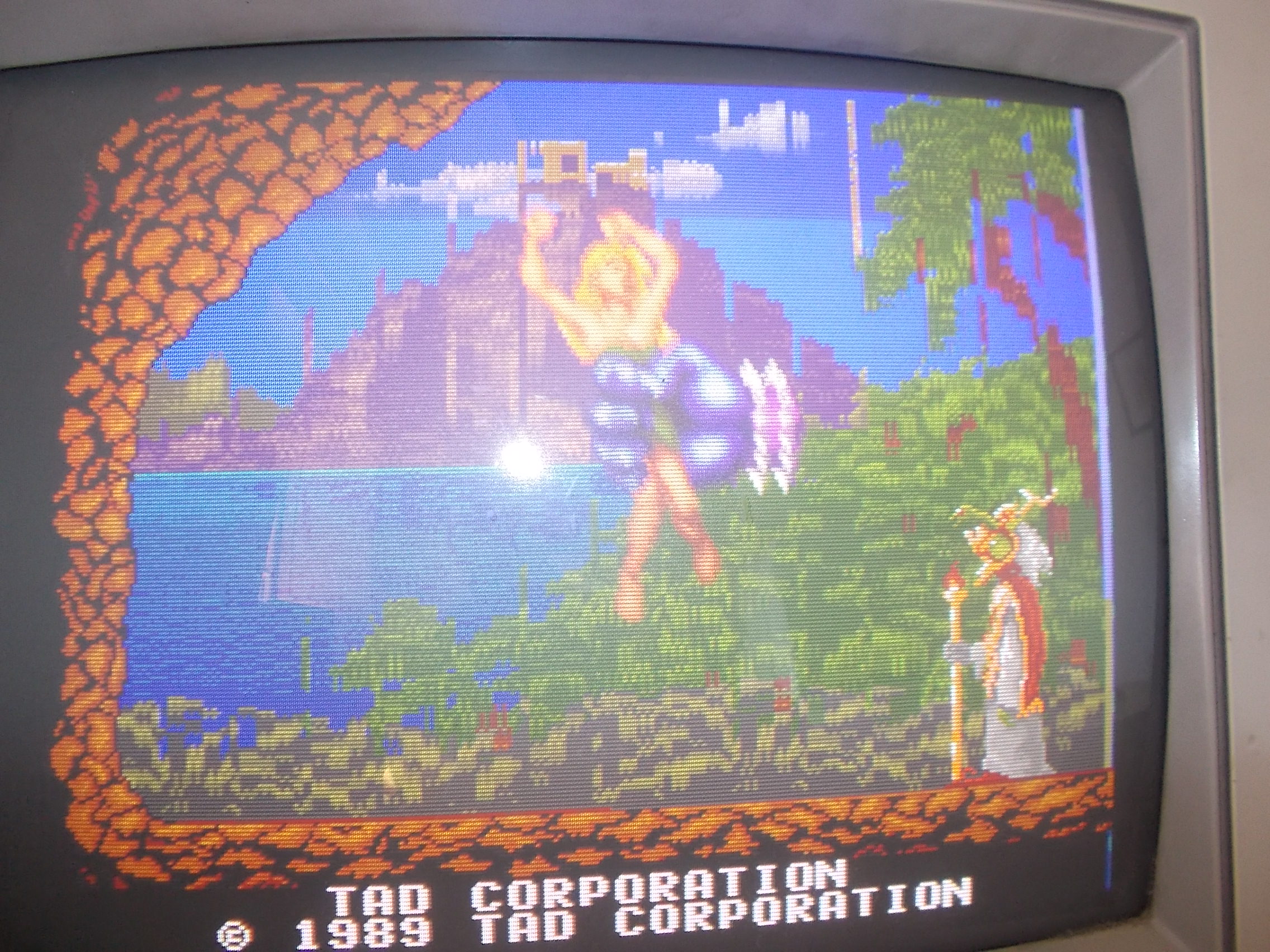
The first PCB:
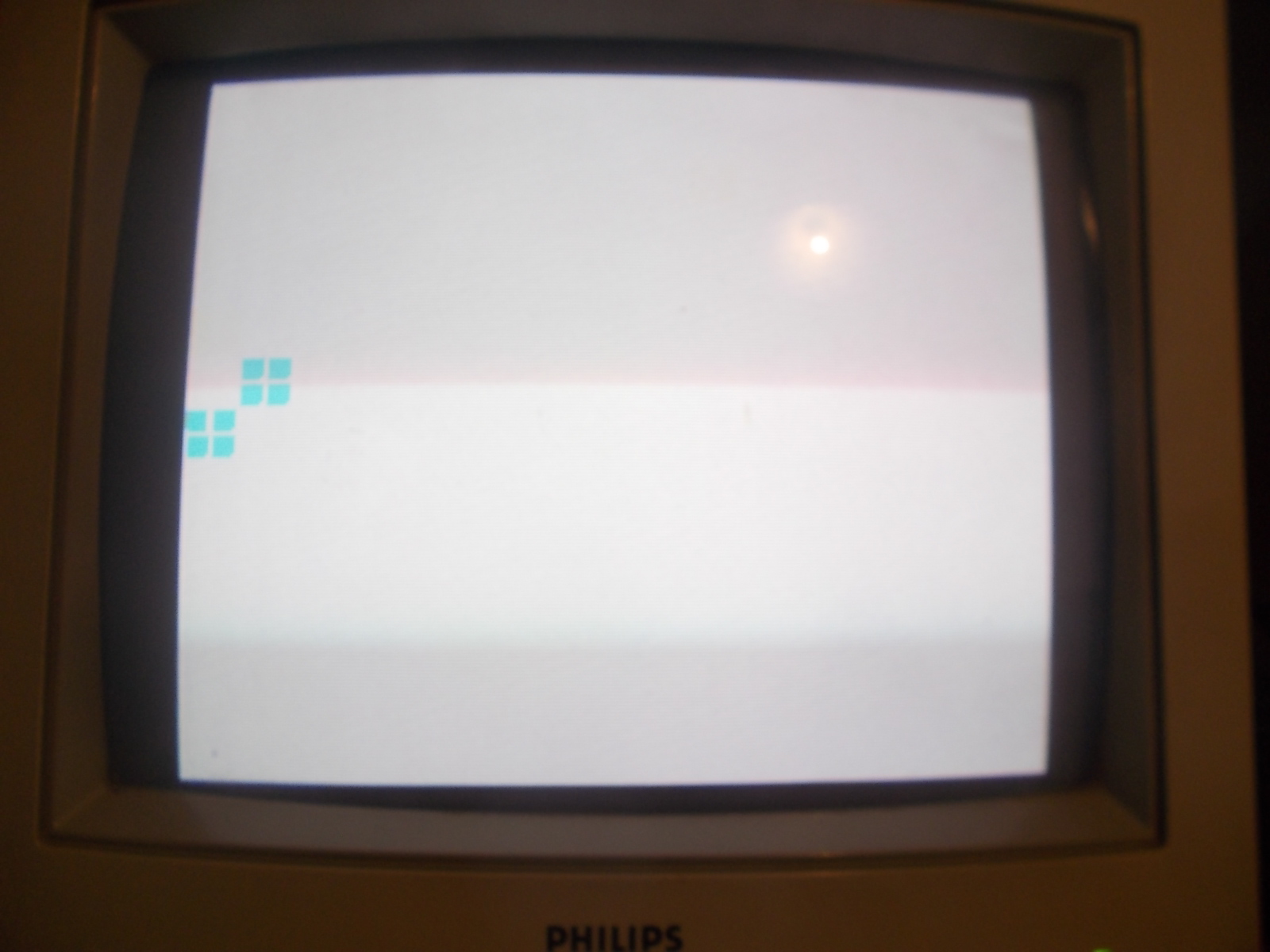
On power up it was stuck on a blank static screen:
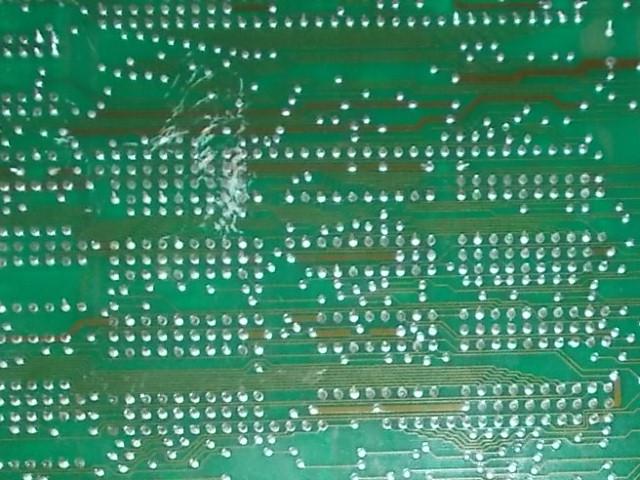
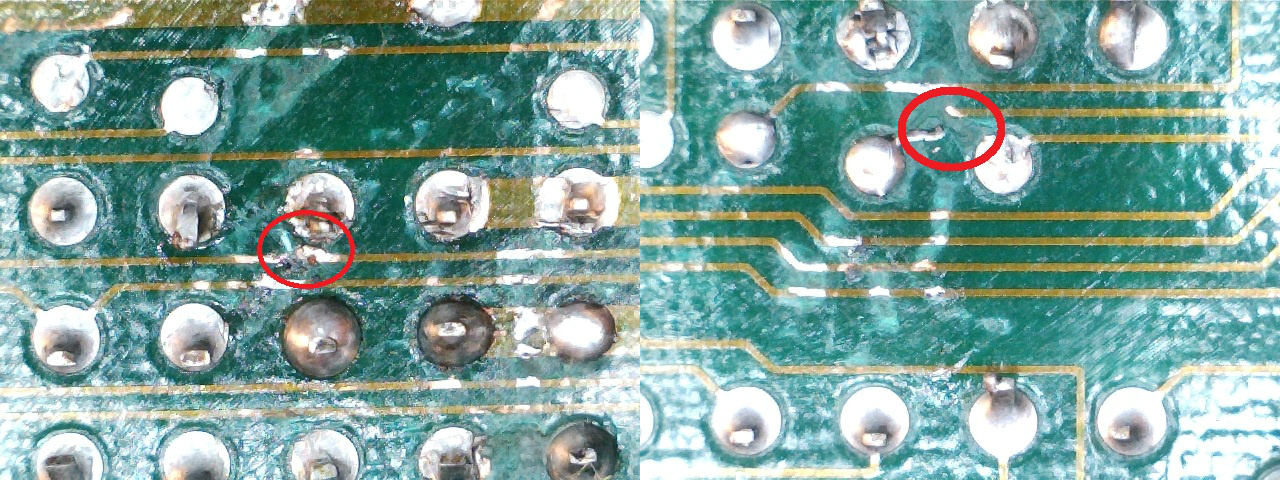
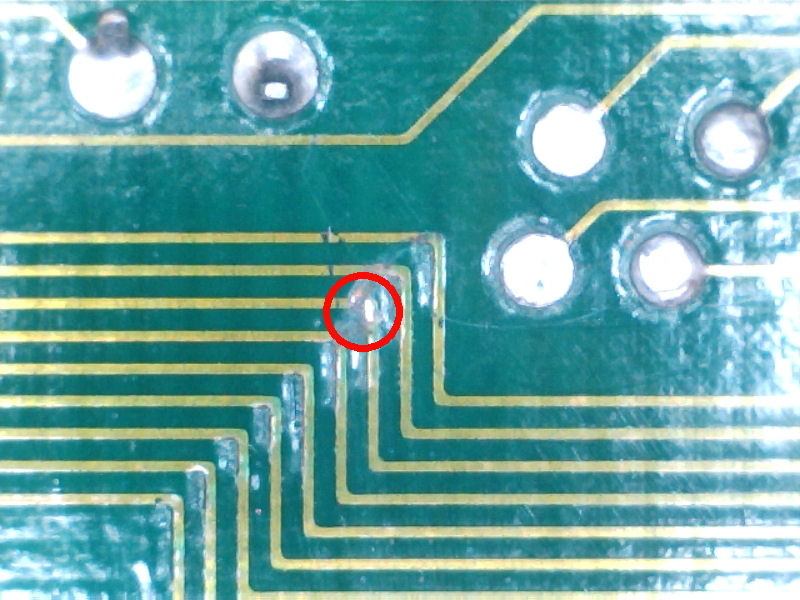
Doing a visual inspection I noticed some scratches on solder side:
Using my multimeter in continuity check I found a couple of severed traces in the 68000 main CPU area:
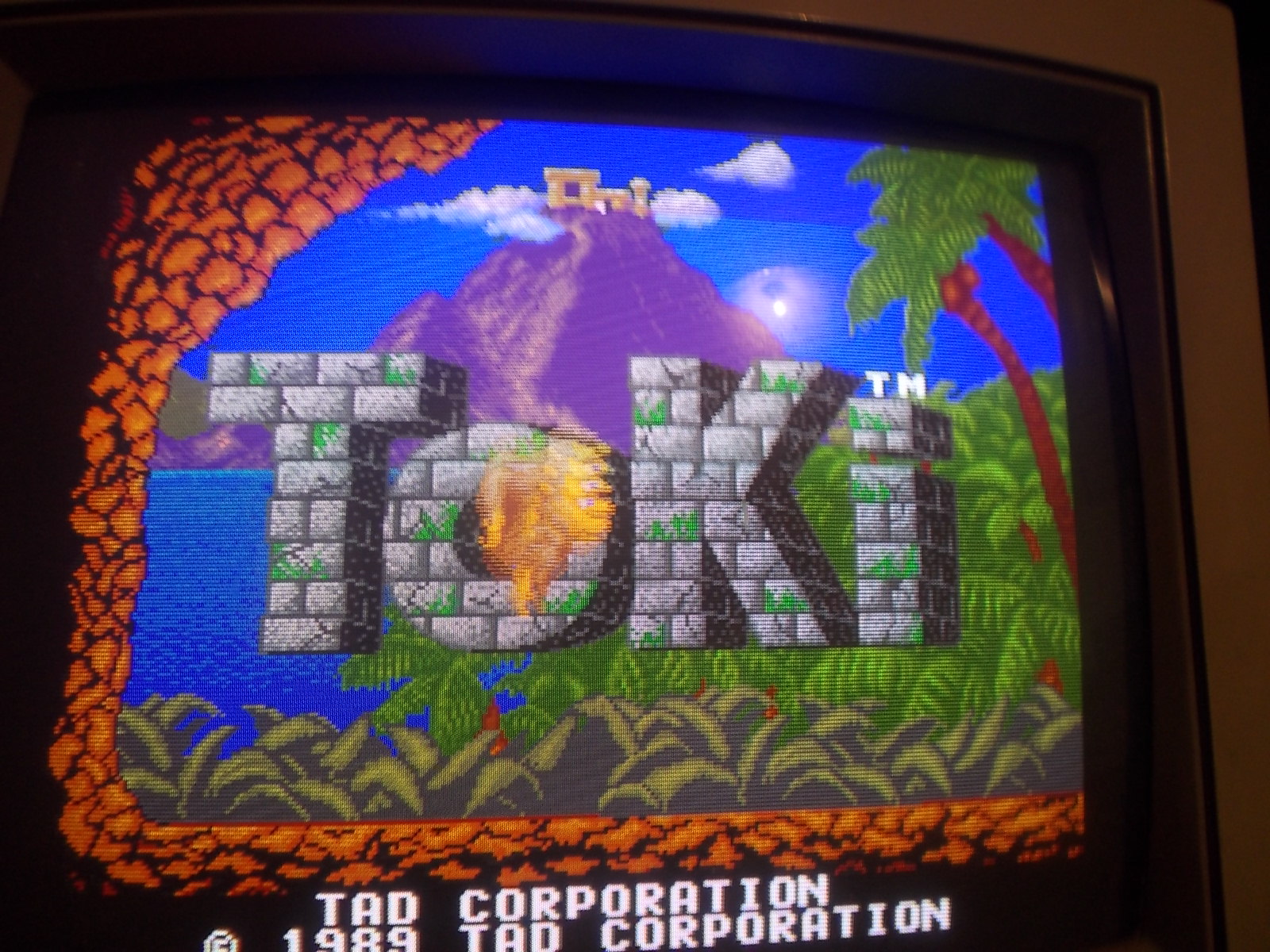
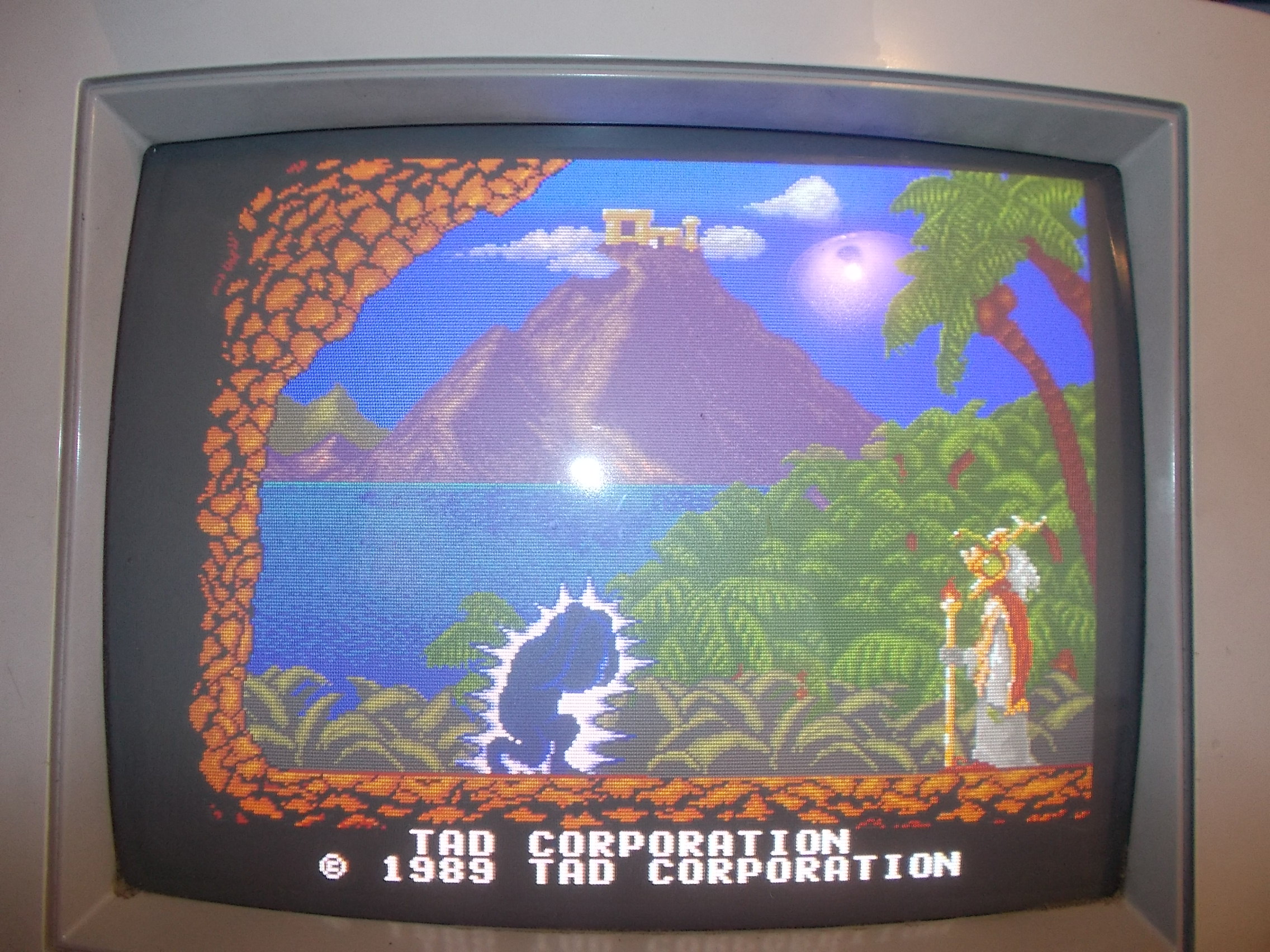
After patched them the game successfuly booted:
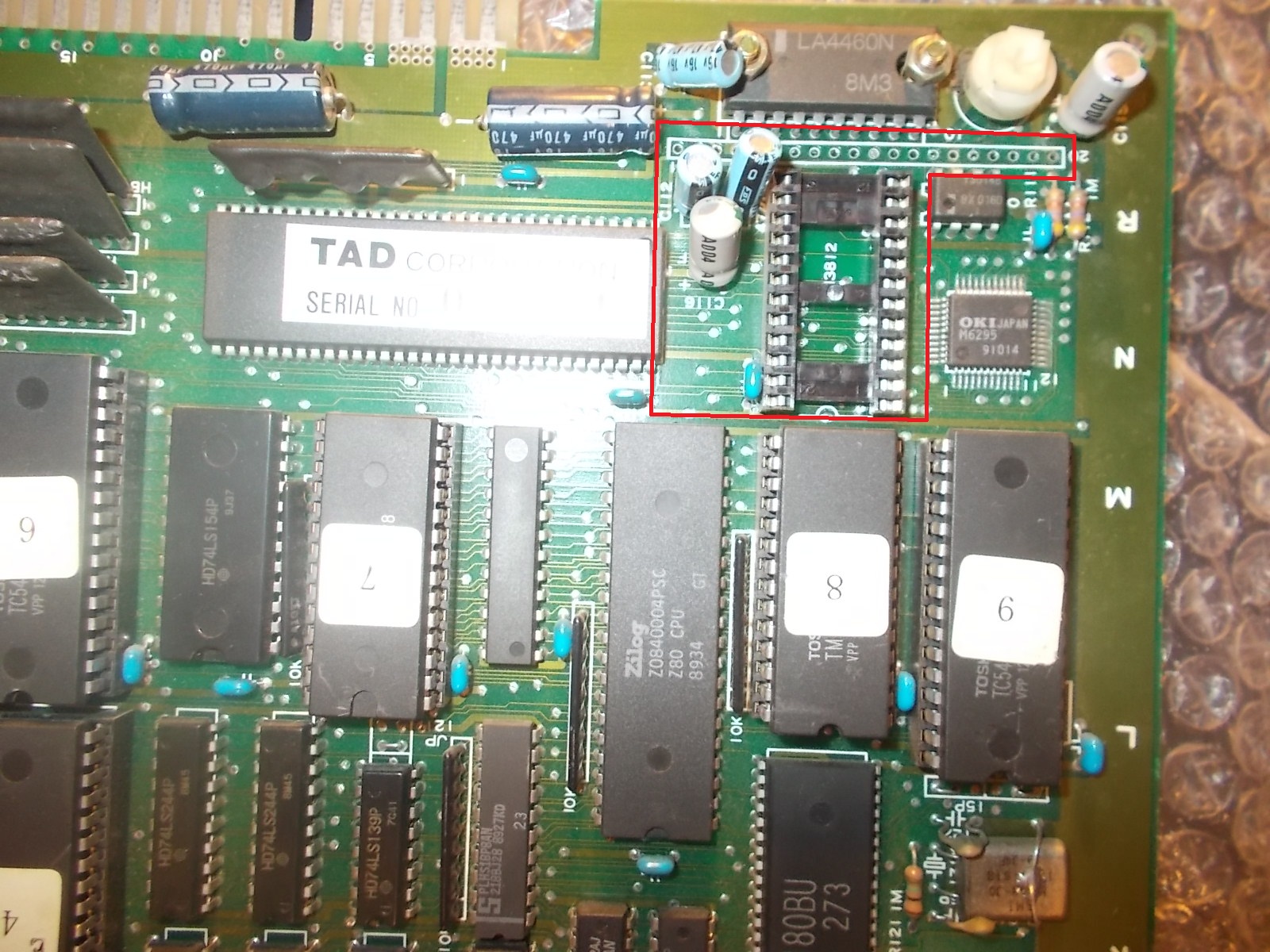
But sound was absent, this was due missing YM3812 OPL chip and custom SIL ‘HB-41’ module:
I finished the repair installing the missing components, this restored full sound.Board 100% working again.
The second PCB:
Board booted but backgrounds graphics were corrupted and flashing :
Also here I found a broken trace on solder side:
This restored graphics:
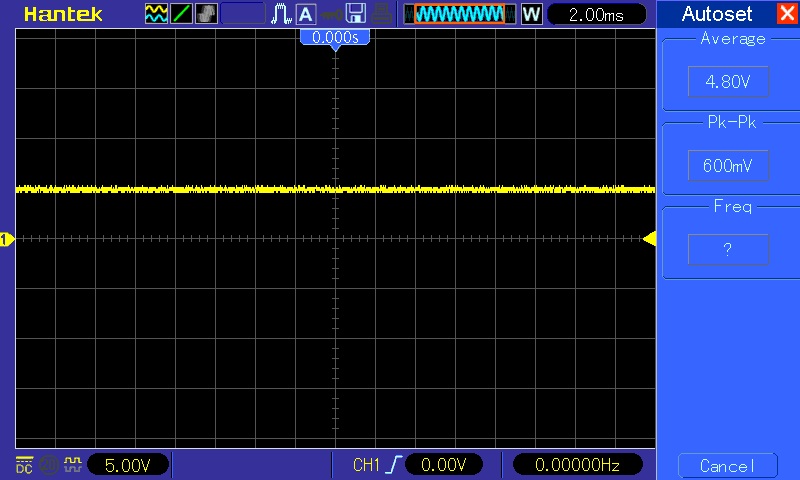
But, while I was testing the board, suddenly I lose sound and I could no longer coin up.The two issues are related each other since on this hardware the Z80 CPU commands the sound system but also handles coins.Indeed, probing it revealed a stuck signal on CLOCK pin 6 where a 3.579545 MHz one should be:
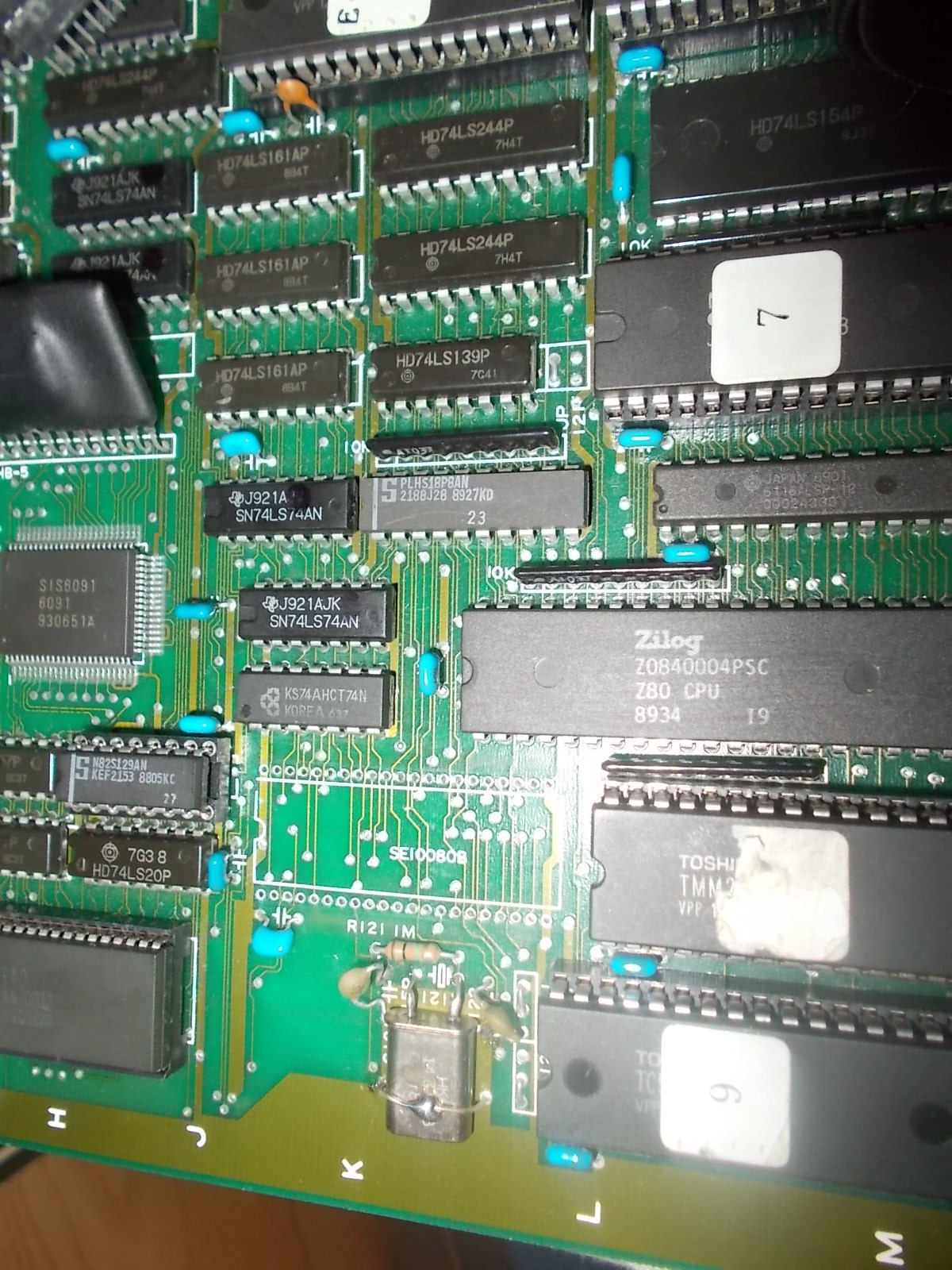
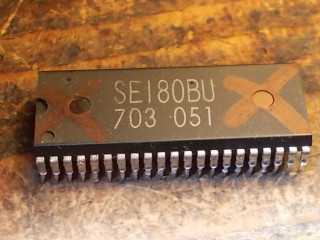
Looking at hardware, the clock is derived by a 14.318 MHz quartz then divided by the custom ‘SEI80BU’ (which also does interface between main and sub CPU) and lastly divided again by a 74HC74 (14.318/4= 3.5795)
I replaced the quartz with no luck , the 74HCT74 was not receiving any 7.159MHz signal so, for exclusion, the ‘SEI180BU’ had to be the culprit.I removed it and took the spare from a scrap Raiden PCB:
This restored sound hence the custom was really bad:
As you may now notice there is a new tab on the menu bar called ‘For Sale’.
At present this is just a simple gallery showing items that we may be selling at any particular time.
If your interested in any items then please contact the seller directly via the contact form
I reinstalled the RAM, the oscillator and the EEPROM (temporarily omitting components in audio circuit) and board showed the self-test reporting bad devices @12C (ER5911 serial EEPROM), 6G (sound Z80 code 27C010 EPROM) and 7G (2k x 8-bit SRAM of sound system)
I cleared the first error by re-initializing the EEPROM (holding down the TEST switch while powering up the board)
As for the other two errors, I dumped the EPROM @6G and code didn’t match any existing MAME set so I reprogrammed the device with correct code.This cleaared the error but the one regarding the device @7G was still present.Probing the device (a Sony CXK5814, a 2k x 8-bit static RAM compatilbe with 6116) revealed unhealthy signals on data lines:
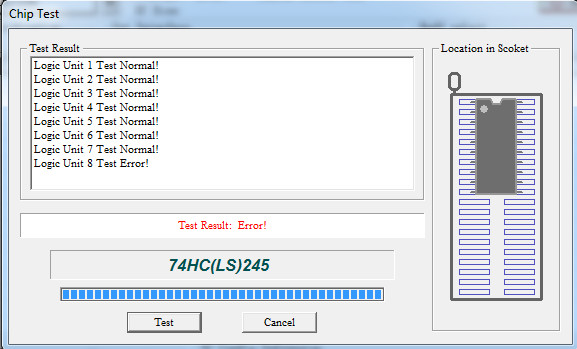
Once removed, the chip failed the out-of-circuit testing:
Finally the self-test no longer complained so board booted into game but colors of some backgrounds were wrong and sprites were mssing parts:
The MASK ROMs check reported a bad device @16L, this is a 8Mbit one containing sprites data:
I replaced it with a 27C800 EPROM but with no luck so I focused on the background colors issue.The hardware uses an ASIC marked ‘053251’ which is responsible of palette and priority:
The chip outputs 11 bit of palette index called ‘CO0-CO10’ on schematics:
Probing the outputs with a scope revealed bad signal on pin14 ‘CO4’ (healthy signal on the left for comparison)
I removed che custom and replaced it with a spare take on a donor board (Premiere Soccer)
This fixed the color issue but sprites were always wrong :
and device @16L was still reported as bad:
Schematics don’t cover this part of circuit but I knew the design.The two ASICs marked ‘053246’ and ‘053247’ work in tandem, the first generates the address lines to the sprites MASK ROMs and the latter read and process their data:
I checked connections between the ASICs and MASK ROMs, no problem found.Actually the data lines from MASK ROMs are not directly tied to the ‘053247’ ASIC but there are some 74LS374 in the middle (two for each ROM) which latch data bits.Piggybacking the ones @12K and 10K restored partially the sprites.I desoldered the first and it failed the out-of-circuit test:
This improved sprites but not yet perfect :
So I removed also the other 74LS374 @10K, it failed too!
This fixed the sprites issue completely.As for lack of sound it was only matter to fit the missing MB3722 amplifer and electrolytic capacitors @C114, C21 and C16.
Another board torn from the darkness, long live to it!
We all know that Konami manufactured wonderful arcade games but, you know, beautiful things are often complicated too.And surely their hardware is! This mainly because of the use of many custom chips with the most disparate functions and shape.
The ‘052535’ is one of them, used on countless PCBs of ’80-’90 :
The ‘052535’ is basically a 5-bit video DAC (one for each R,G,B color) in SIL package used to convert the digital signals of the palette circuit into analog, we can see its pinout and implentation in this snippet from Lethal Enforcers schematics:
During my repairs sometimes I had to replace faulty ones so why not reproduce this part too?Perhaps someone else did it already but i did it my way.
First of all I removed the black epoxy to expose the circuit and scan it :
As you can see the Konami ‘052535’ is nothing more than a R-2R resistor ladder with the resistors values tipically doubled .The transistor on the left is used in final stage to amplify the analog signal adapting it to RGB arcade standard.The circuit is very simple so it took few time to draw schematics of it and route them to a PCB which ended up with more or less the same dimensions of original part:
Here is the assembled reproduction, I used the legs from thru-hole components as pins which fit well in a female header:
Testing on board was successul, reproduction validated!