May 102014
 

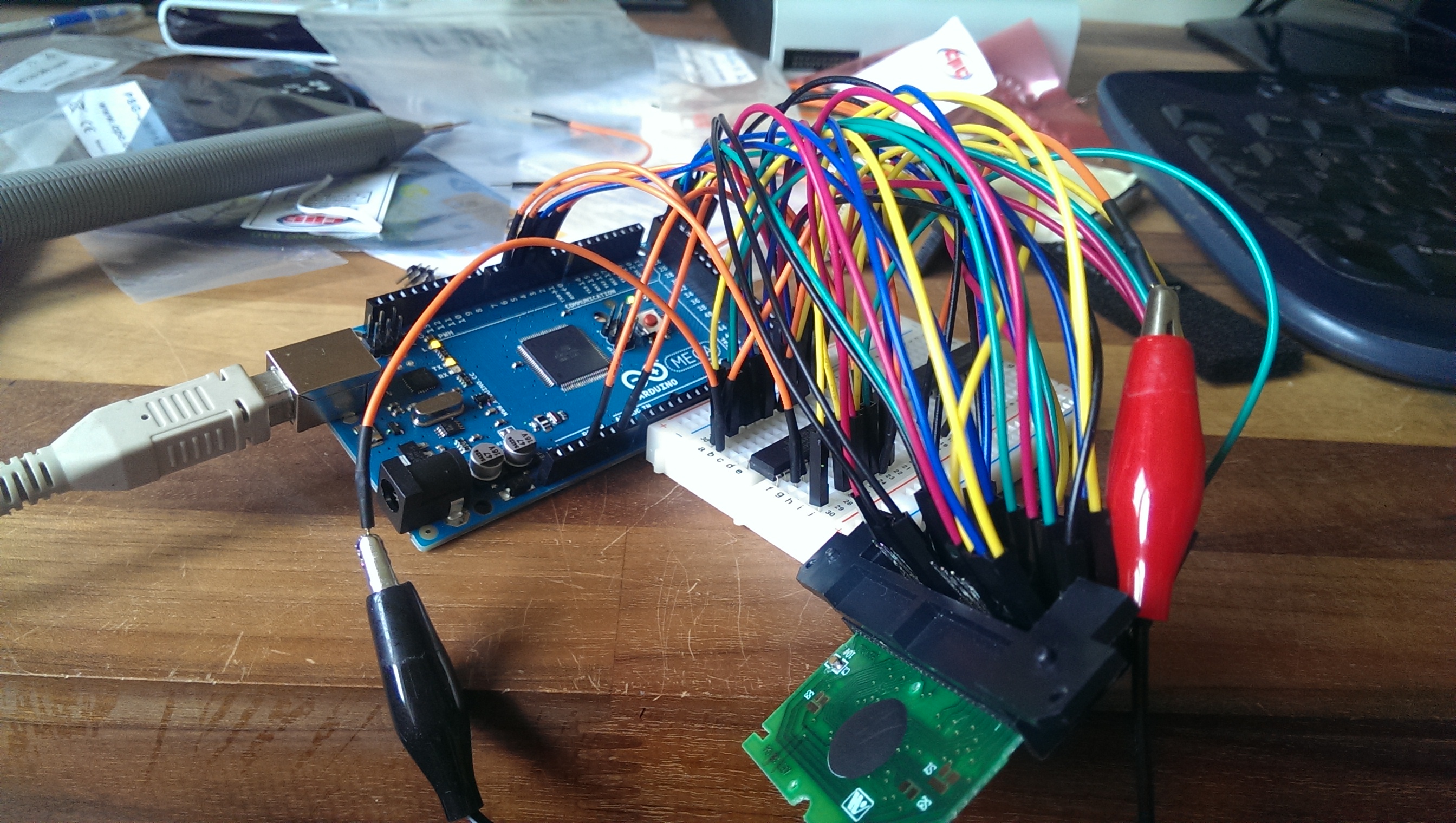
Quite often I need to be able to manually toggle the input pins on a PAL chip so I can observe its behavior. Ive needed to use this method to reverse several registered devices and also the Amstrad 6128 HAL chip that used latches.
Up till now Ive either used a program written on the Boardmaster 4000 or an old circuit board I made up with switches and LED’s.

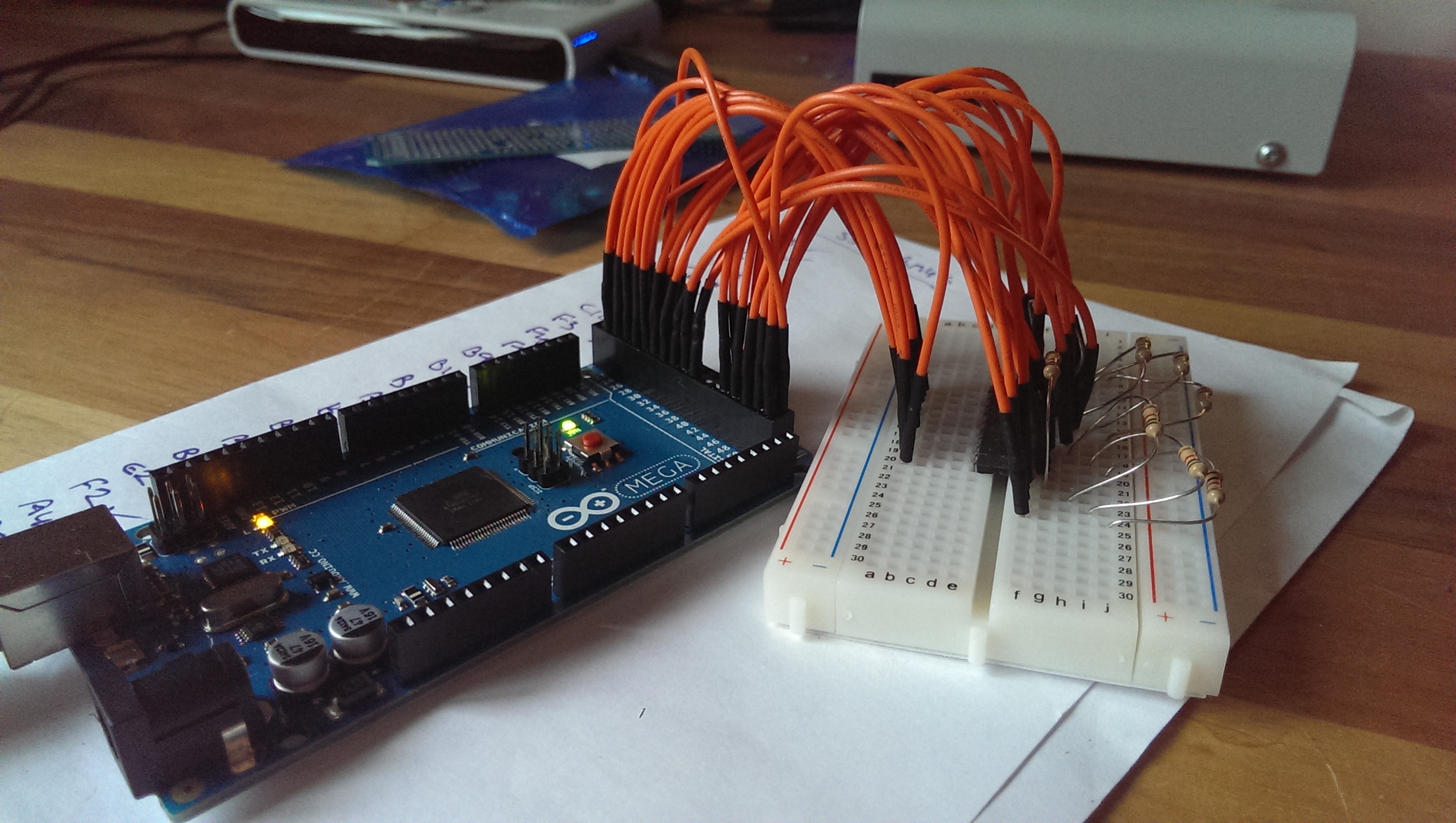
I recently got my hands on an Arduino MEGA 2560 which is a really nice bit of kit so as my first project I thought I would implement my pin toggler on this device.
After several days of learning Ive finally arrived at something im happy with using.

Right now its all on a proto board but I have just finished making a “shield” for this.

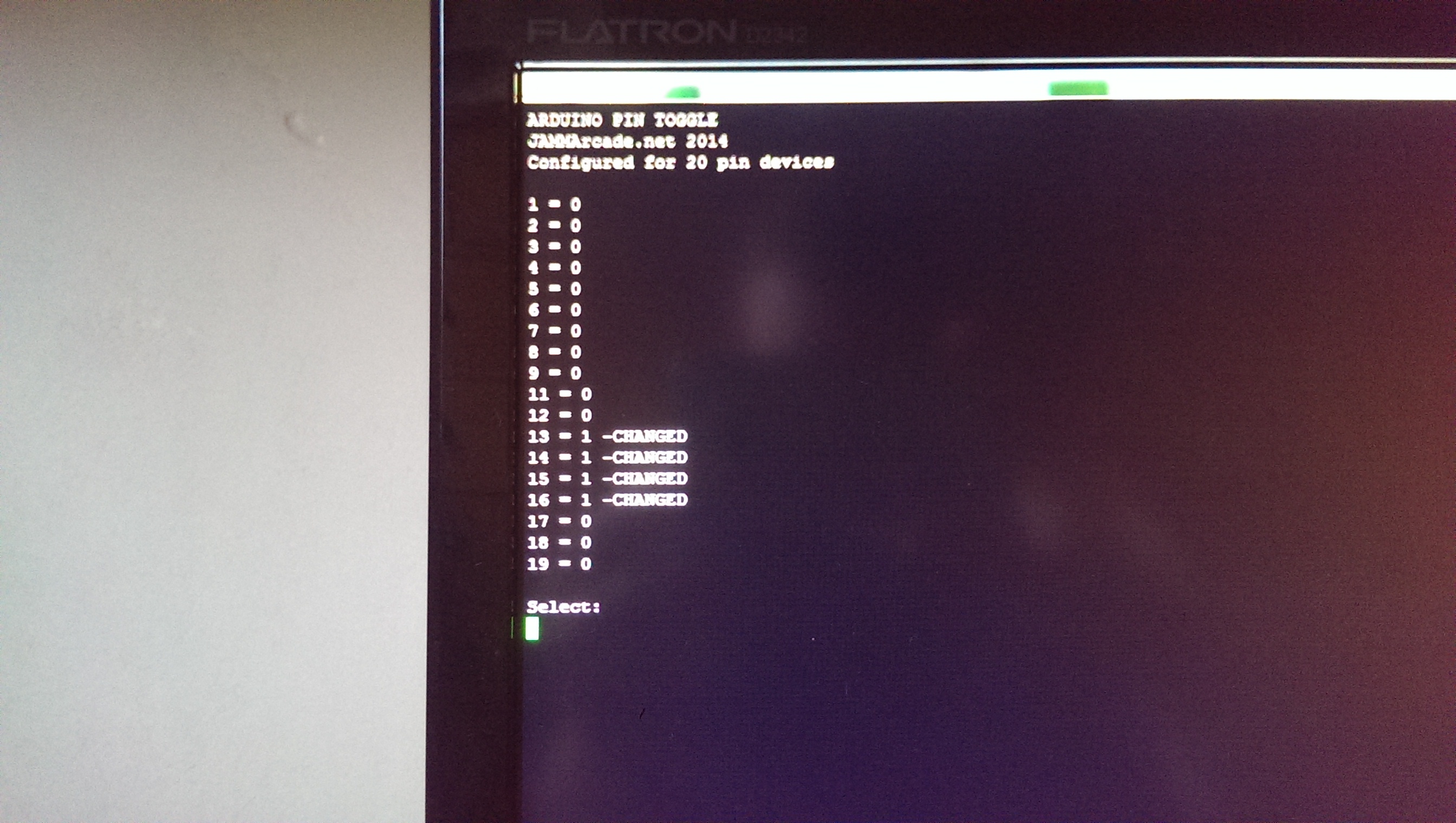
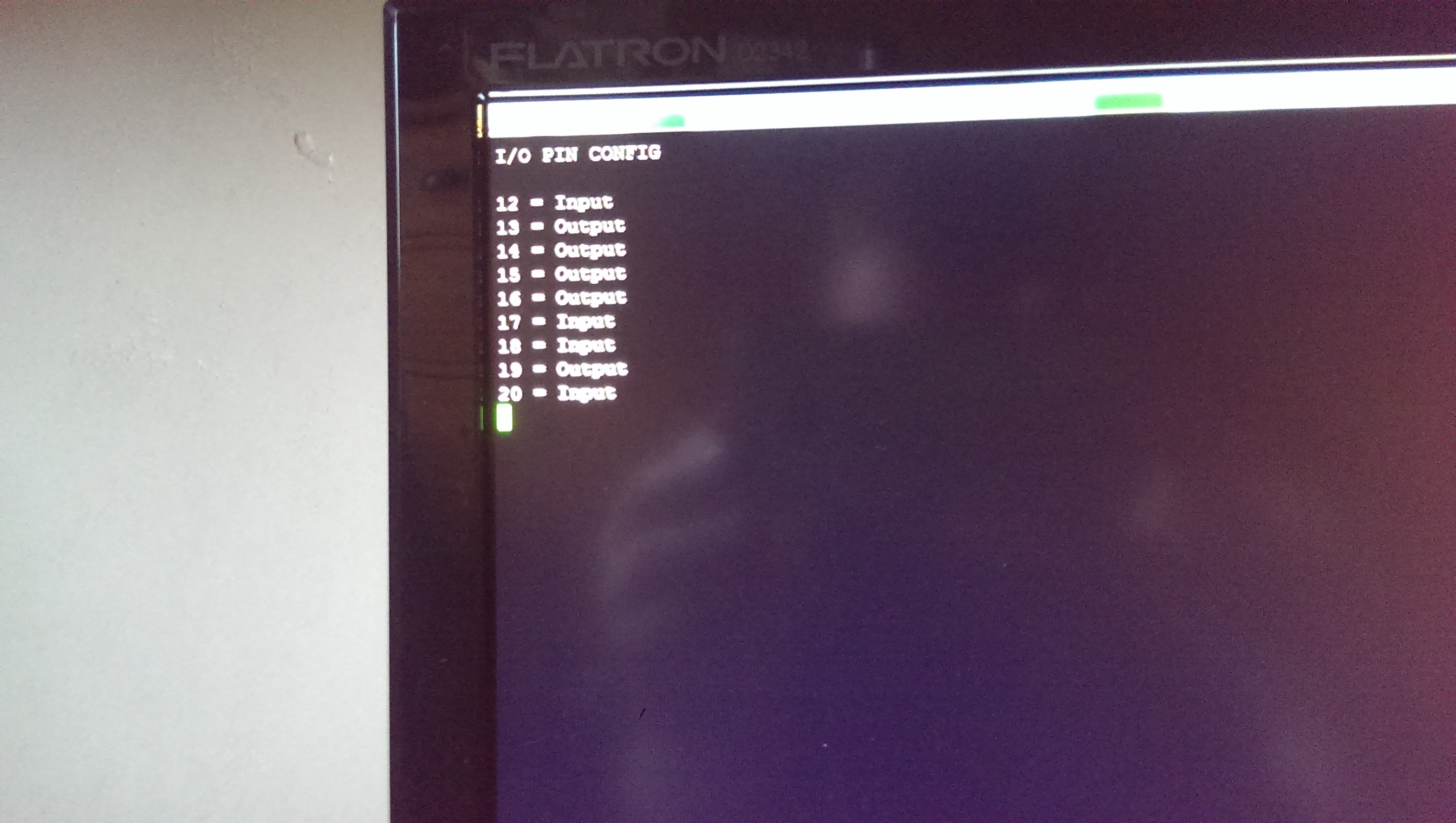
Its controlled via the terminal window (I use Putty) and also gives its output via the same terminal. It also detects the configuration of all the programmable I/O’s and sets up accordingly.

The code also fully supports switching between 20 and 24 pin devices so it just needs a link to determine which device you are using.
Its a simple concept but took a surprising amount of coding to implement.
Loving the Arduino and will be looking at doing a lot more with it in the future.

 Posted by at 8:39 pm

Skulls & Crossbones (rev 5) PAL dumps added

 PAL Updates  Comments Off on Skulls & Crossbones (rev 5) PAL dumps added
May 072014
 

I dumped the three PALs from an original Atari Skulls & Crossbones (rev 5) PCB, an obscure arcade game, never heard of it until now.The three devices were all unlocked so I dumped them with a standard programmer and then converted two of them (a PAL16R8 and a PAL16L8) to GAL16V8 format using PALTOGAL utility.The third was already a GAL16V8 device so no conversion was needed. I can confirm that the two dumps mirrored here with the permission of Aaron Giles match the mine (same equations but different labels) so we can merge them.All dumps are tested working in GAL16V8  devices.

 Posted by at 11:31 pm

Nastar (World) PAL dumps added

 PAL Updates  Comments Off on Nastar (World) PAL dumps added
May 062014
 

I just dumped the two PALs from an original Taito Nastar (World) PCB.Both devices (AMPAL16L8B)  were unlocked so I read them with a standard EPROM programmer, disassembled into their equations using JEDUTIL MAME utility and then recompiled into GAL16V8 format under WinCUPL.Besides, I can confirm that my dumps match the ones present in MAME.Anyway I have no way to test them since the PCB is faulty so we would appreciate if someone with a good board could test them and report feedback, thanks.

 Posted by at 9:54 pm

Bucky O’ Hare repair log #1

 PCB Repair Logs, Repair Logs  Comments Off on Bucky O’ Hare repair log #1
May 062014
 

Got this original Konami Bucky O’ Hare PCB for quite some time but I never looked at:

100_5295

Once powered on it displayed good graphics but loud, scratchy and distorted sound.Everyone in the arcade world knows that this kind of PCB use an hybrid custom sound module, in this case it’s the  one marked ‘054986A’ (other games like X-Men use the ‘054544’ one) which is famous to go bad (in particular its SMD electrolytic capacitors will leak sooner or later damaging tracks).Well, with these premises, I decided to do a full recap of the module following this chart:

https://jammarcade.net/images/2024/05/KONAMI_HSC.pdf

I opted for a different solution.I used tantalum SMT tantalum capacitors instead of electrolytic through hole or SMD ones.Why will you say?Because tantalum capacitors are extremely reliable, they don’t suffer from leakage and have a lower ESR.Last but not the least, they are also more elegant than electrolytic one like you can see in this comparison at the end of my recap/repaint job :

054986A_combined

Anyway once powered on again the board I got same sound issues.I know this custom module has additional circuitry also on the underneath.So, I was force to desolder again the module but this time I socketed it using a 64 pin SDIP (shrink DIP) socket divided in two stripes for an easy future maintenance:

S-DIP_socket_combined

After desoldering it, I found this scenario:

100_5291

In particular there is a QFP Konami ASIC marked ‘054321’ (probably a MCU which controls the entire sound system, infact if you run the PCB without it the RAM/ROM test will show error on all related sound components -RAM, ROM, 74LS245 and ASIC ‘054539’).Besides there are also a JRC4558 OP-AMP (LM358 compatible) and a AD1868R (Dual 18-Bit Audio DAC), all in SMD package.

Judging from the issue  I started to suspect about the 4558 OP-AMP.So, I borrowed one from a faulty PCB. After a quick soldering  I turned on the PCB again and..the sound was back, crystal clear as it should be.Mission accomplished.

 Posted by at 8:03 pm

Raiden II (set 4, Italy revision) PAL dump added

 PAL Updates  Comments Off on Raiden II (set 4, Italy revision) PAL dump added
May 032014
 

After repairing it (see log here) I dumped the two PALs from an original Seibu Raiden II (set 4, Italy revision) PCB.One dump is tested and working on a GAL16V8 replacement.The other one was good apparently but when I  tried it  on the PCB I got sprite issues.The original device is a PEEL18CV8 and it seems that it has been programmed as registered (PIN1 is tied to a 16MHz clock signal) so we can’t do much about for now.So, this is a partial set.

 Posted by at 6:38 pm