Yves_M, one of our members, sent in dumps of PALs from his Blandia PCB.Dumps were obtained from protected PAL16L8 and have been successfully tested back on board onto GAL16V8 targeting devices.Thanks to Yves_M for his contribution.
Truxton II/Tatsujin Oh PAL dump added
Today I’ve dumped the only PAL from a Truxton II/Tatsujin Oh PCB.Original device was a registered but unsecured PALCE16V8H so I could read it straight in my programmer.Dump is not tested since the PCB is not working but should work on a PALCE16V8 target device or a GAL16V8.Any feedback is welcome.
Marchen Maze repair log
Had on the bench this Marchen Maze PCB (Namco System 1 hardware) :

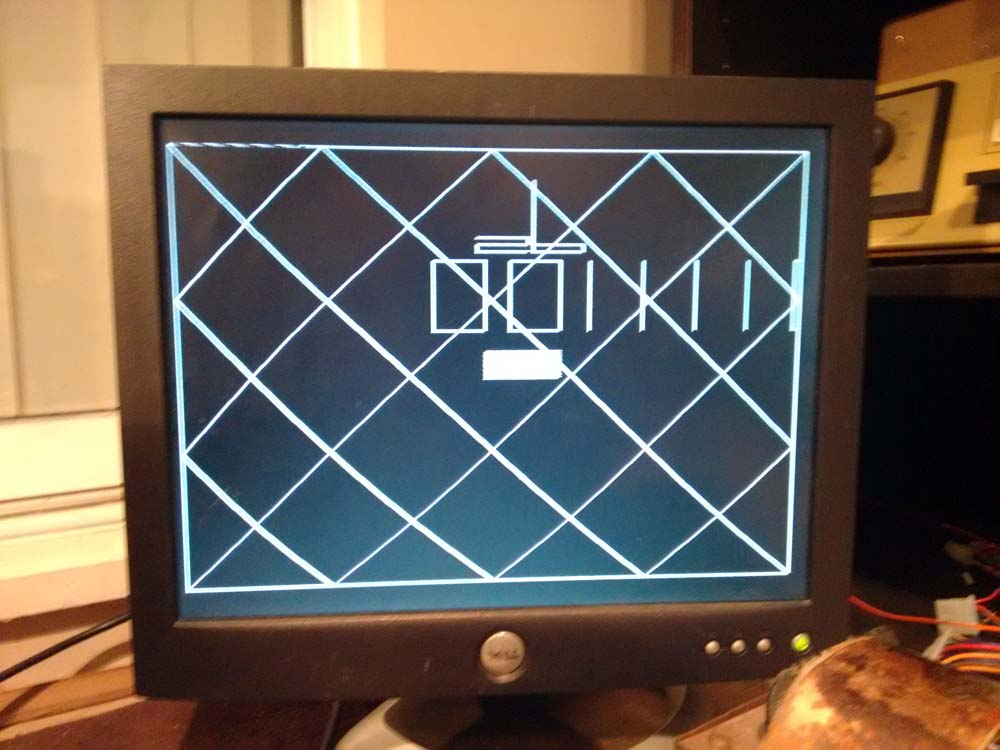
On the power up I was greeted by this screen:

The RAM @D6 is a 6264 located on CPU board (fault was surely on this board since I succesfully swapped a good one) used in pair with another one @E6 , both are adressed by the near custom ’48’ which is a sprite address generator:

For first I went to replace both RAMs (sometimes the board booted showing an error also on the one @E6) but this didn’t cure the problem as well swapping a good known custom ’48’ had no effect.Probing these RAMs revealed some address lines stuck high.Looking at the schematics of Pac-Mania (which runs on same hardware) I figured out that adress lines from custom to RAMs are driven by two 74LS365 @H6 and @L6.

Parts mounted on the PCB were from Fujitsu which means high chance of failure:

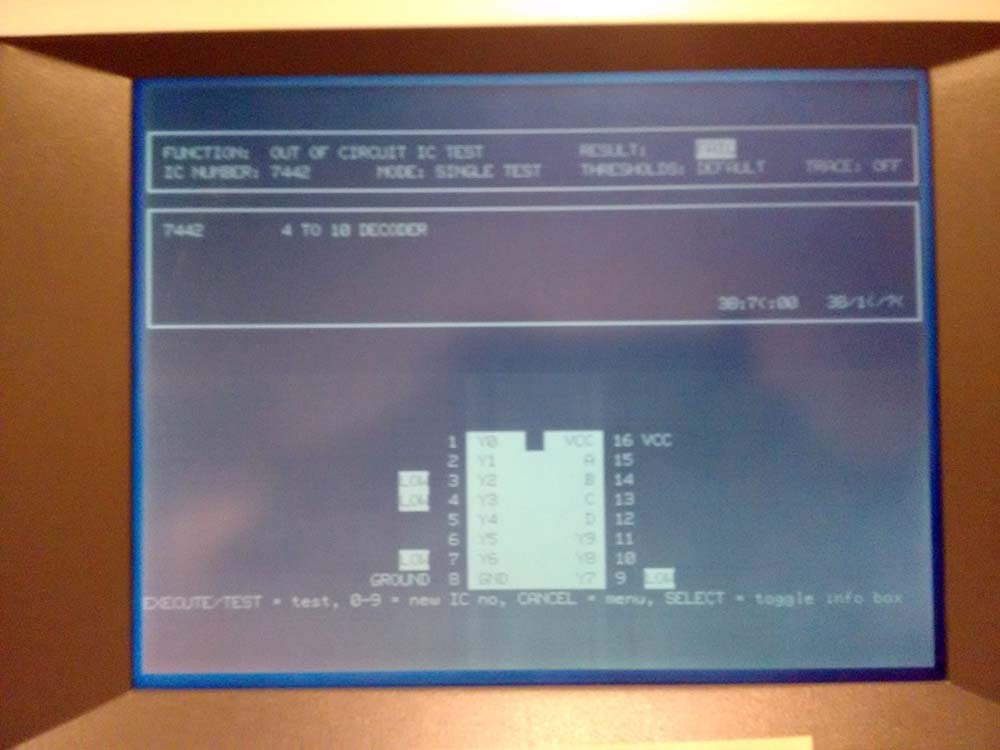
After a quick test with my HP10529A logic comparator (which confirmed me troubles on all outputs) I decided to remove them.They both failed in my programmer:

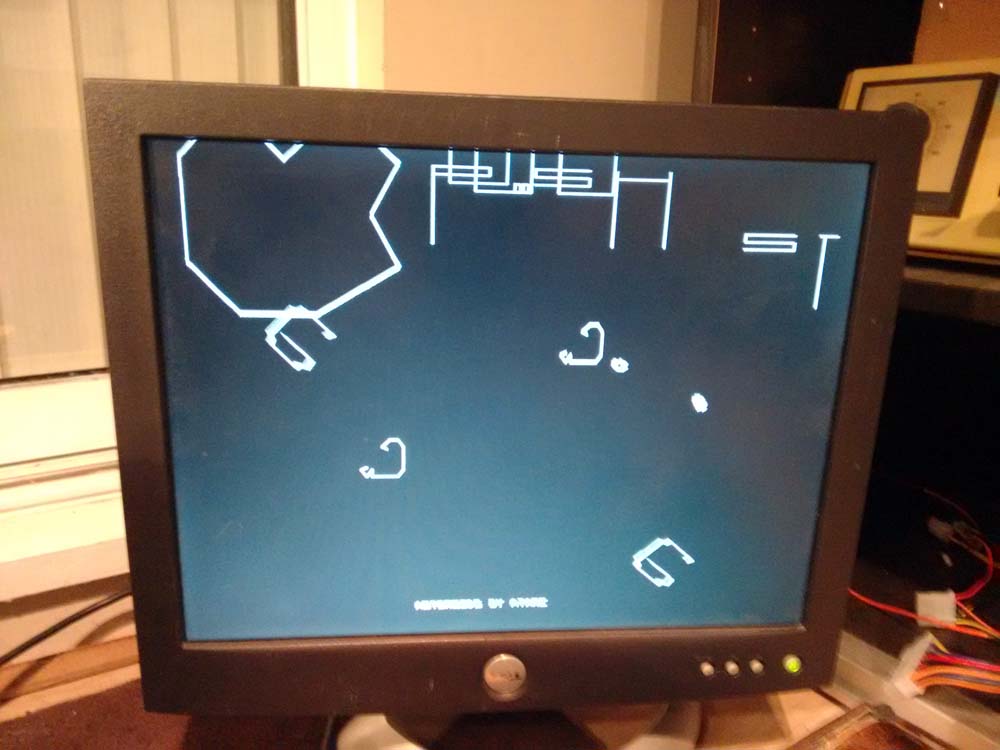
This cleared the error on startup so board successfully booted into game but sprites were all blocky:
![]()
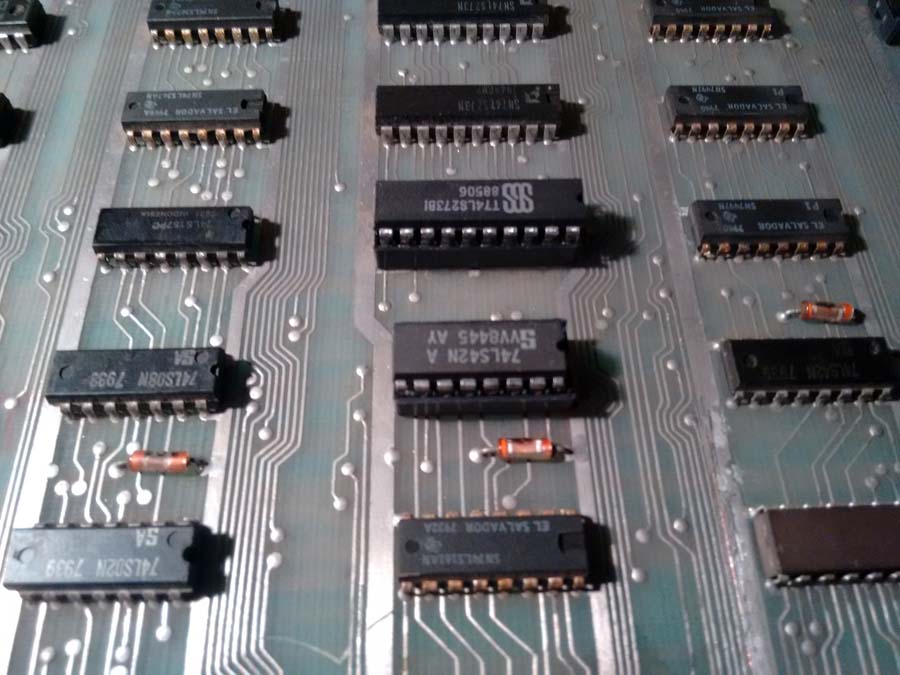
Judging from the kind of fault on screen, this, more than an addressing issue, had to have something to do with data.Always looking at schematics I noticed that data bits from the custom ’48’ and RAMs are routed to two 74LS377 @A3 and @A4 :

and from these to the custom ’39’ sprites generator:


Piggybacking the two 74LS377 I could partially restore sprites :
![]()
This lead me to remove and replace both.The desoldered ones failed when tested out of circuit :


Sprites back again in all its glory and board 100% fixed!
![]()
Some days ago I had on the bench this original Pitfall II PCB:

Board booted but all characters/texts were missing and also sound was totally absent:

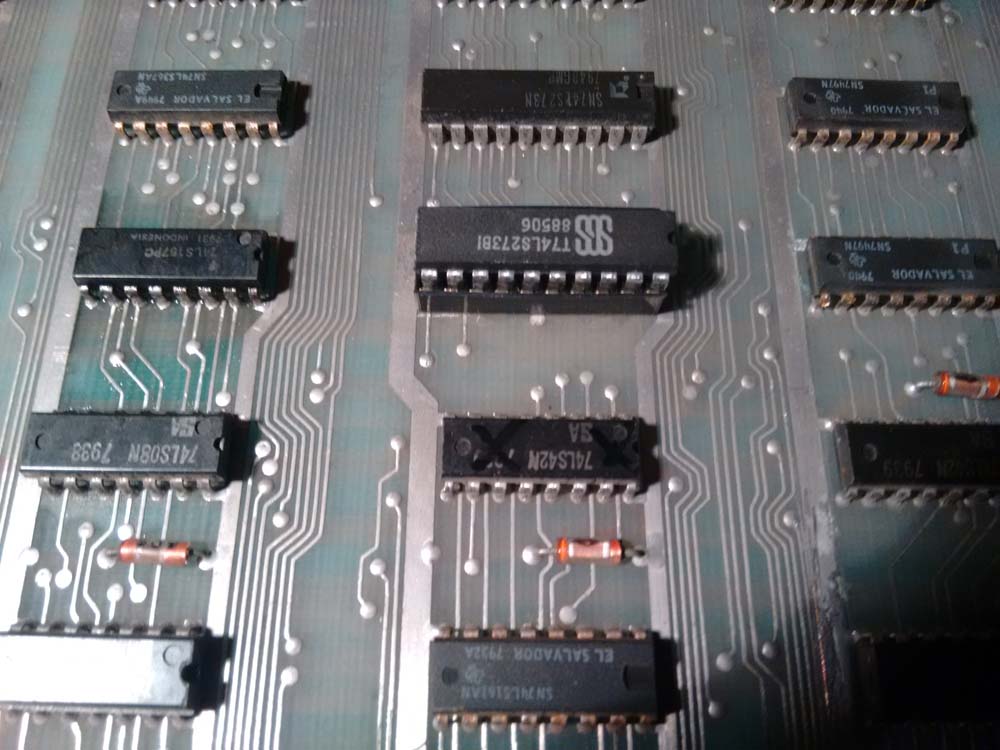
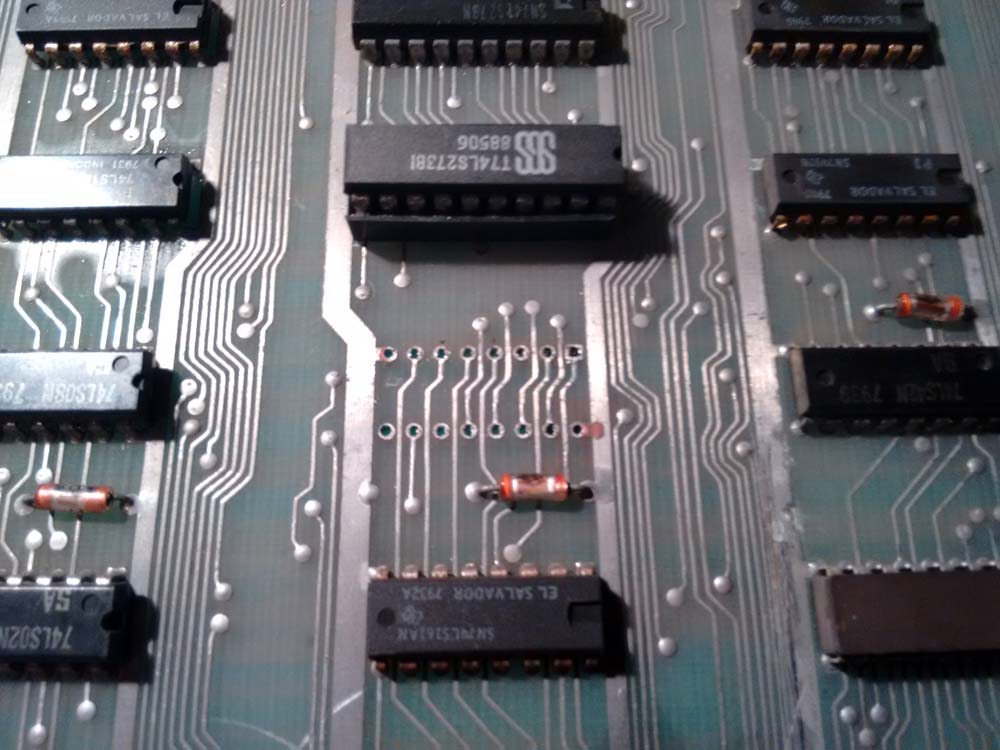
I started to check the circuit around the six tiles/characters ROM and found nothing of abormal until I came across a 74LS273 @IC39 with missing clock on pin11:

As you can see from the above picture someone had already socketed it but broken the trace going to pin 11, he tried also to patch this but didn’t make a good work ending up there was no perfect continuity (45 Ohm measured) between this pin and above pad :

Once established connection, all missing characters were back again:

So I moved to troubleshoot the lack of sound.Putting my fingers on solderside pins of the LA4460 amplfifier didn’t produce any noise at all so I was sure that it was bad since I could get sound from its input (pin2) connecting it to an external amplifier but nothing on its outputs (pin 7-9).So, I removed the amplifier and put a good one back:

But I was wrong, still no sound at all.So, I went look at schematics of Choplifter that, though runs on different Sega hardware (System 2 while Pitfall II is on System 1), shares the same audio circuitry:

I had not taken into account the pin 6 of the LA4460 which is called ‘MUTE’.This pin when tied low, like its name says, mutes the outputs.So, I went to probe it on the board and, indeed, it was stuck low.I could trace it back to pin 16 of a BA12003 @IC129 (a Darlington transistor arrays) :

The input (pin 1) was low so signal was not inverted internally (like schematics show) and outputted high :

I desoldered and tested it out of circuit where it failed:

I replaced it with a compatible ULN2003:

and sound was back again.End of job.
Laser Ghost (317-0164) added
Added japanese version of Laser Ghost to the list. This version is untested on real hardware for now.