ReproductionsComments Off on Konami ‘501’ reproduction
Apr282019
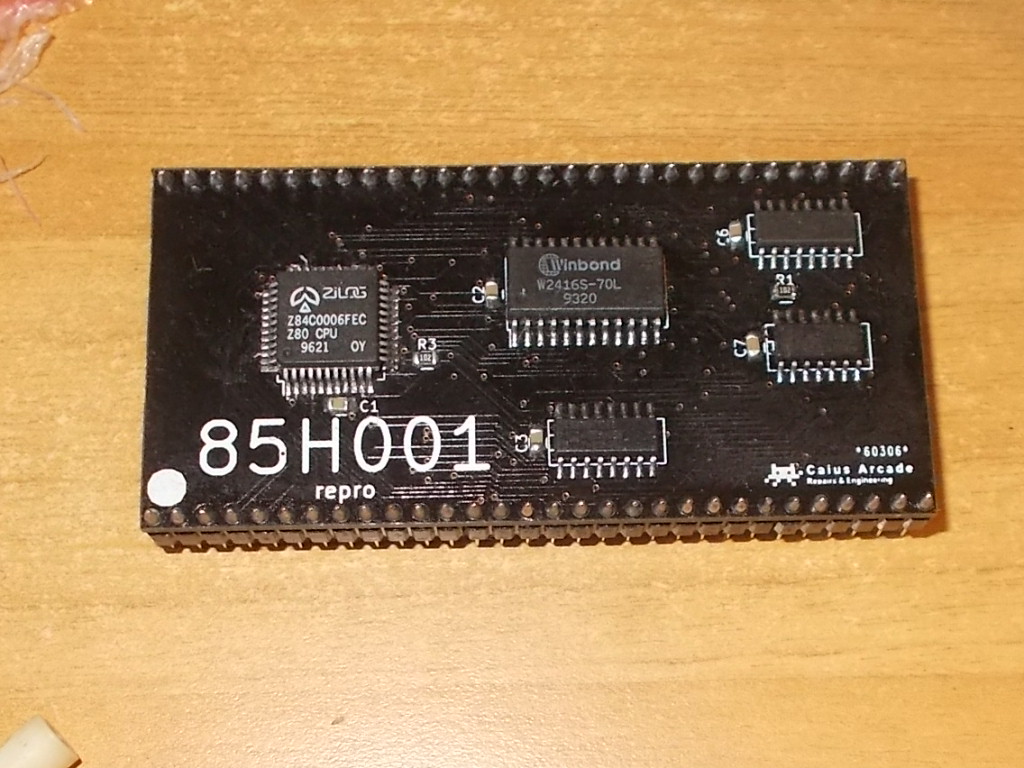
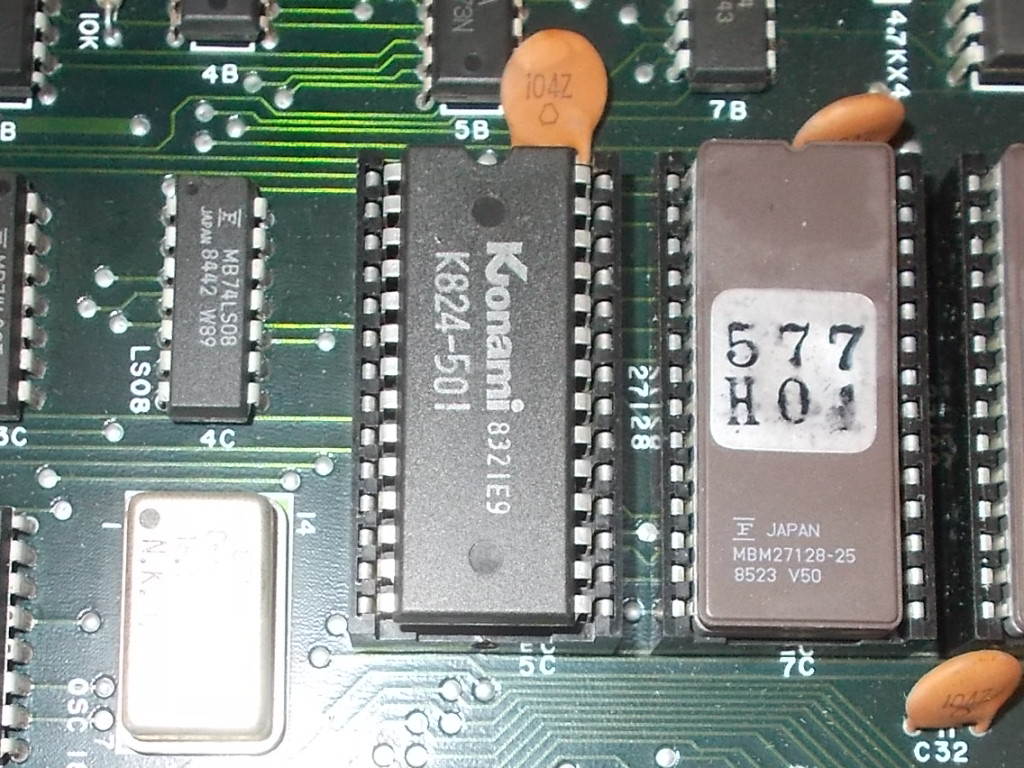
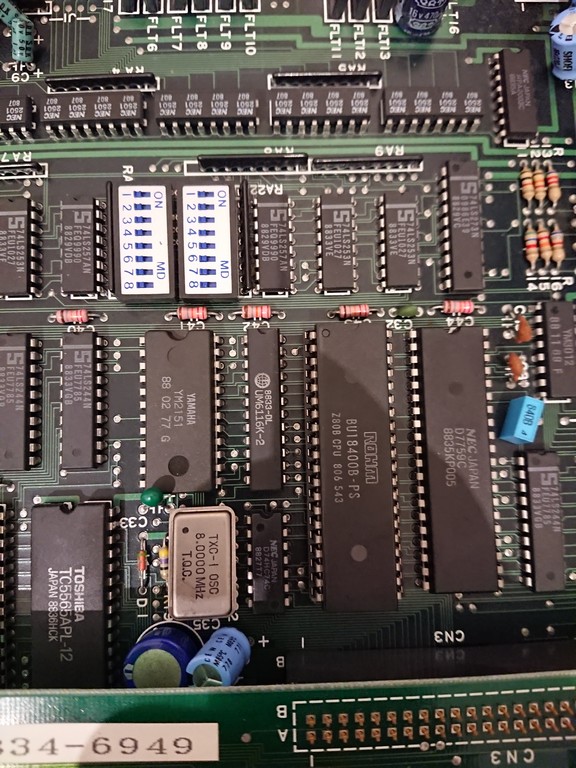
The Konami ‘501’ is one of the many custom ICs you probaby encountered when dealing with PCBs from this manufacturer.Most of times the chip (28 pin 600 mil DIP package) comes with scratched-off part name, sometimes not like on my Rush’n Attack PCB:
It can be found on not so many PCBs like shown on this useful spreadsheet (credits to ‘mattosborn’ on KLOV forums)
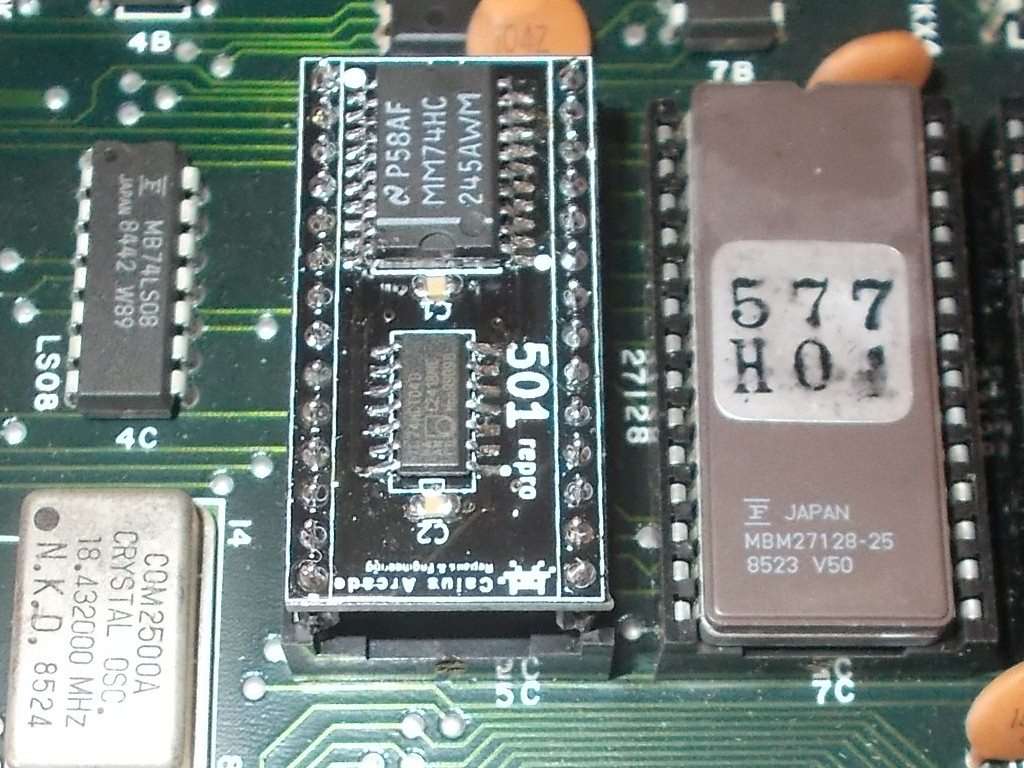
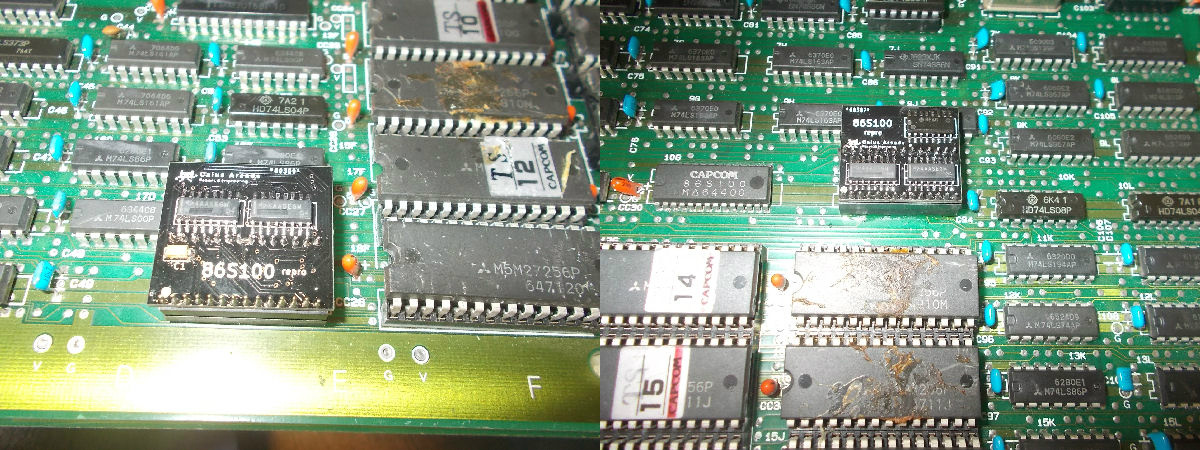
Actually there is already a reproduction of it which uses the ColinD CPLD 28 pin board (based on Altera EPM7064S) of which ‘Porchy’ wrote the code (available here for download).I simply made what I call a ‘poor man’s’ version using simple surface mounted TTLs gates:
Some weeks ago I bought this game for my collection in really great conditions.
While playing, I messed up with the external potentiometer of my supergun and menaged to detach it for a brief moment . Result was that the power supply jumped to 7V on the 5V line and 18V on the 12V line.
With my surprise, the game was not totally fried, sprites were still good but all the background was totally black
Also the game had no sound ( but the amplifier was still good)
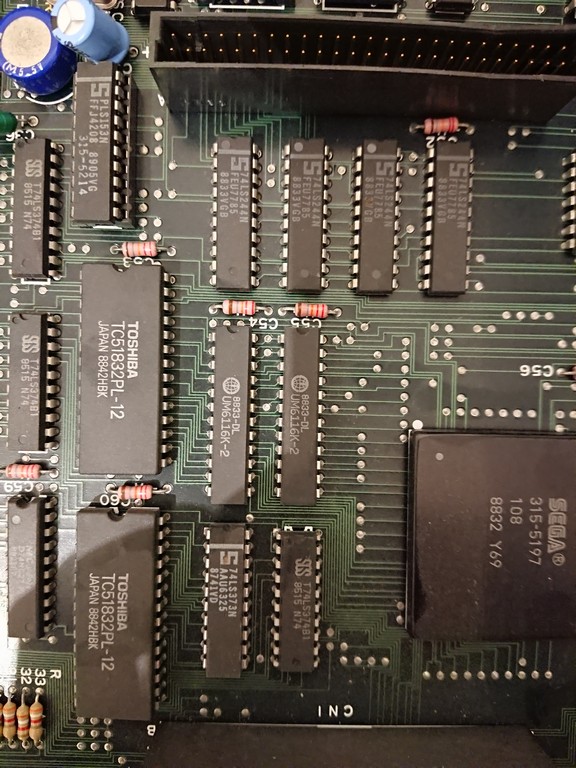
For the graphics problem, 2k sram @H15 and H16 had all the data lines in the grey area.
Changing them restored completely the graphics.
The sound had also another UMC 6116 sram and the data lines were completely in the grey area.
Changing it led to no improvement but after checking the connections I found out D6 line was not connected to the Z80 but only to the YM2151.
I probably broken it during the exhange. Restoring the line led to a fully working game.
In the end it appears that UMC parts were the weakest devices of the pcb , I replaced all the ones which were present on the pcb
Code name : ’86S100′.Nothing really ‘TOP SECRET ‘, just a little custom IC you can find on many Capcom arcade PCBs from pre-CPS1 era.To name few :
1943
Bionic Commando
Black Tiger/Black Dragon
Mad Gear
Rush & Crash/The Speed Rumbler
Side Arms
Street Fighter
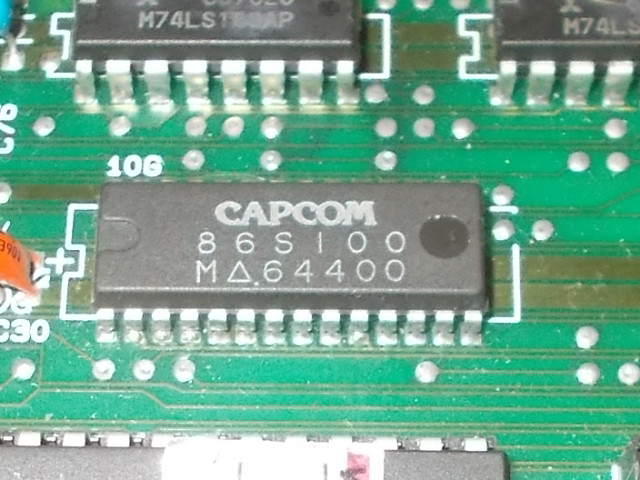
The chip is a 28 pin one with plastic package and pitch of 1.778mm :
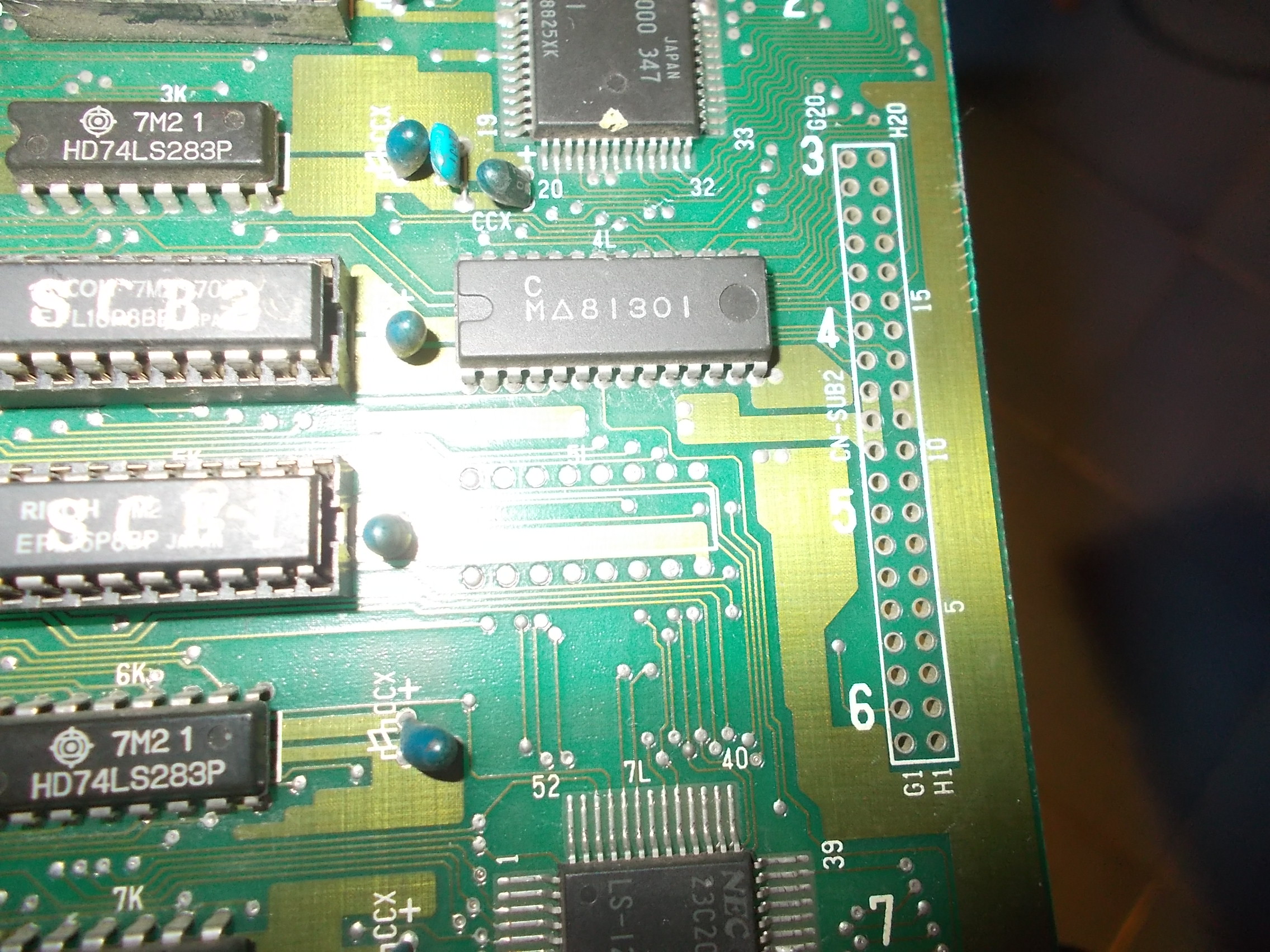
Sometimes you can find it under different part name but same functions, like on a Mad Gear PCB :
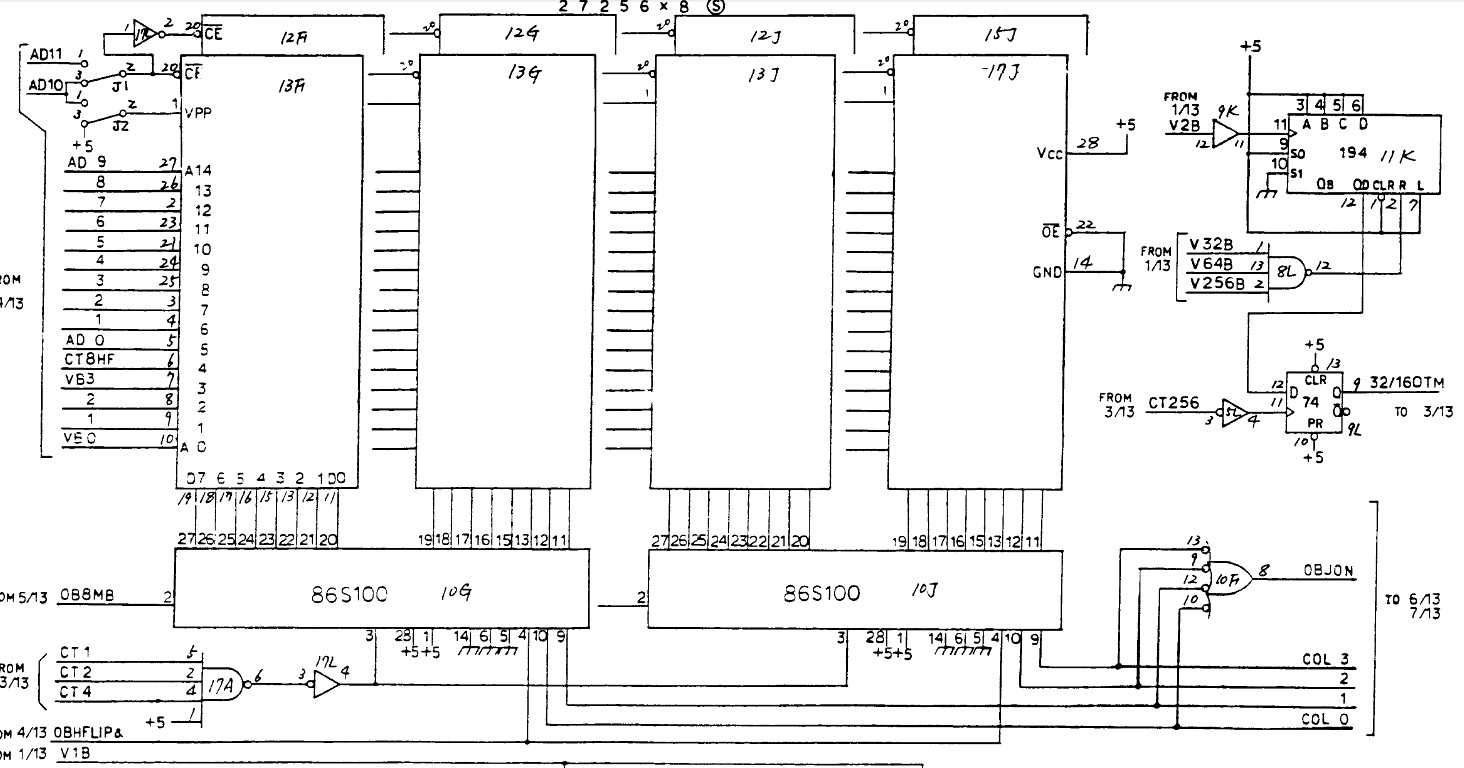
This custom IC is involved in graphics generation being directly connected to data bus of the GFX ROMs as shown on Bionic Commando schematics:
Being a not really reliable part (sometimes you can find it literally ‘fried’) and quite hard to obtain as spare I decided to give a try to reproduce it.As usual I looked at how bootlegers re-engineered it and how the custom functions were implemented in earlier Capcom hardware.I succeeded in my purpose it but I actually had to make two versions of it because the original ’86S100′ can work in two modes depending on the logical state of its pin 1 (if hard-wired to GND or VCC).
Here’s final testing of both reproductions on a Bionic Commando and 1943 PCBs:
PCB Repair LogsComments Off on Teenage Mutant Ninja Turtles repair log
Apr222019
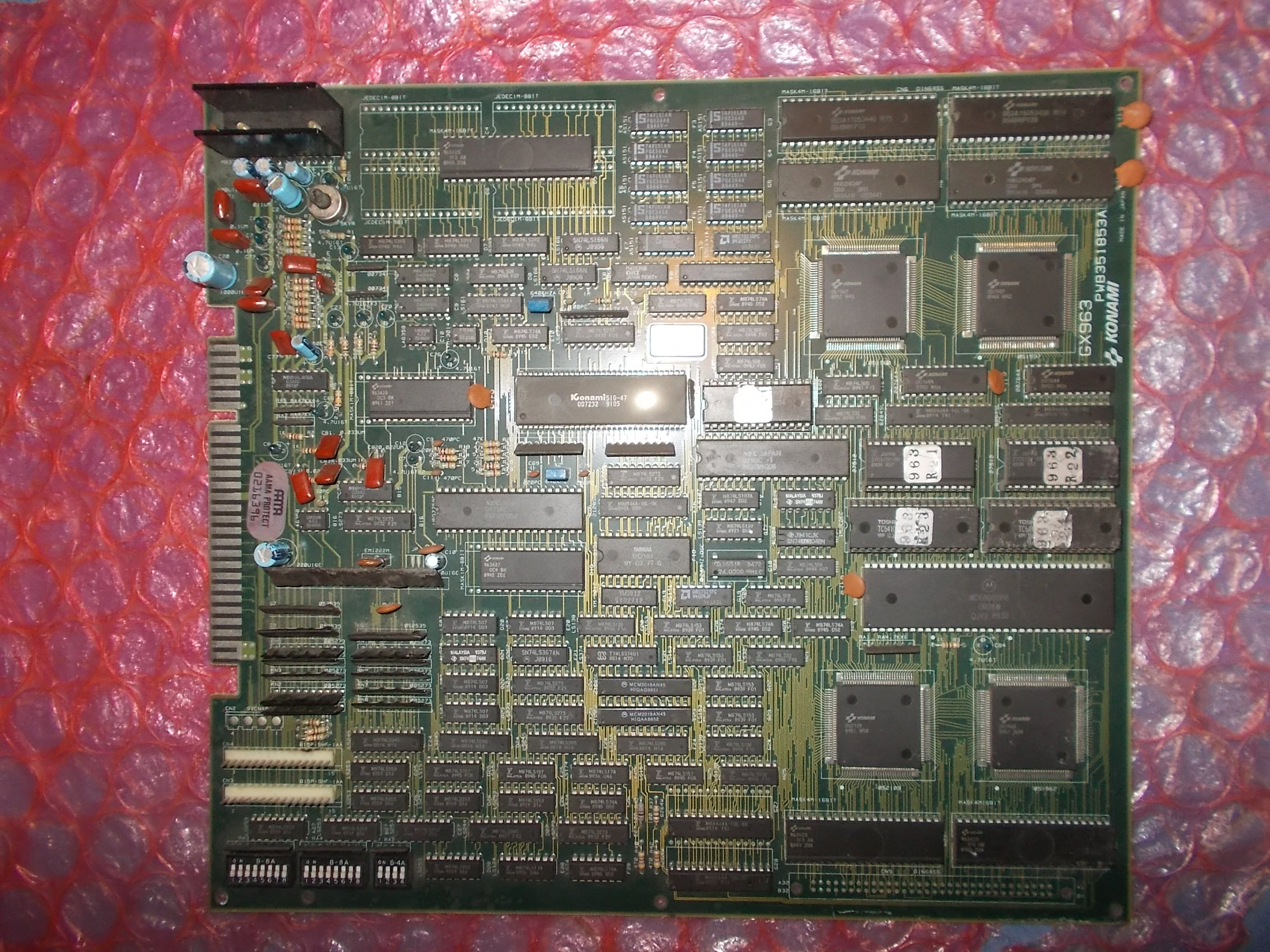
Got for repair from the States this Teenage Mutant Ninja Turtles PCB (actually the US 4 Player ROM set)
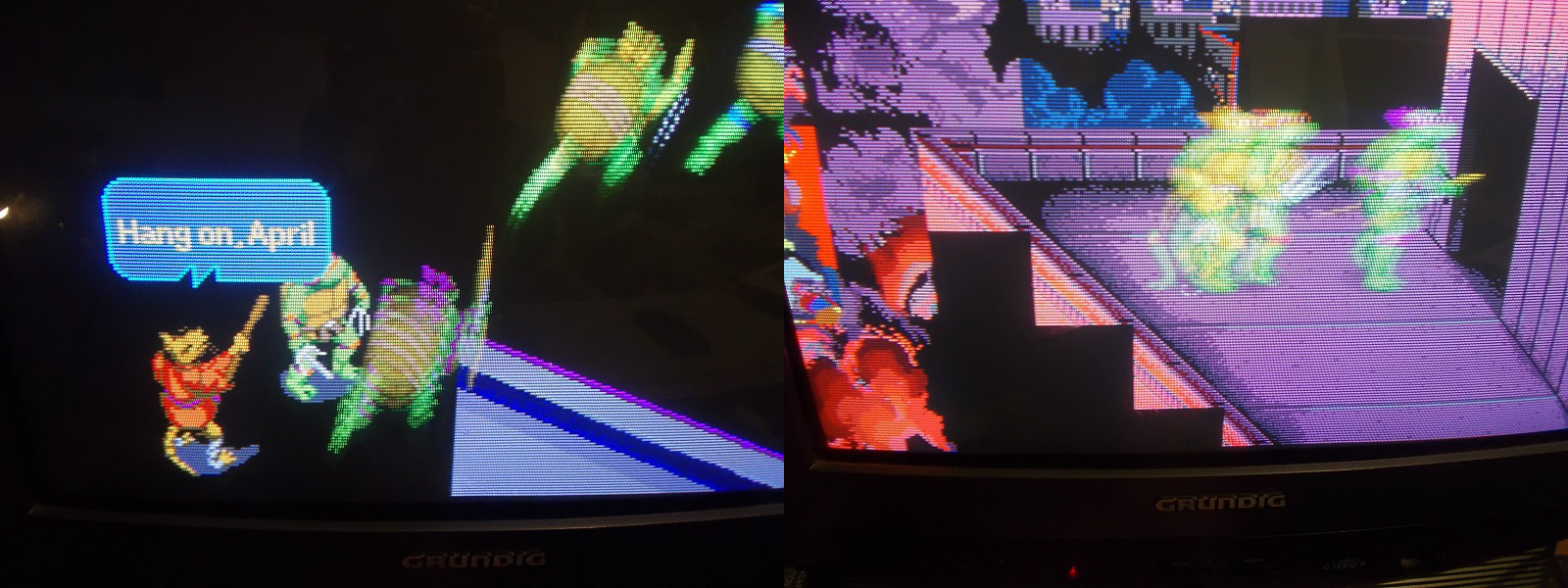
Board booted up with noticeable graphical issues, both sprites and backgrounds were affected as they were missing parts.Also colors were wrong, screen was blue tinted (hard to distinguish in the video and pictures though)
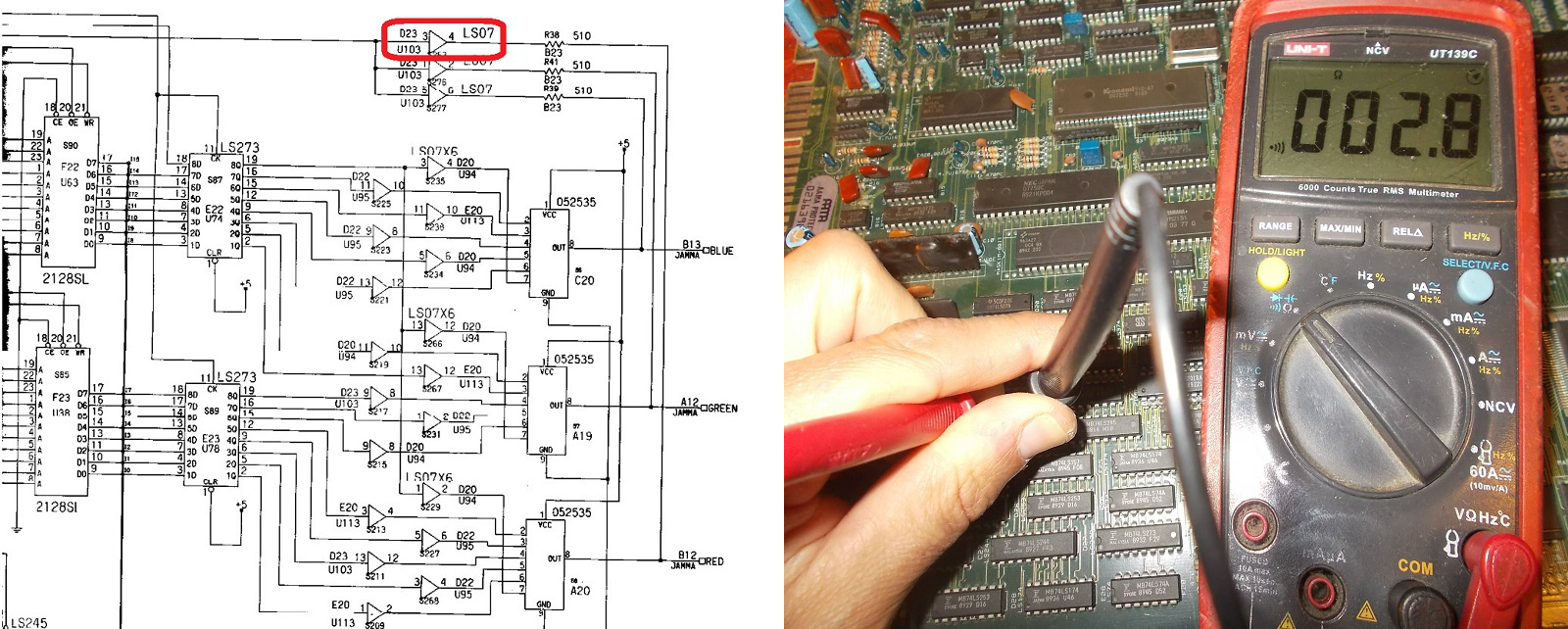
The palette circuit is made of two 2k x 8-bit static RAMs, a couple of latches (74LS273), some open collector buffers (74LS07) and finally three ‘052535’ RGB DACs that outputs each color to respective JAMMA edge connector pins :
A blue dominant means the RED color has some troubles so I went to probe around this part of circuit and found the 74LS07 @D23 (from Fujitsu, obviously…) with an output (pin 4) shorted to GROUND :
Chip failed in that pin when tested out-of-circuit:
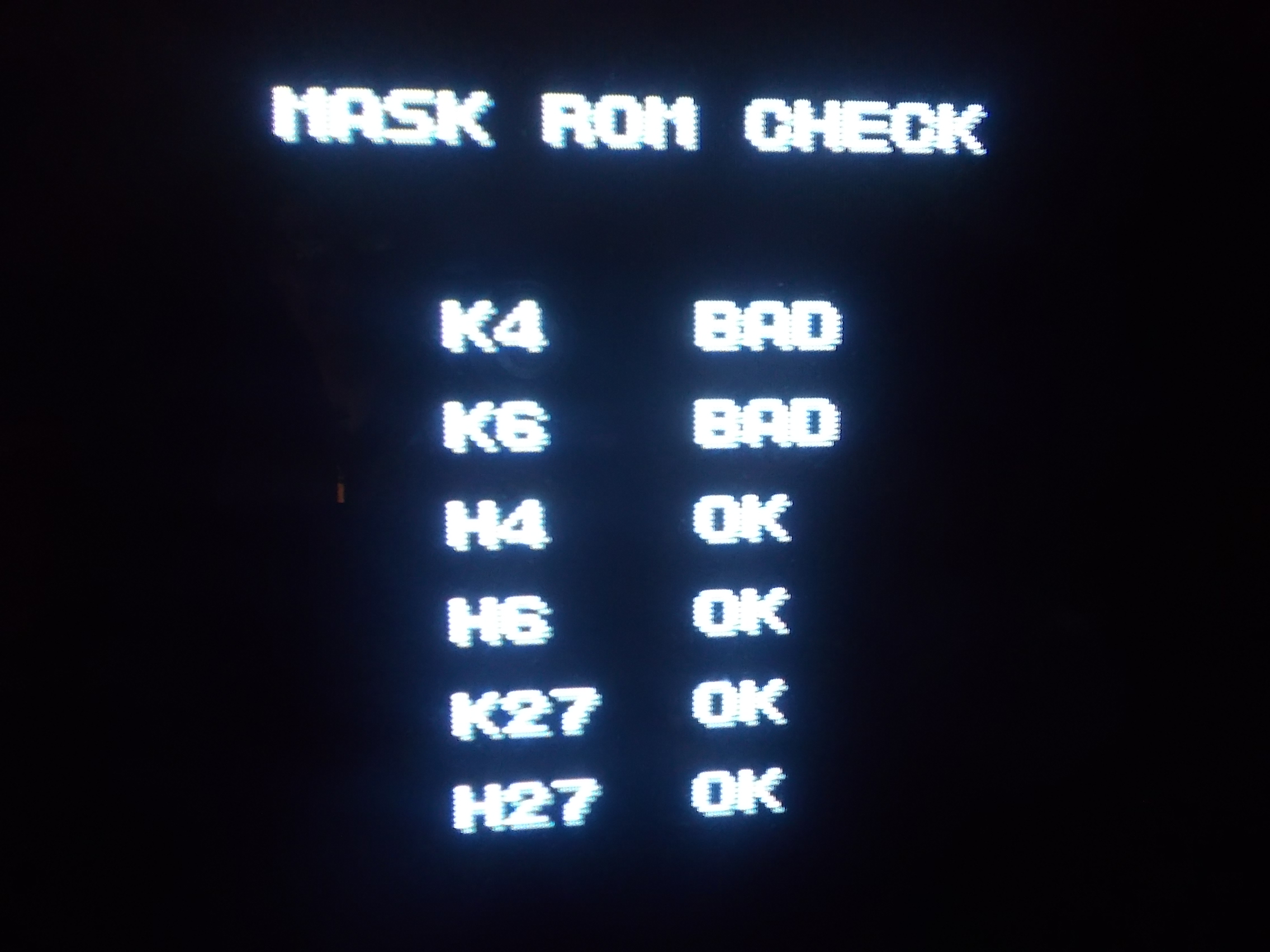
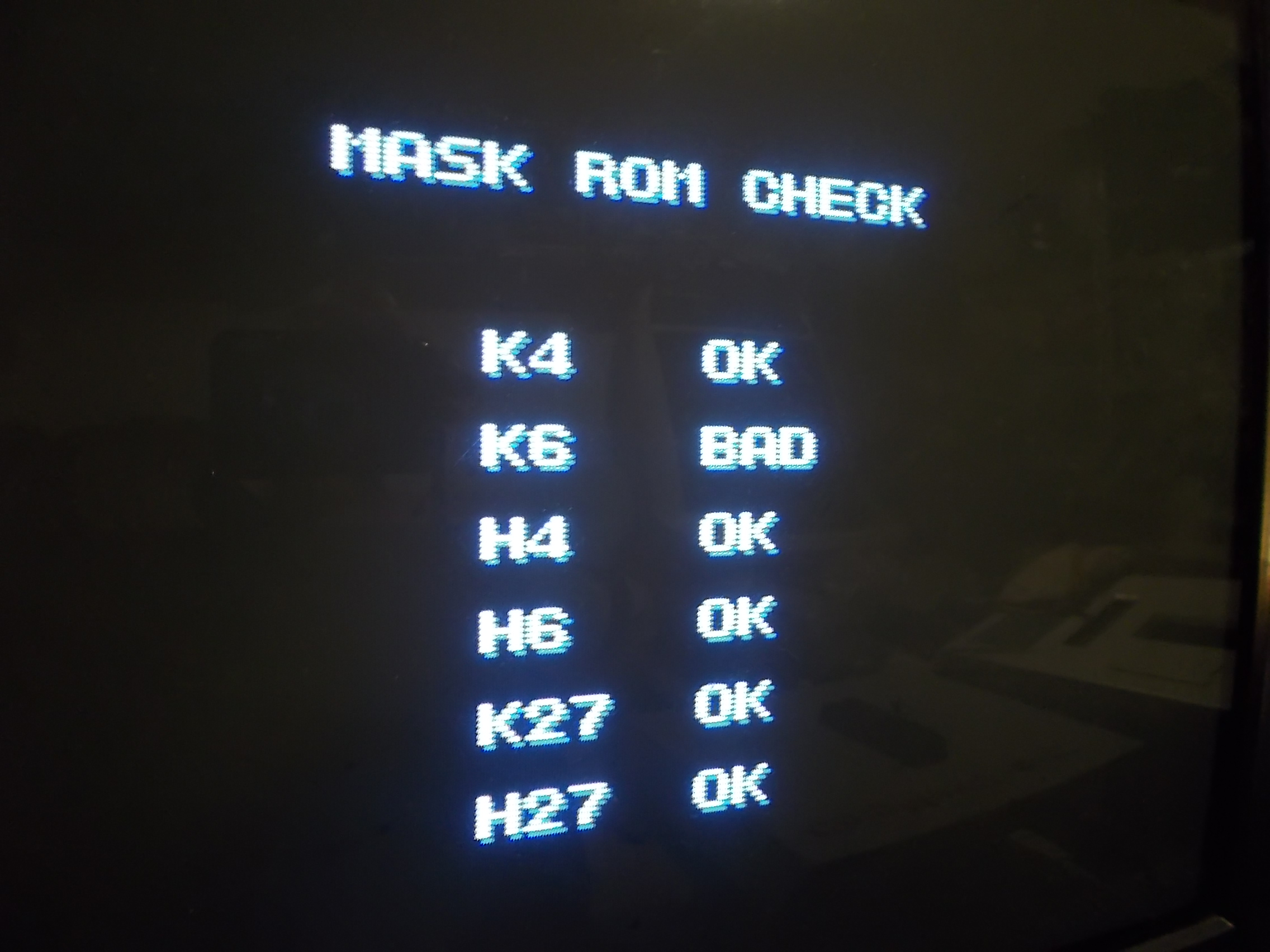
Replacing the TTL IC restored the correct colors so I moved on the grahical issues.I launched a MASK ROM check which reported two bad devices @K4 and K6:
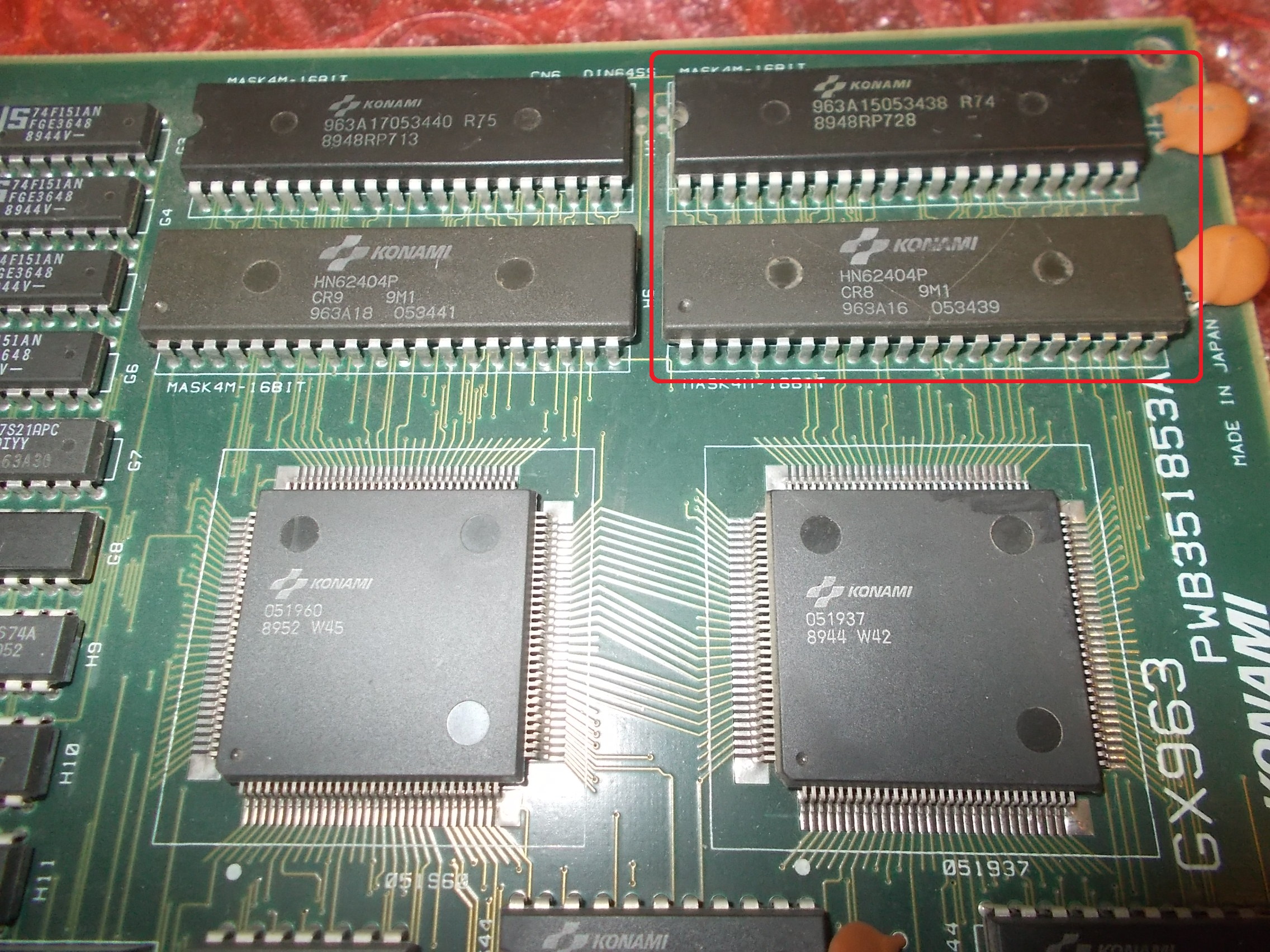
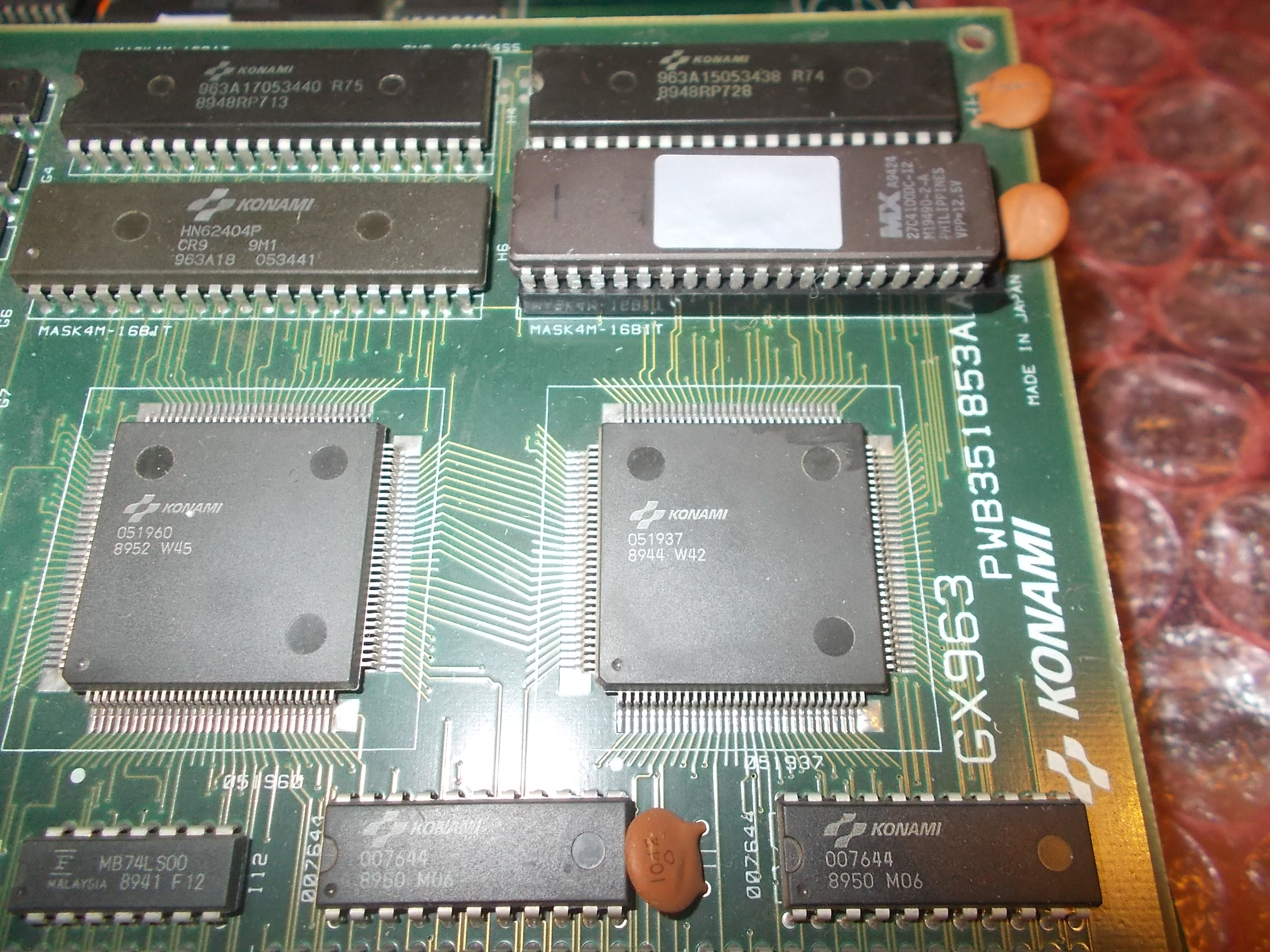
They are two of the four 4Mbit MASK ROMs that store sprites data:
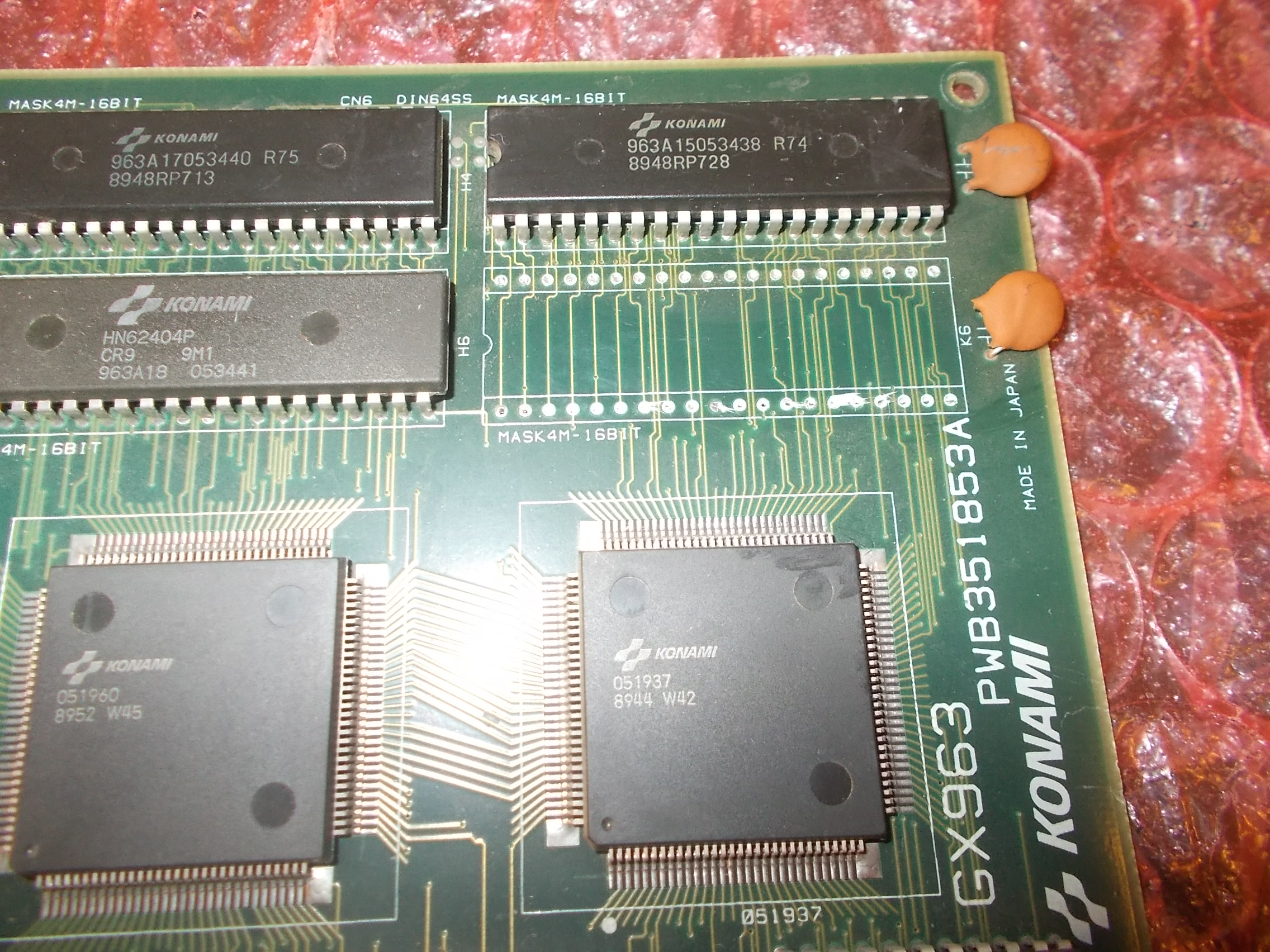
I removed the first device @K6 :
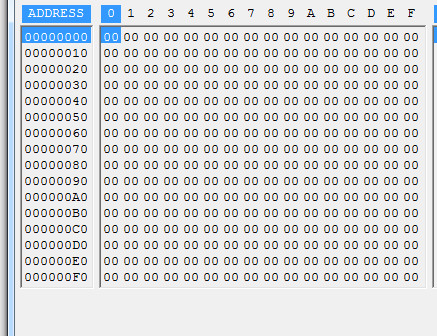
I dumped it, the resulting buffer of my EPROM programmer was empty so device was really bad :
I launched again a MASK ROM check, the device @K4 was reported as good this time so the bad one @K6 was affecting it (data/address busses are shared)
I replaced the bad MASK ROM with a programmed 4Mbit EPROM (I used a Macronix MX27C4100)
Sprites were restored and check no more complained :
But backgrounds were still missing parts :
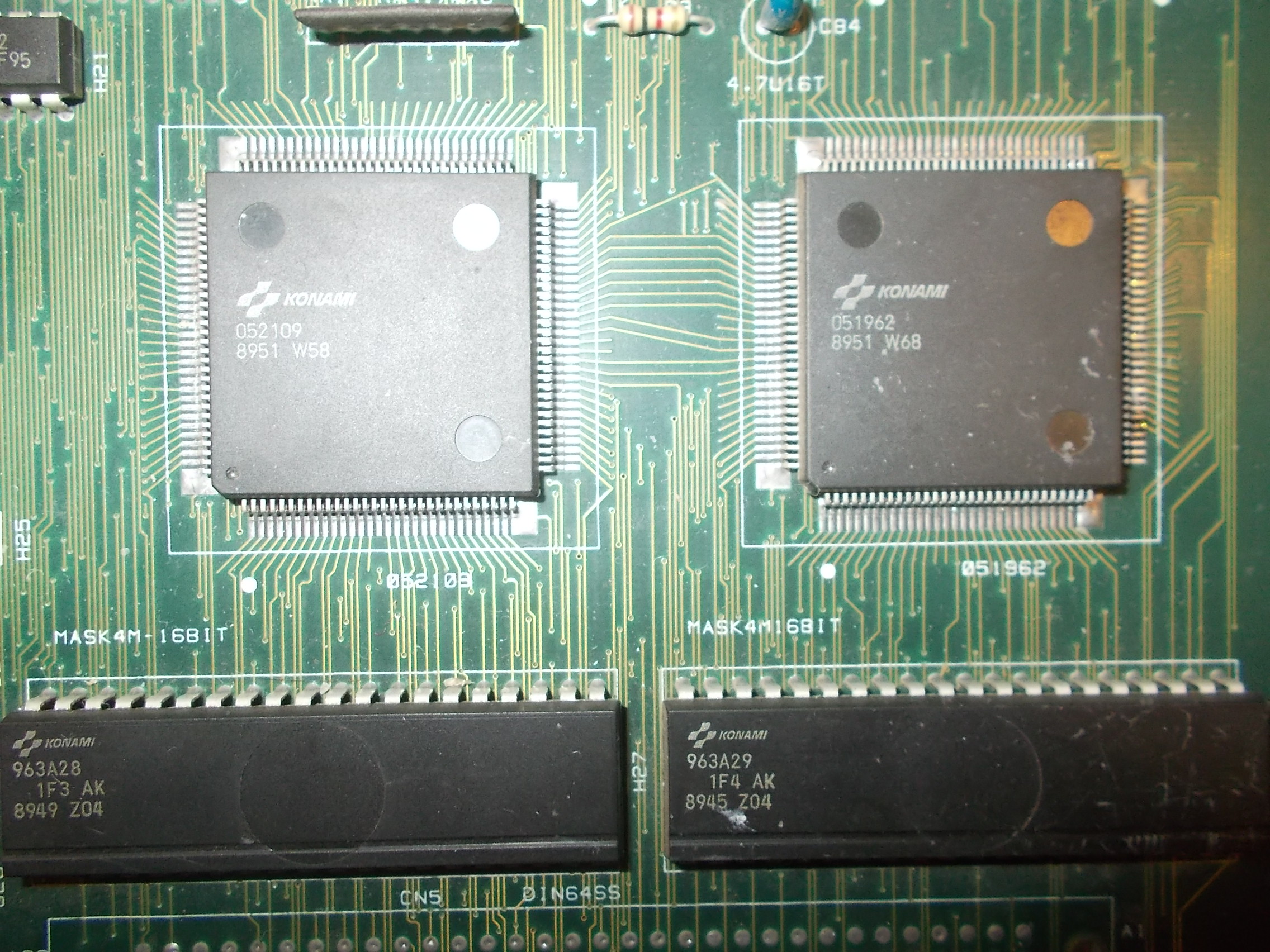
This part of graphics is entirely handled by the ‘052109’ and ‘051962’ custom ASICs:
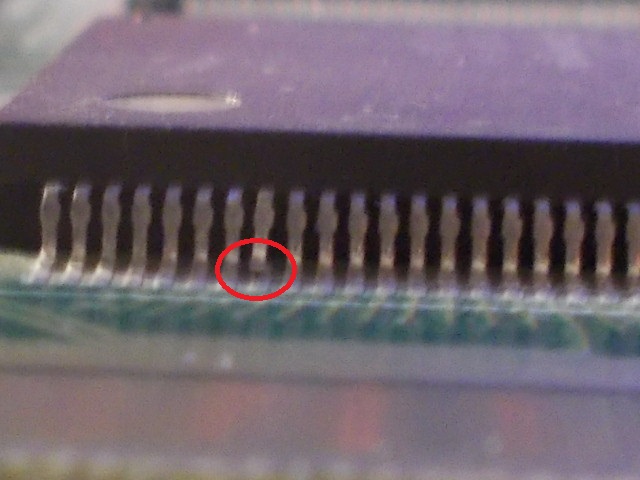
On a visual inspection I found a lifted pin on the latter:
I reflowed the pin and this fixed board completely.Repair accomplished.
I got a Megablast board that was not booting at all.
1) As reported on Caius Liquid Kids repair log (https://www.jammarcade.net/liquid-kids-double-repair-log/), it is common on these Taito F2 system boards that TC0220IOC custom chip is faulty in this case (I suspect plugging the board to the JAMMA connector upside down may fire that chip, sending it +12V via the I/O ports. That’s probably what happened here).
Indeed, after swapping the TC0220IOC chip from a donor board, the game booted and offered me a nice glitched screen:
2) Another common issue on these Taito F2 boards are the mask roms getting internal disconnections within time. So I started replacing the background ROM (C11-05 @ IC58) by an equivalent 27c400 programmed EPROM and got backgrounds fixed:
3) Anyway, all the sprites were missing. After a long search and many tries I found a weak signal on one of the RAMs data line that carry sprites information between the main CPU and the sprites generator custom chip TC0200. Replacing the RAM (a TMM2063AP @ IC50) made sprites appearing, but glitched:
4) I found out that one of the sprites ROM was dead as well (C11-04 @ IC31). Replacing it with a programmed 27C400 EPROM fully restored the graphics:
5) & 6) One last thing I didn’t mentioned yet was the sound that was scratchy. More precisely, sample sounds were clearly corrupted, not the FM sounds. With no surprise, I found out that both IC where audio samples are stored (C11-01 @ IC29 and C11-02 @ IC30) were dead. Replacing them with equivalent 27c040 programmed EPROMs totally restored the sound.
Board is now fully fixed. Here is an overview of the chips I had to replace on my board (interesting fact is that Caius had to replace the exact 4 same mask ROMs on another Megablast board: https://www.jammarcade.net/megablast-repair-log/):