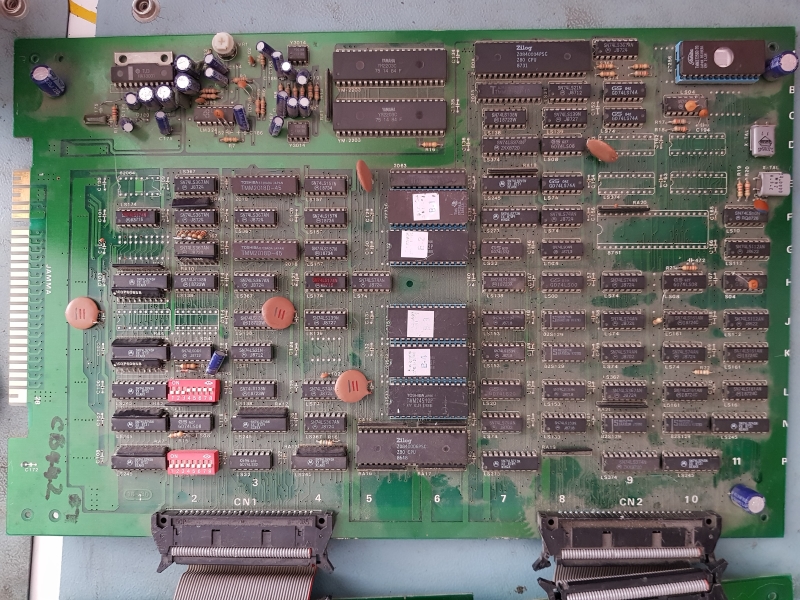
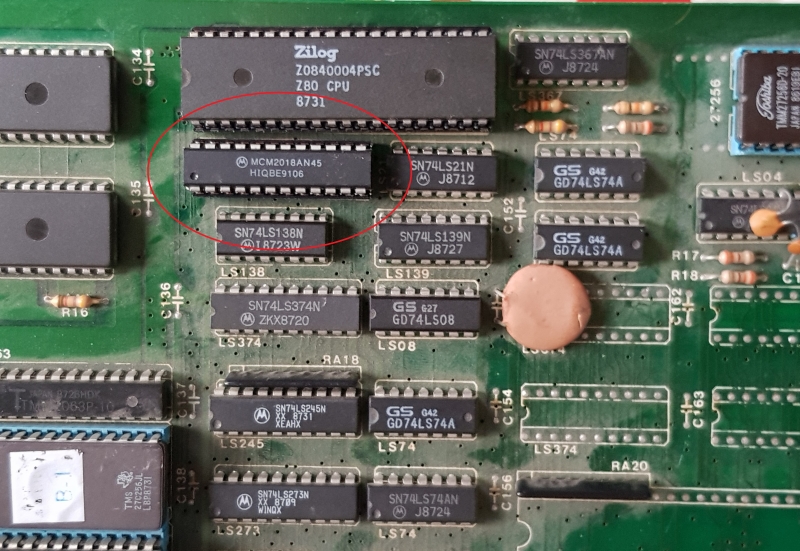
I got the same Black Tiger bootleg board back as in my repair log #3.
The sound had stopped working completely.
I did all the usual visual checks and reseating where I could but no joy.
I probed the Z80 CPU and found following a brief flicker at power on the /HALT pin was always asserted. I pulled the ROM and checked it in my programmer but it came back as good. There is nothing in the way of buffering in between the CPU and ROM.
I decided the quickest way to see what was happening here was to attach the logic analyser to the CPU address bus with the trigger set to the /M1 signal.
From here I could see that it started off good but failed when returning from a call. As the return address is pulled from the stack I decided to remove the RAM and test it. This turned out to be faulty reporting that bit 3 had become disconnected.
Replacing the RAM brought the sound back.
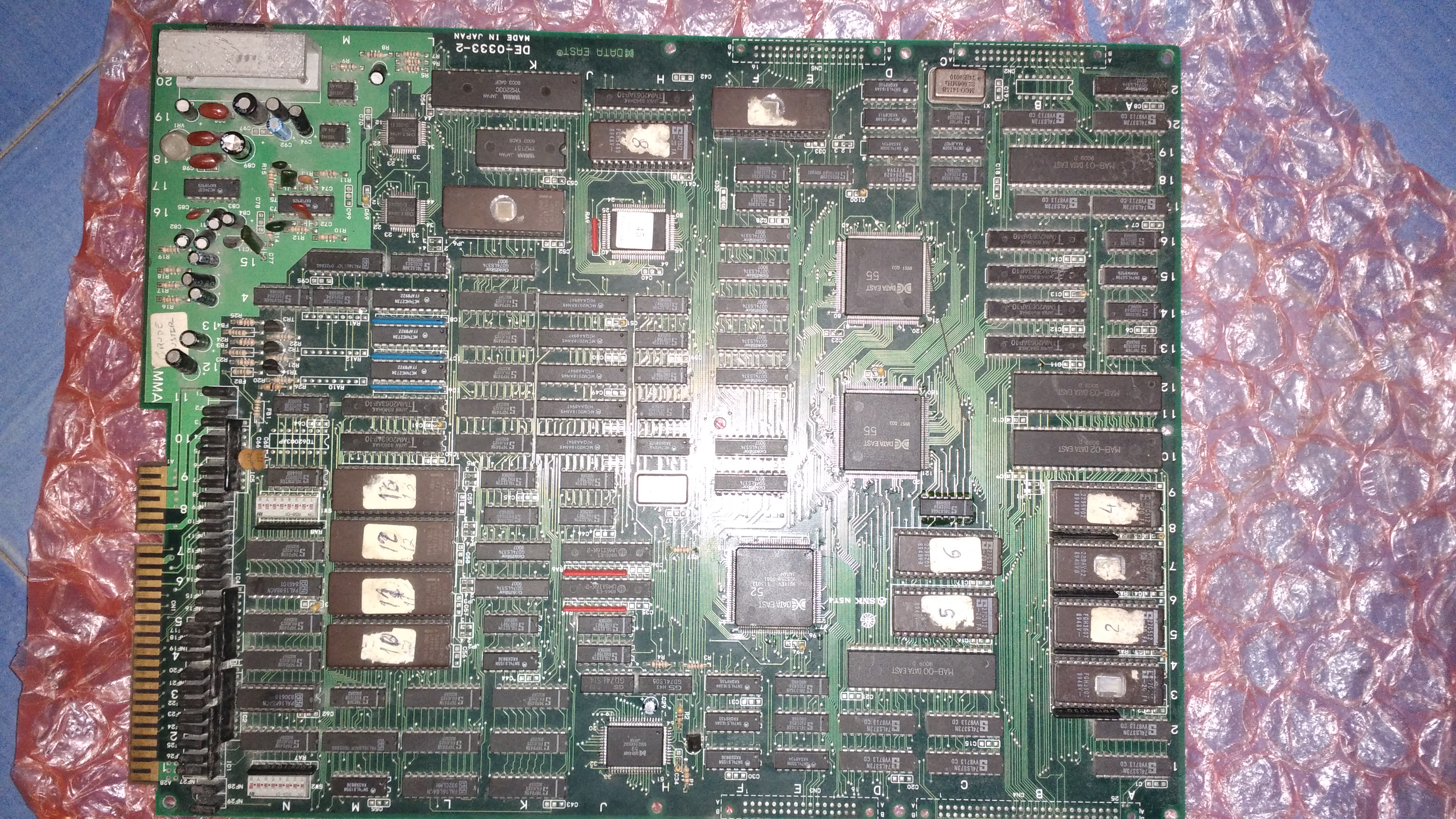
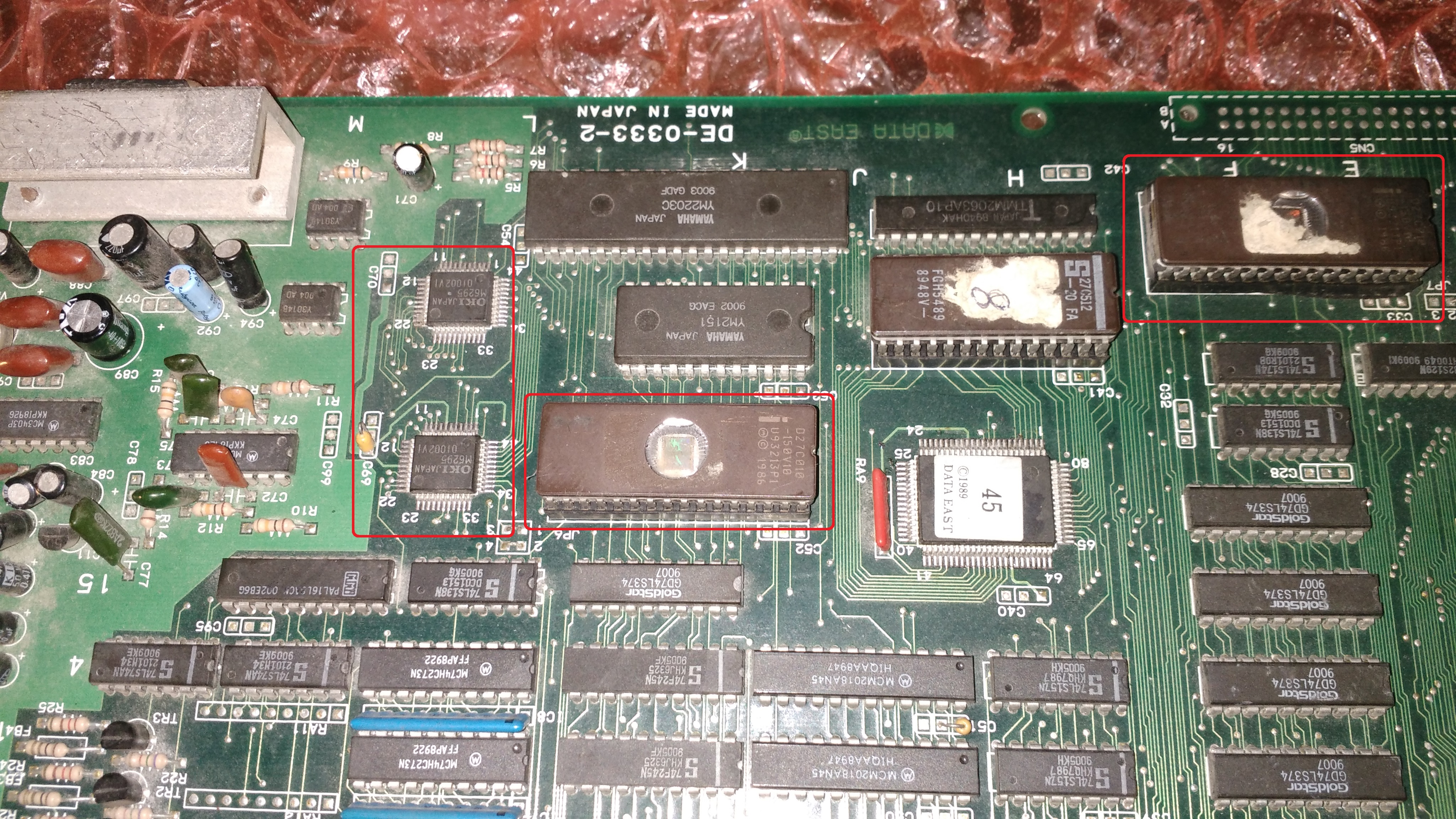
Got from Portugal this Crude Buster PCB (also known as Two Crude outside Japan), an unusual and underrated beat ’em up developed and published by Data East in 1991:
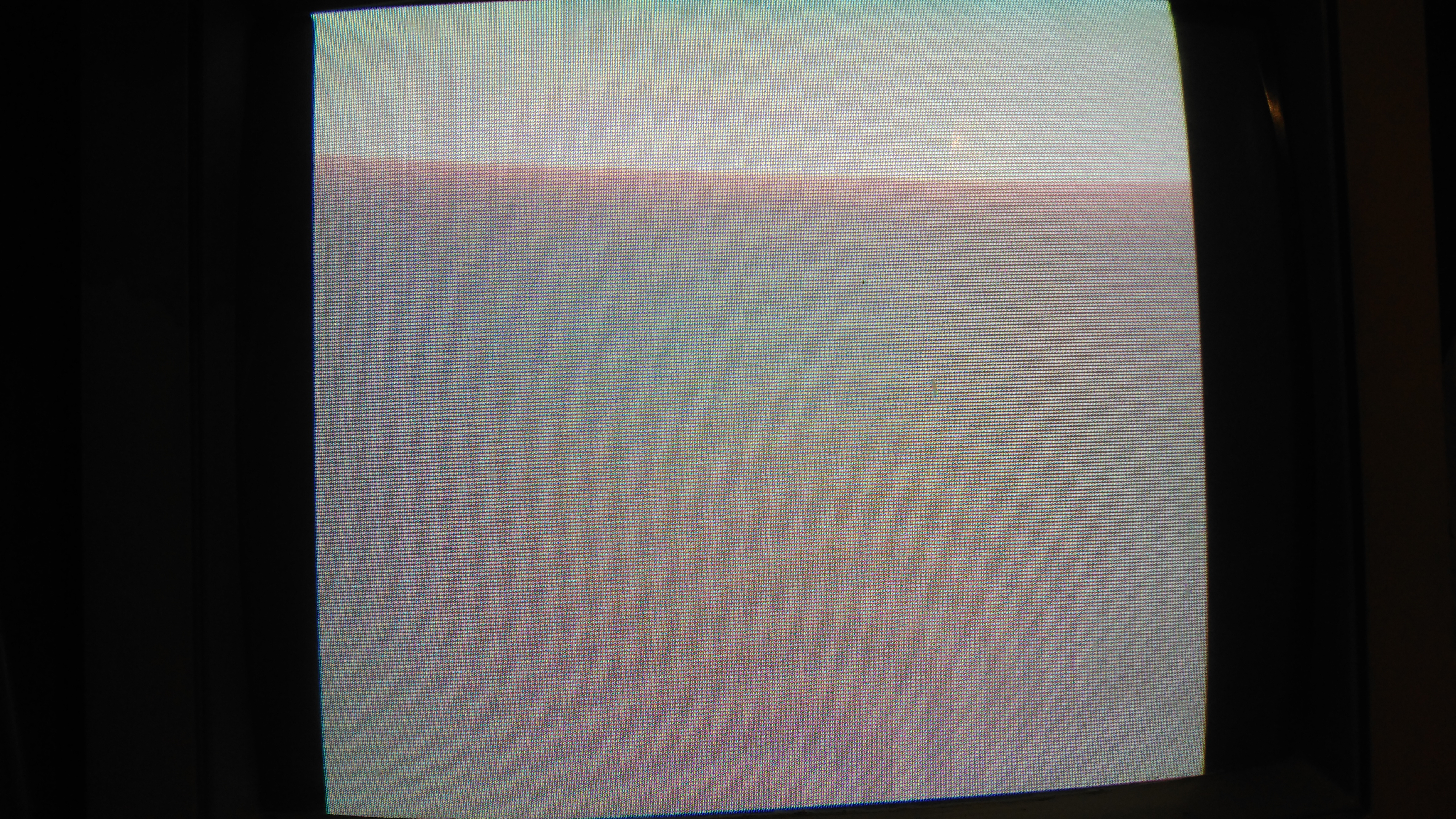
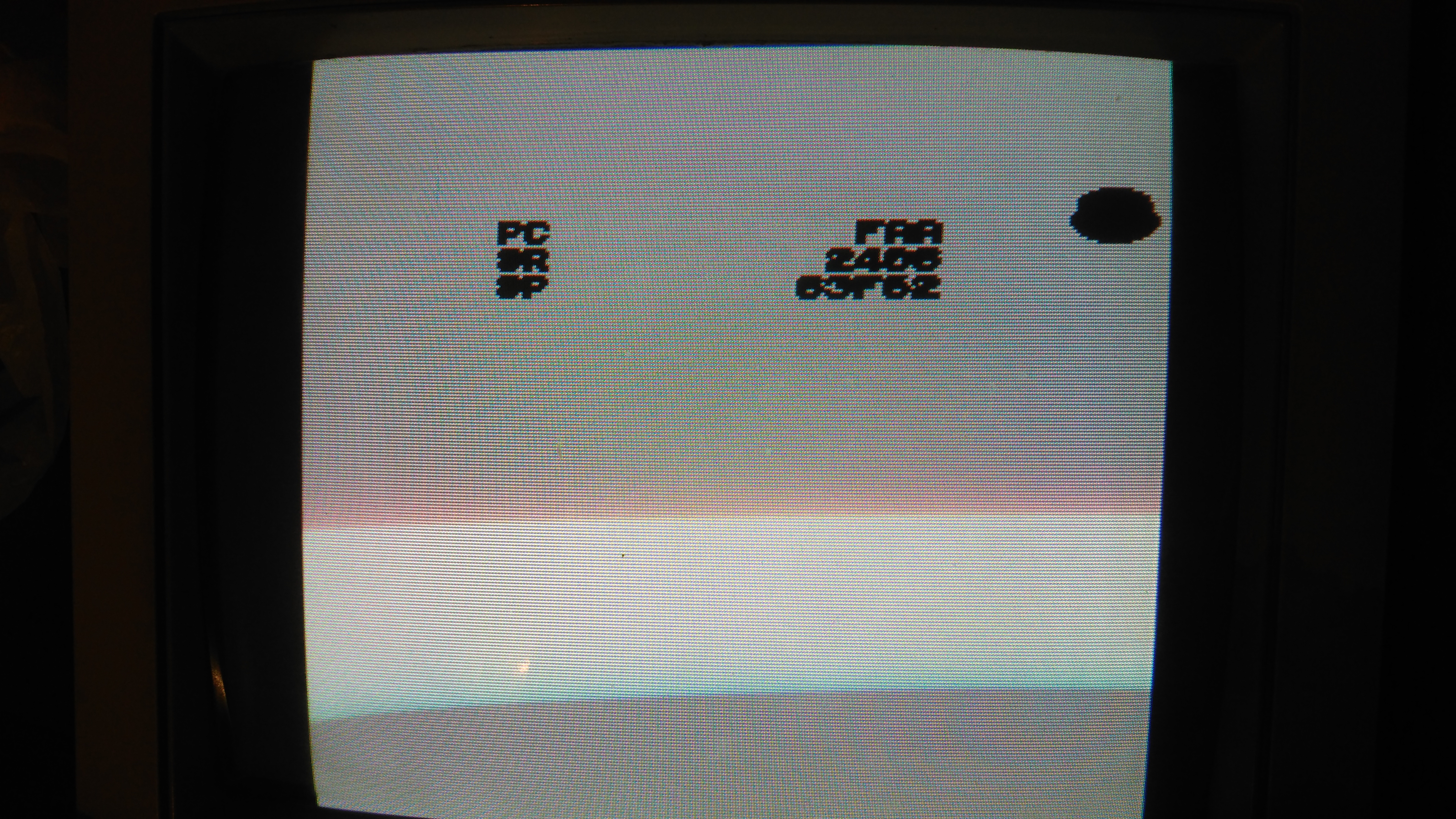
Board simply booted to a white static screen:
Blank screen on boot.
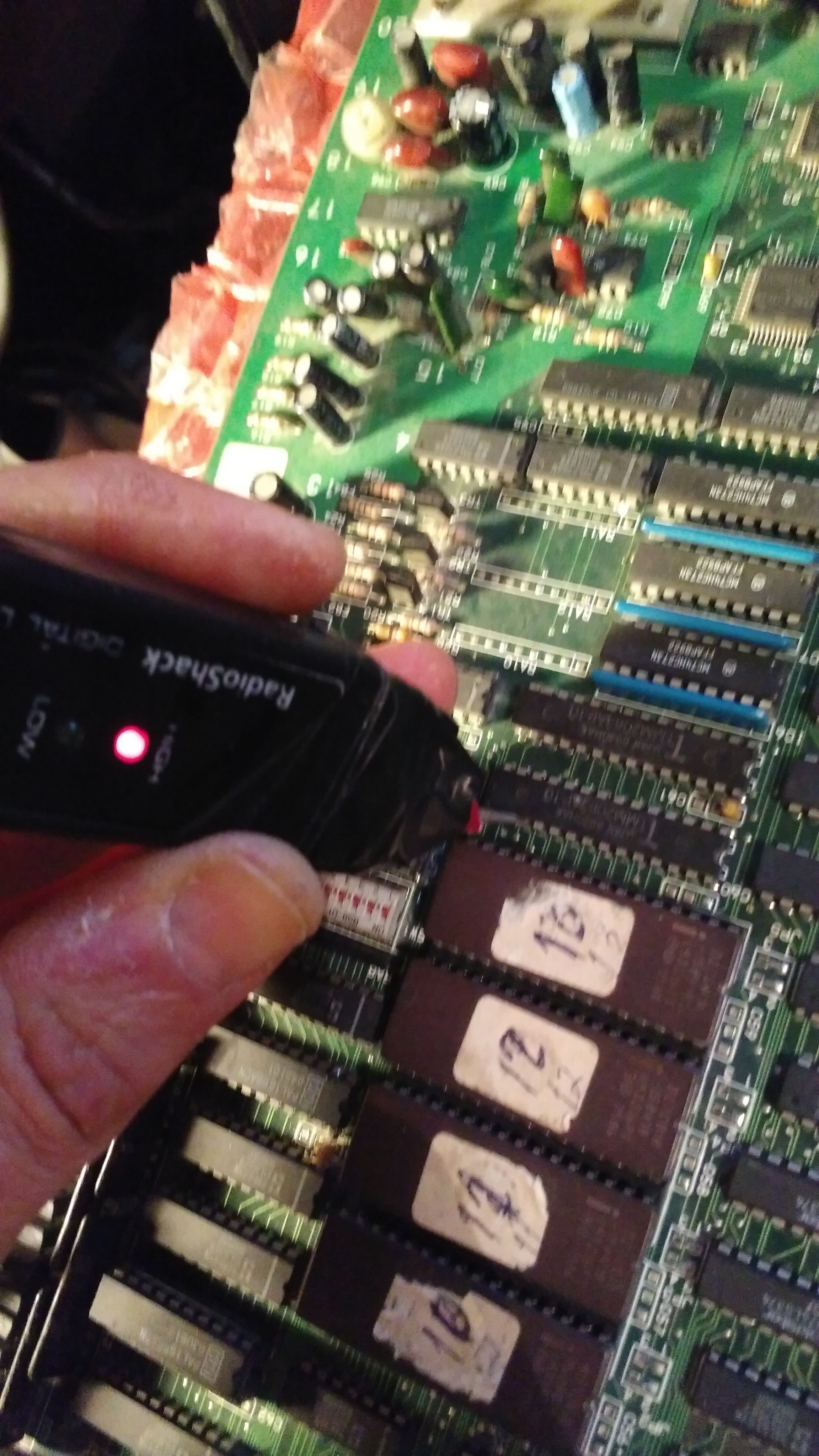
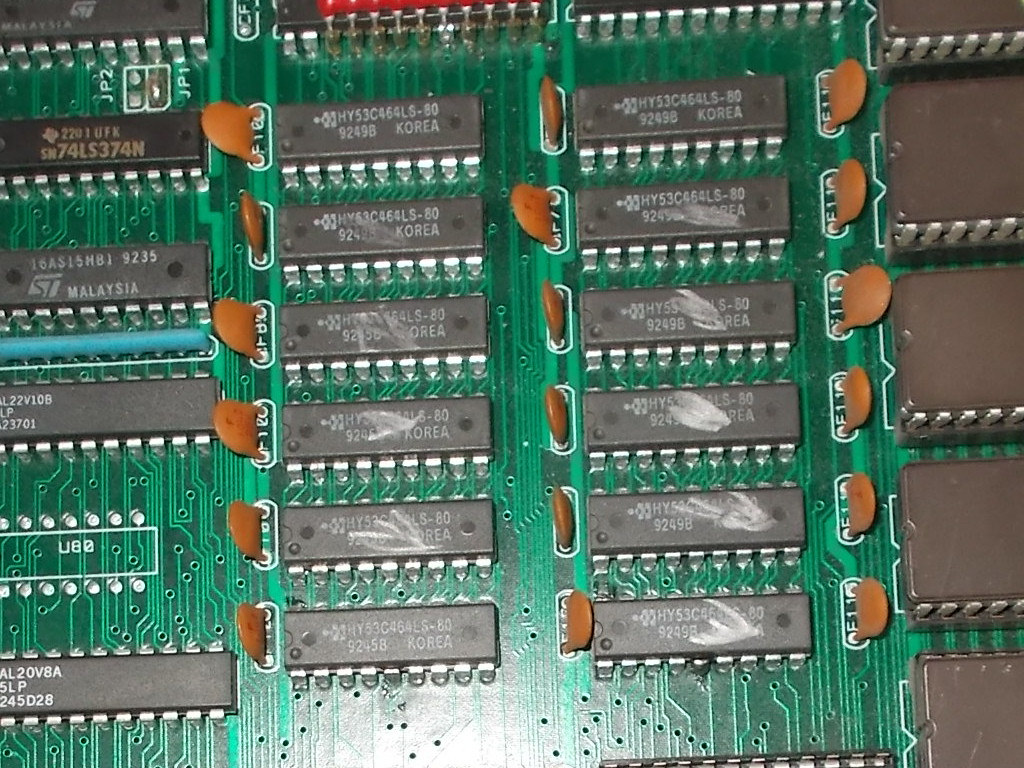
The first thing I did was to check the main CPU (a custom 68000 marked ’59’) circuit and I found that both WORK RAMs (two 8K x 8-bit devices) has stuck data lines whereas address was correctly toggling :
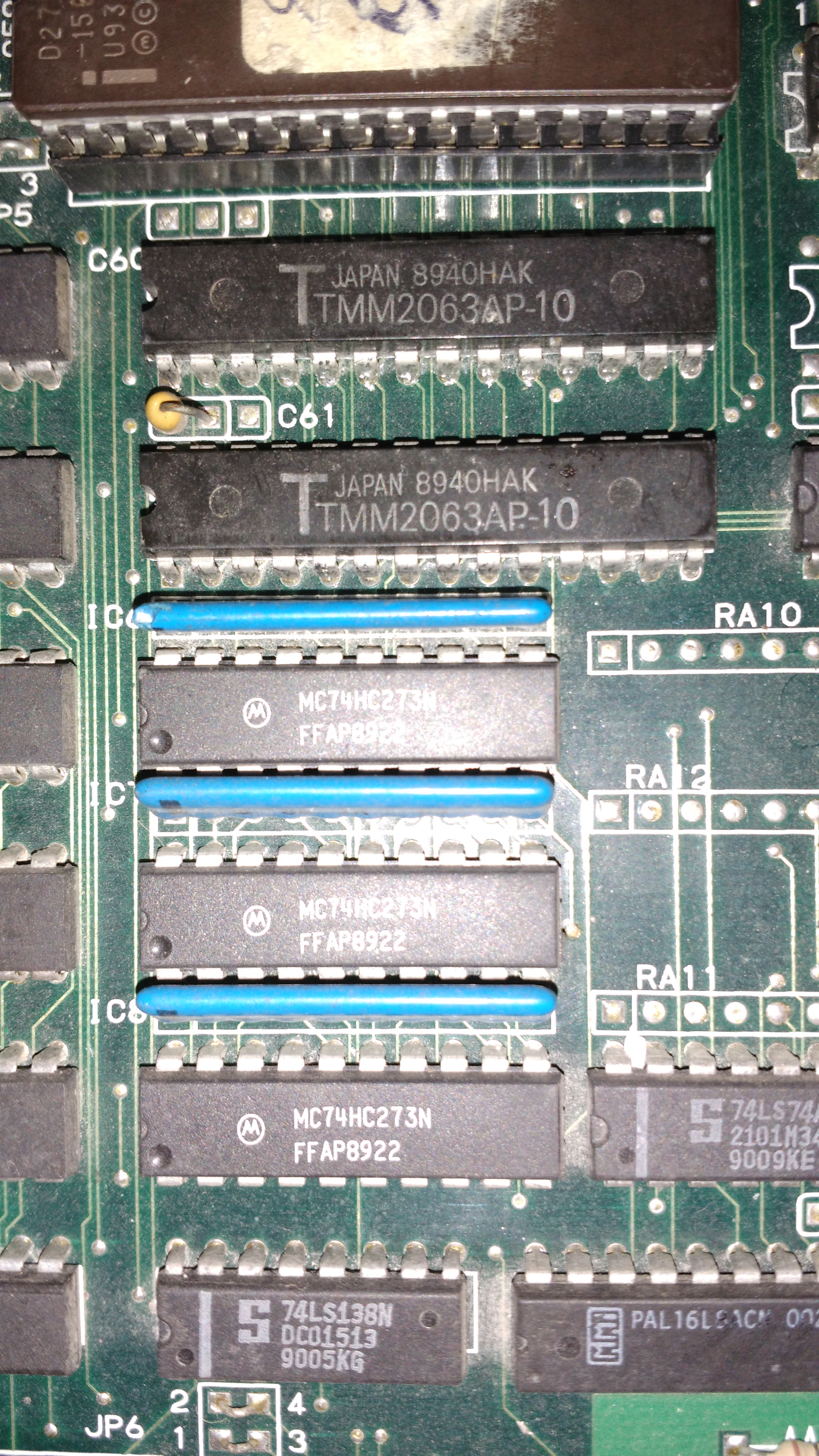
The two RAMs are Toshiba TMM2063, we all know they are very prone to failure:
TMM2063 WORK RAMs
When I piggybacked them and got some errors (related to code execution) on screen:
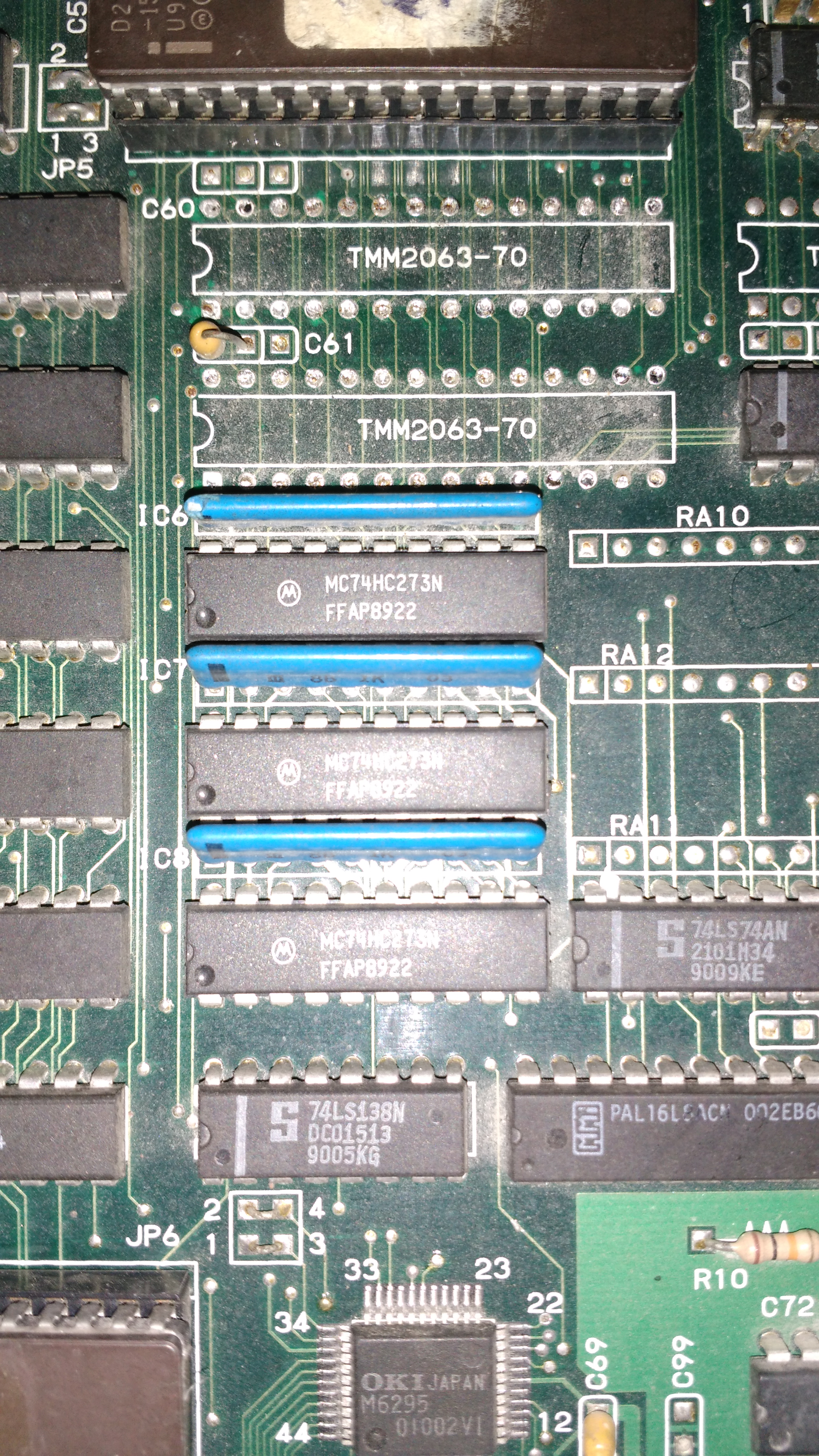
Hence I decided to remove the chips:
WORK RAMs removed
Although RAMs were both tested fine in my programmer I replaced them and I got the board booting. Game was fully playable but some sound samples were wrong:
Samples are stored in two 1Mbit EPROMs and played by two OKI MSM6295 PCM chips:
Sound circuit overview
The two EPROMs were dumped as good so I fired up my audio probe and started to “listen” to output (pin 36) of the internal DAC of both MSM6295.The samples came out already corrupted from one :
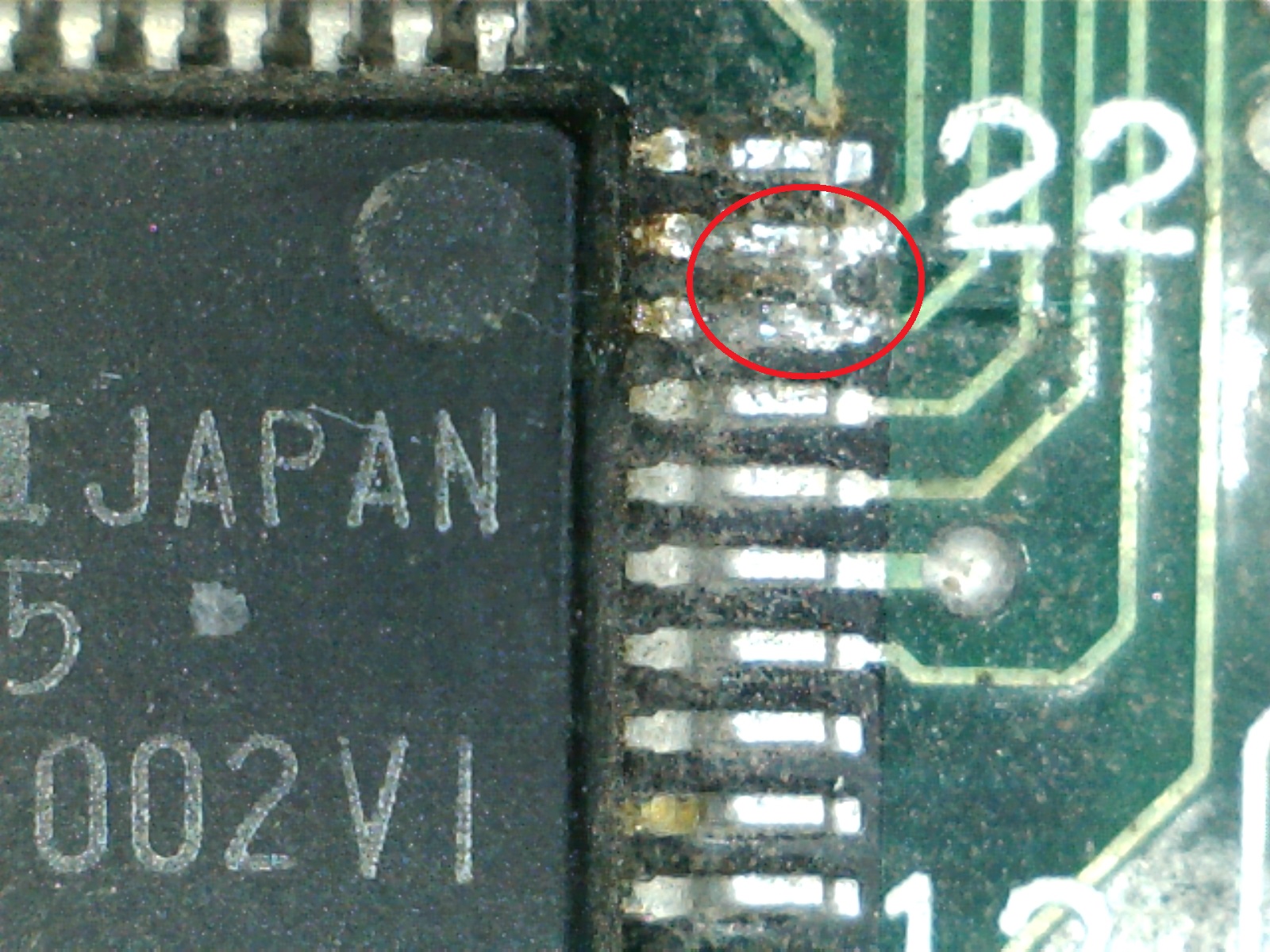
I was about to replace the OKI MSM6295 when I noticed some solder residues on a couple of pins.I magnified the area with a microscope and found a solder bridge that shorted two address lines (pin 20 and 21)
Soder bridge on MSM6295
I removed the bridge and sound was fully restored as well as board 100% fixed.
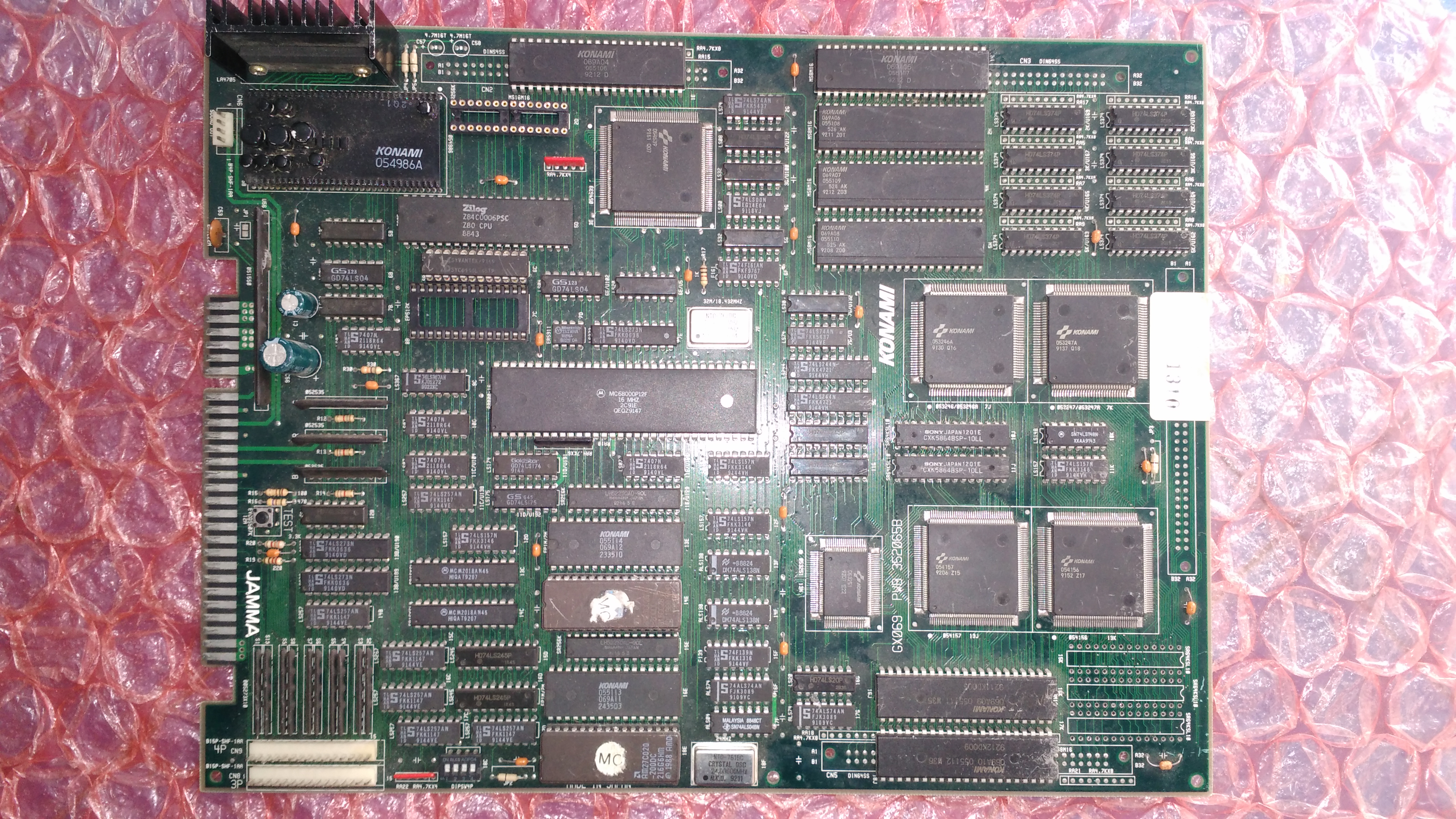
Yet another G.I. Joe PCB on the bench from the five faulty ones received from Portugal some time ago :
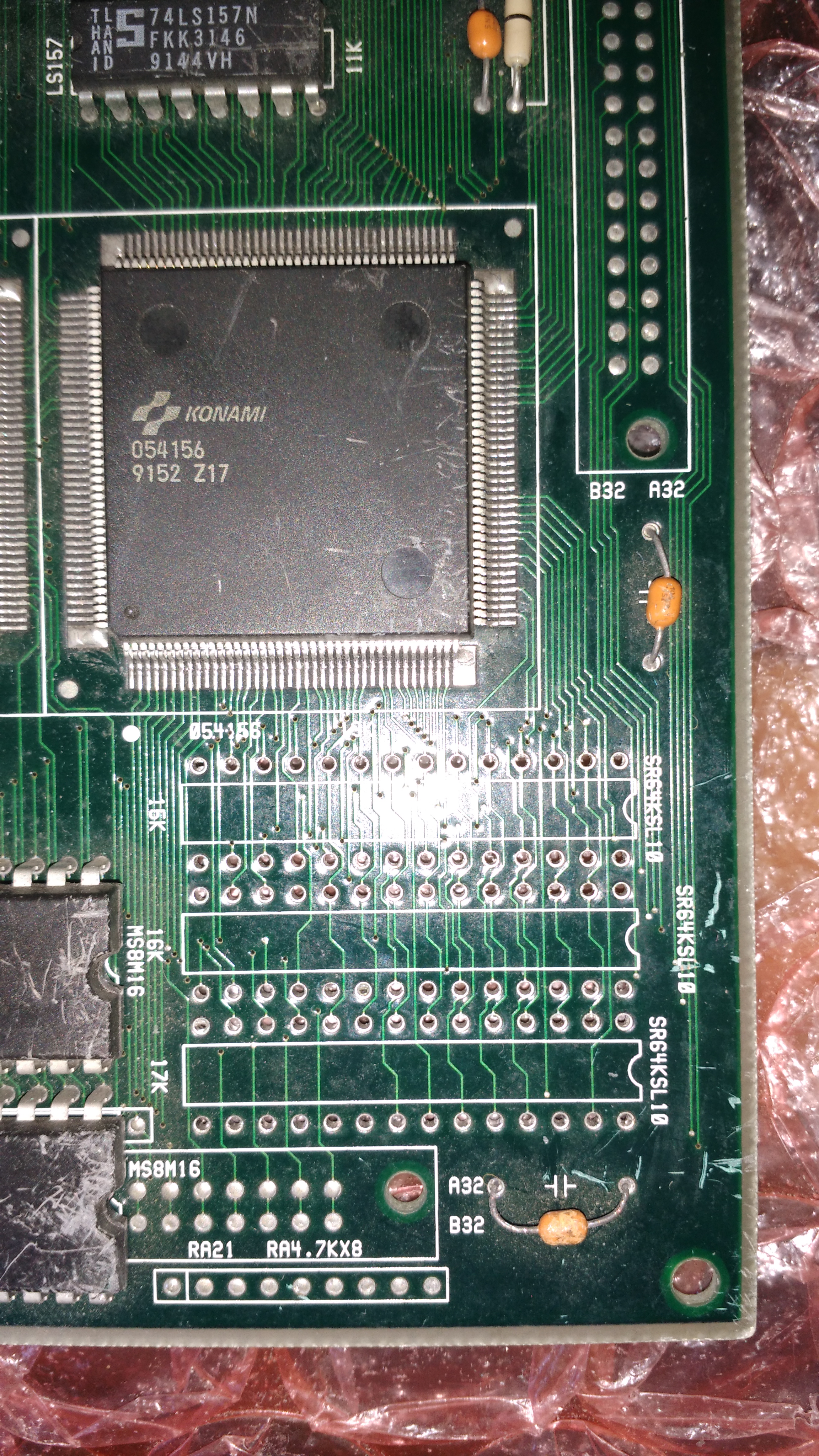
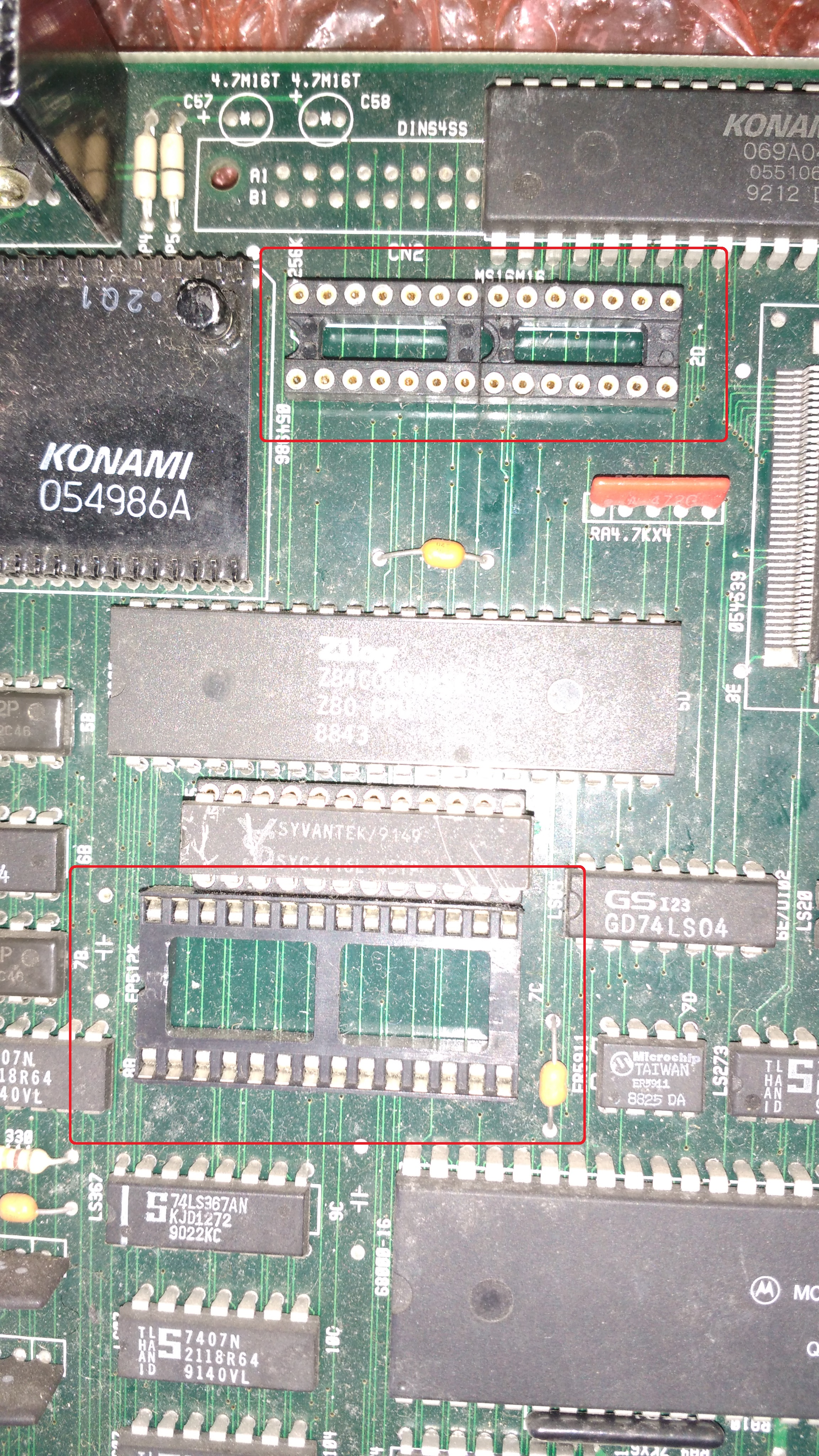
Board was in good conditions but someone harvested parts from it.In particular the thee 6264 SRAM (part of tilemap circuit) were missing:
As well as the sound ROM @7C and the 62256 SRAM @2D always in audio circuit :
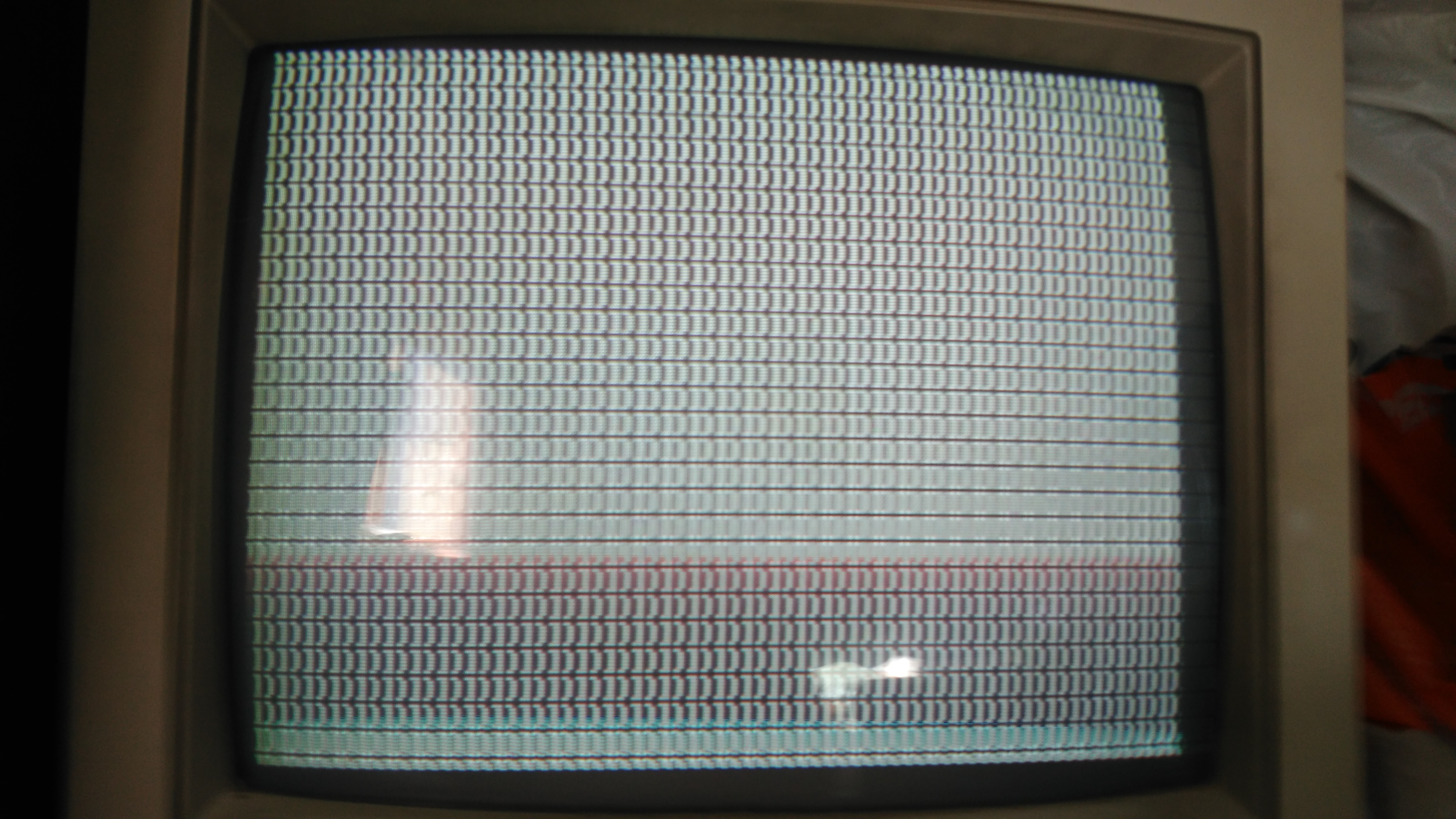
I installed the components and sockets too where needed.When I powered the board up I was greeted by this screen filled with letters :
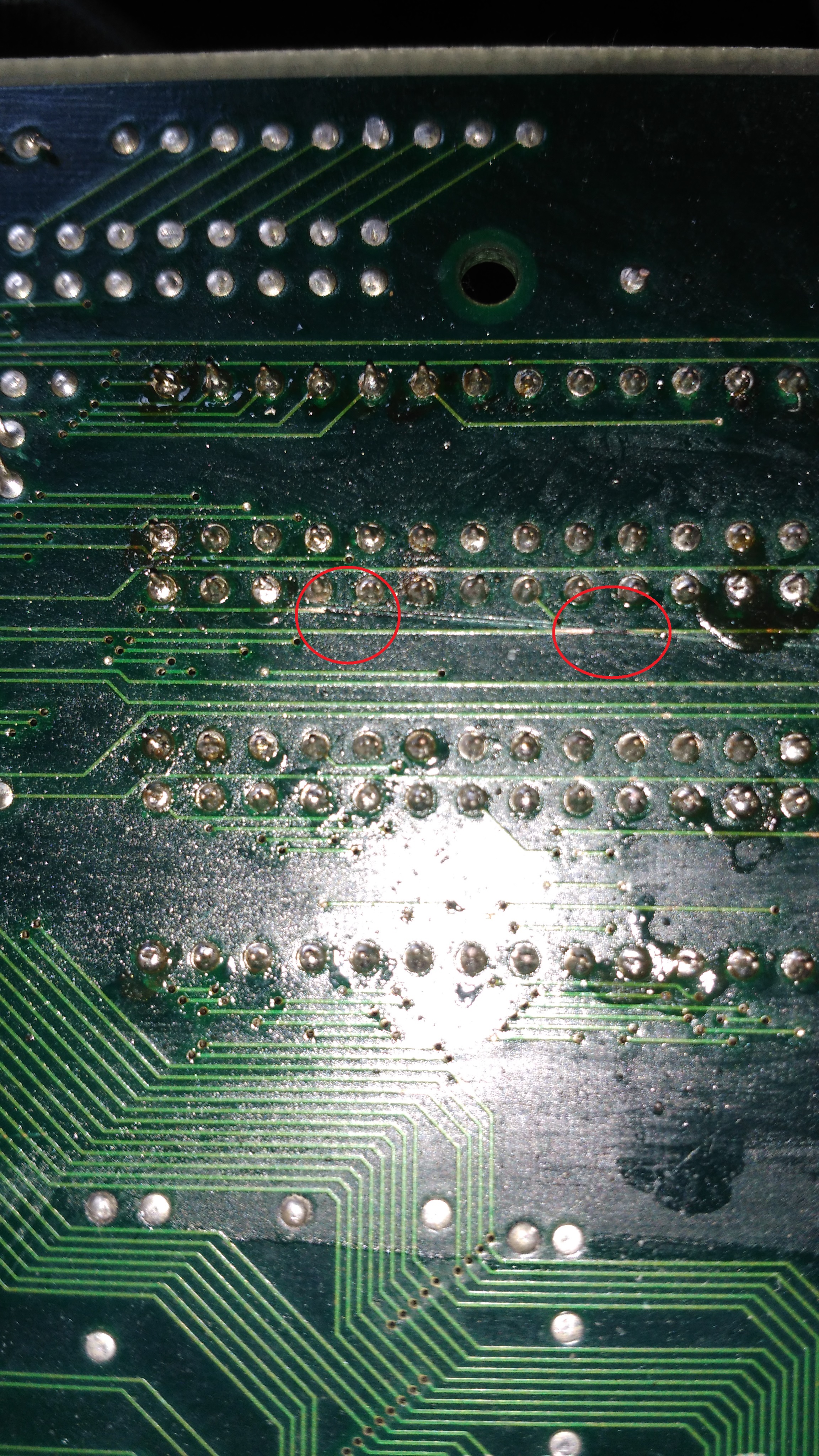
Usually this kind of issue on Konami boards means there is some trouble in the tilemap generation circuit so I made a visual inspection and found a couple of severed traces on solder side:
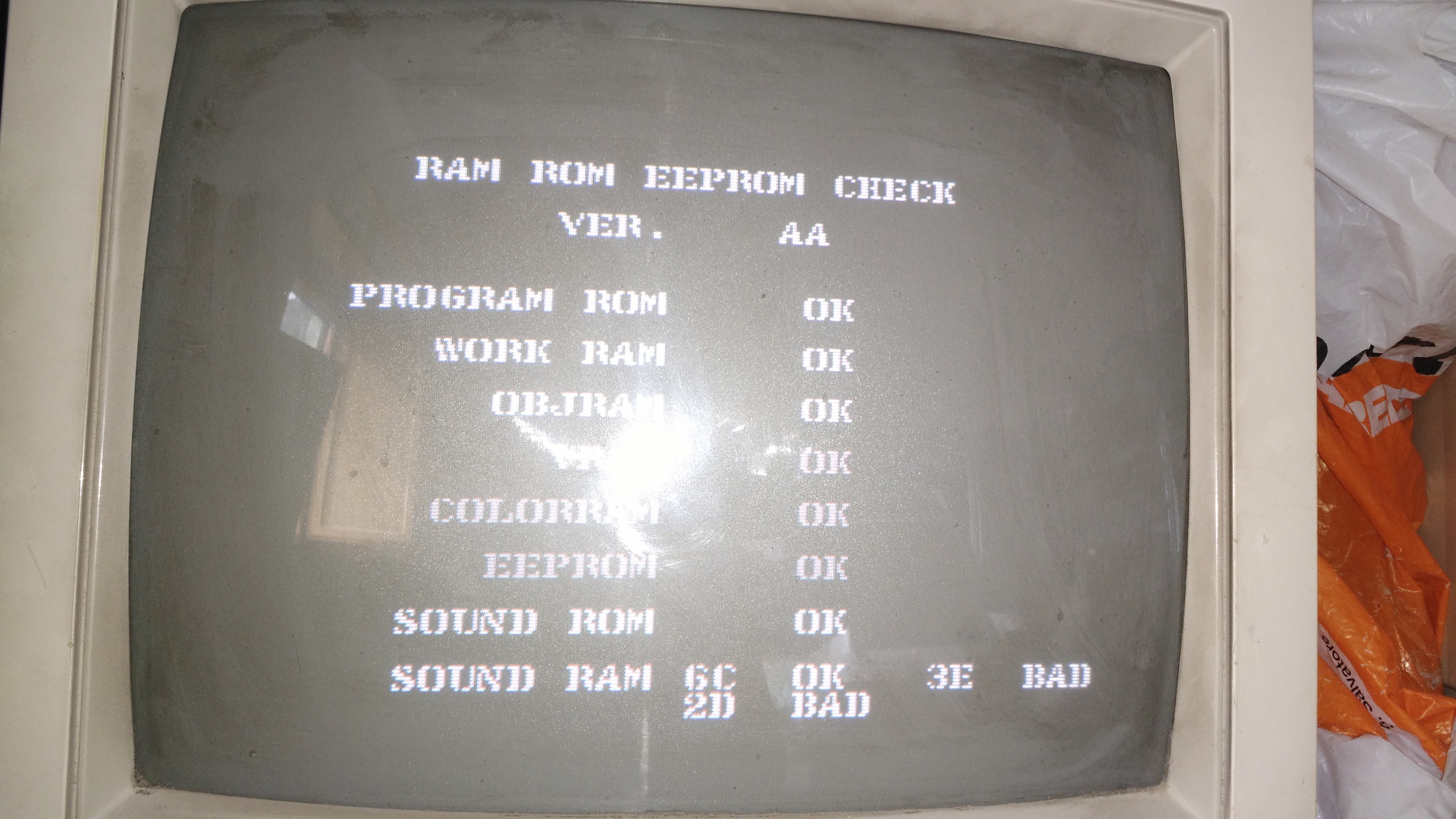
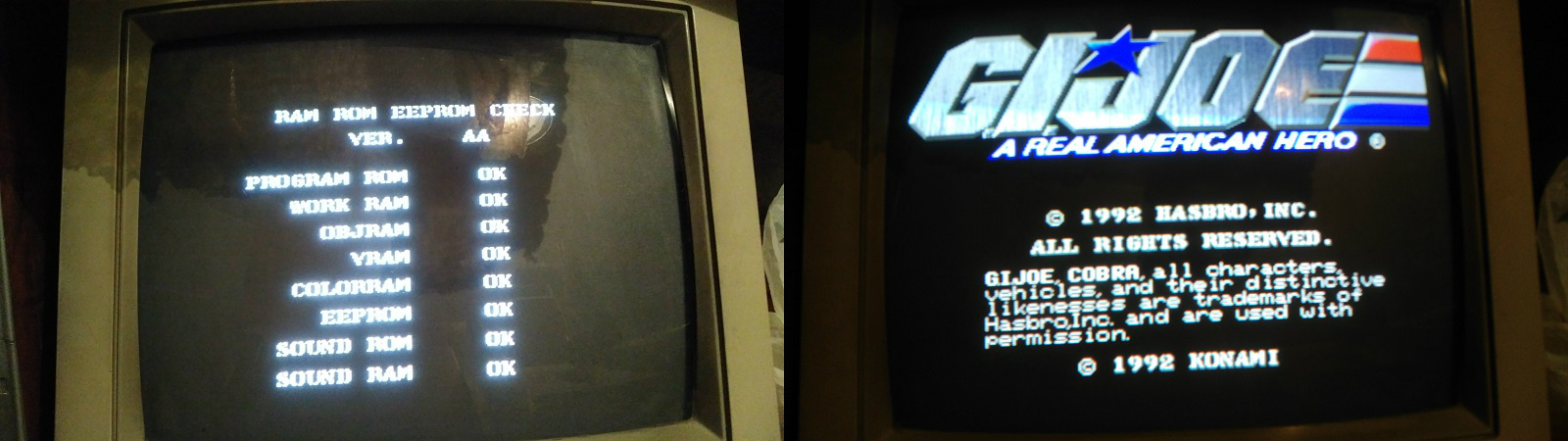
Finally the board executed the self-test but two devices were reported as bad :
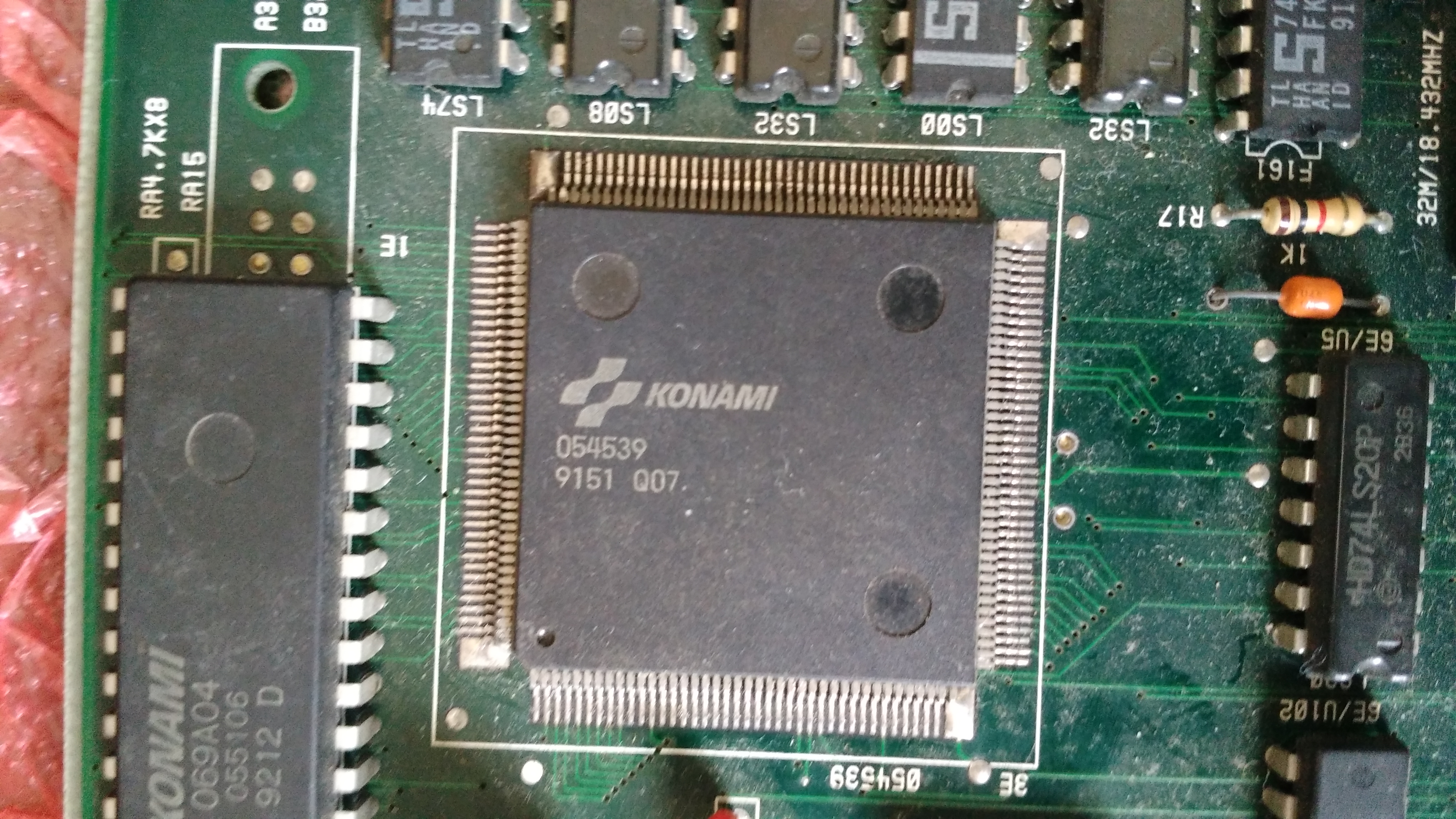
The one @2D was the 62256 RAM that was missing while @3E lies the custom ASIC ‘054539’ (which is a PCM sound generator ), both ICs share same address/data bus.
At a closer inspection some pins of the custom were lifted so I promptly refowed them.The board successfully booted into game with no further issue.
Yes, yet another G.I. Joe PCB fixed (hopefully not the last one…)!
PCB Repair LogsComments Off on Mortal Kombat (original and bootleg PCB) double repair log
Feb052019
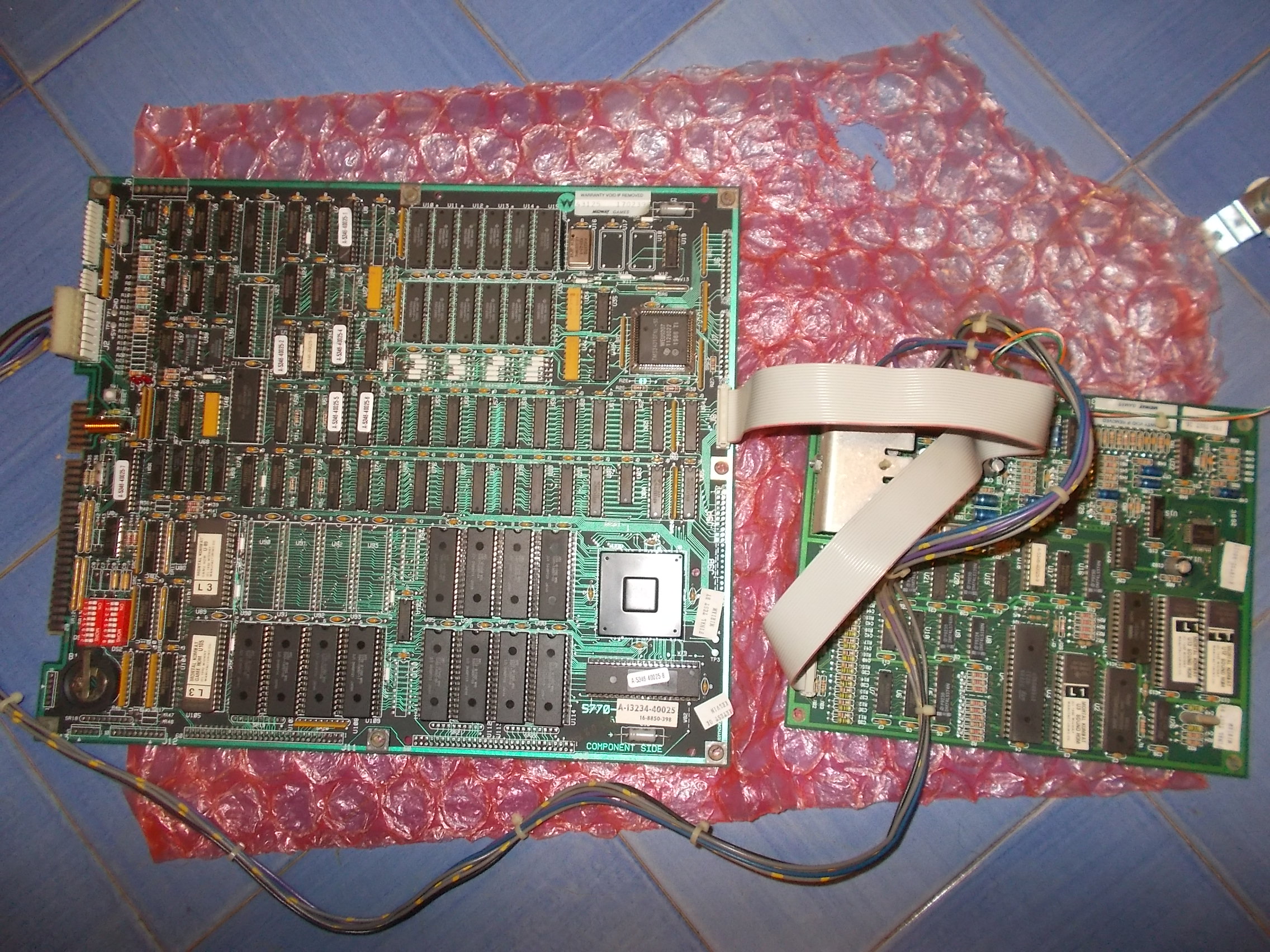
Got from USA an original Mortal Kombat PCB set complete with its sound board:
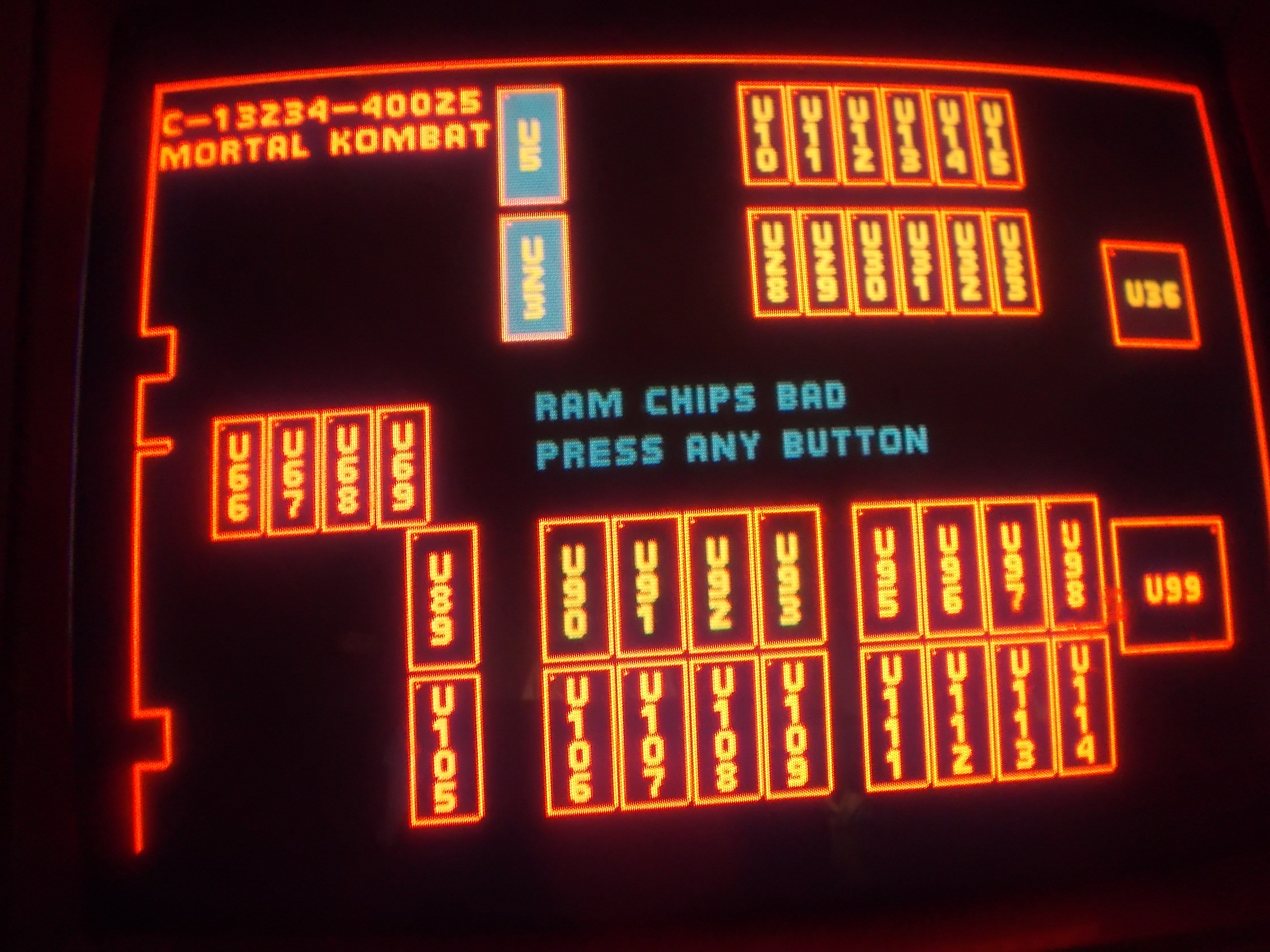
When I powered the board up the self-test reported two bad devices @U5 and U23:
P.O.S.T results
Then it booted into game but colors were completely wrong:
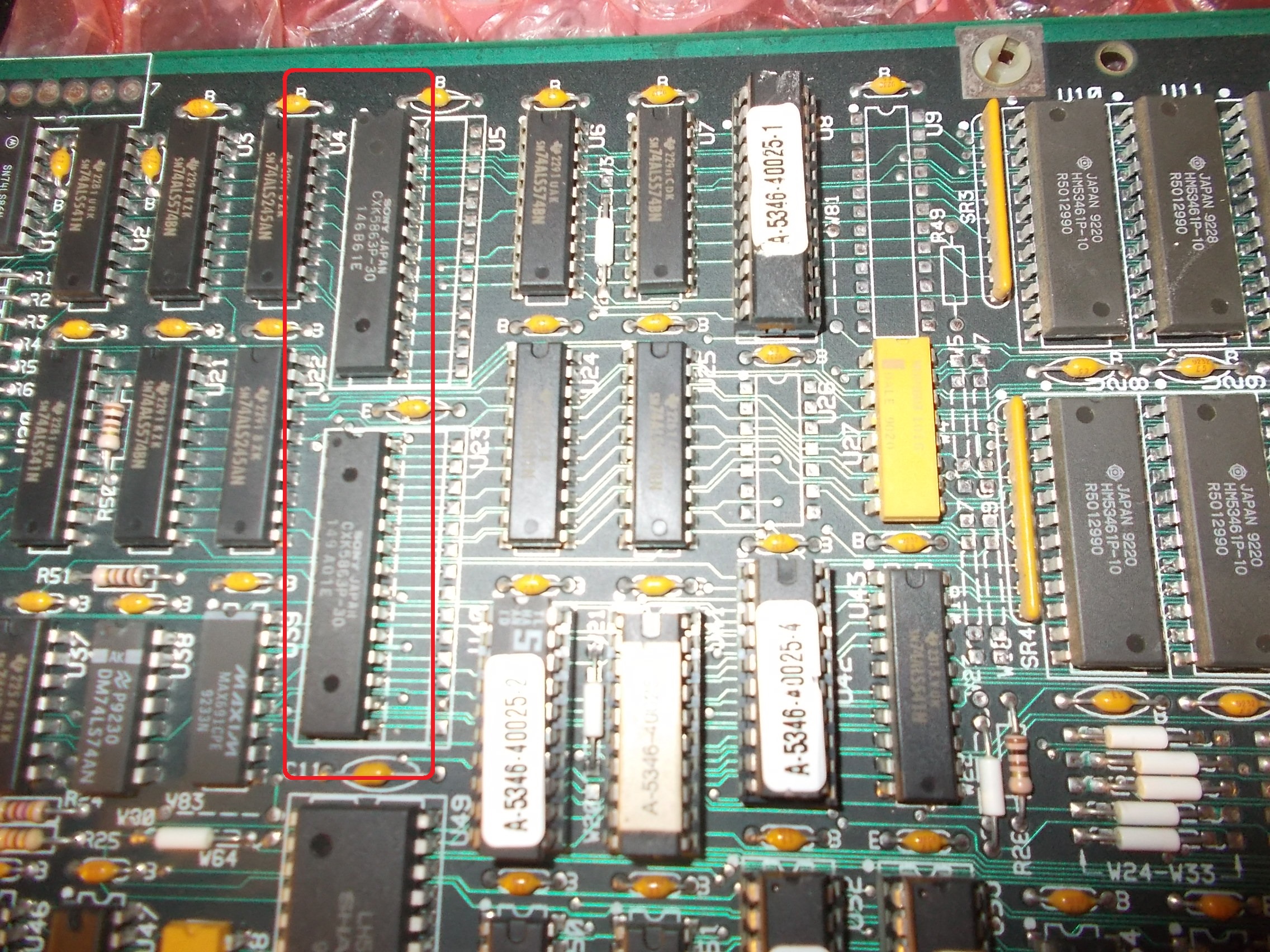
The two presumed bad devices are the color RAMs (Sony CXK5863 so 8K x 8-bit, pin-to-pin compatible with the more common 6264)
Color RAMs
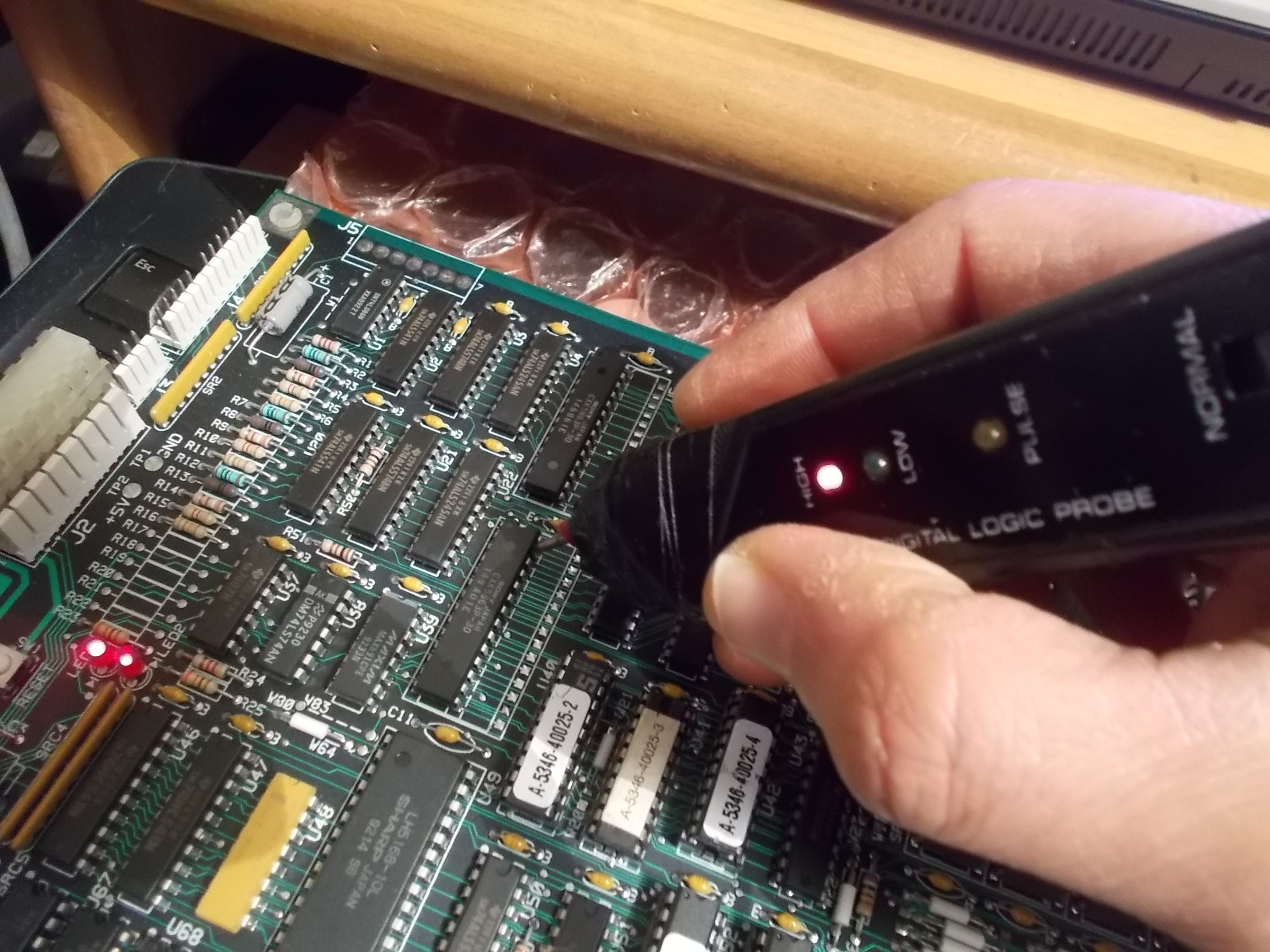
Probing them revealed that pin 27 (Read/Write enable line) of both was stuck high:
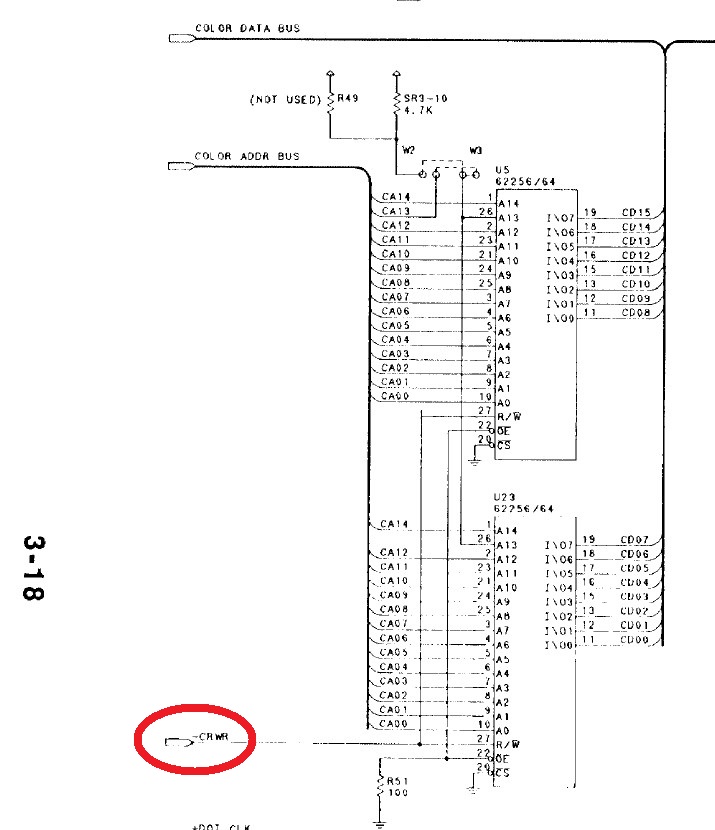
This input signal is labeled on schematics as ‘-CRWR’ :
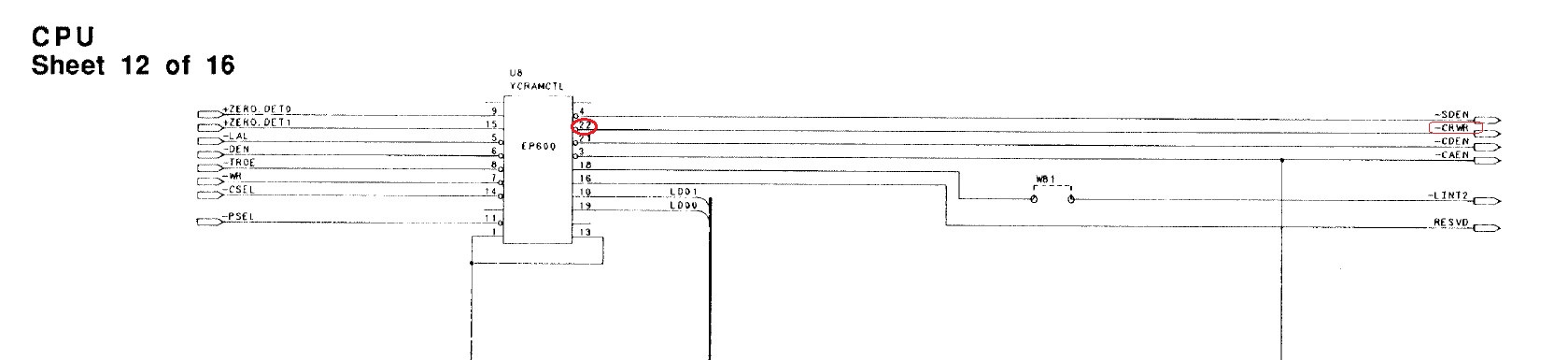
It comes from pin 22 of a 24 pin IC @U8:
EP600 ELPD color RAM control
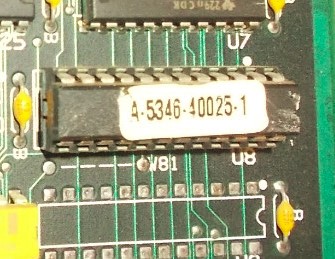
The IC was faulty and needed to be replaced.At first glance I thought it was a simple PAL/GAL but actually it turned out to be an Altera E600 EPLD (so still a programmable logic device but something more complex with two clock inputs providing sequential logic too ).I had no chance to dump or reverse it but only to look for a donor board.Luckily I was sent another original Mortal Kombat PCB completely dead which I took the part from.Board was then fixed :
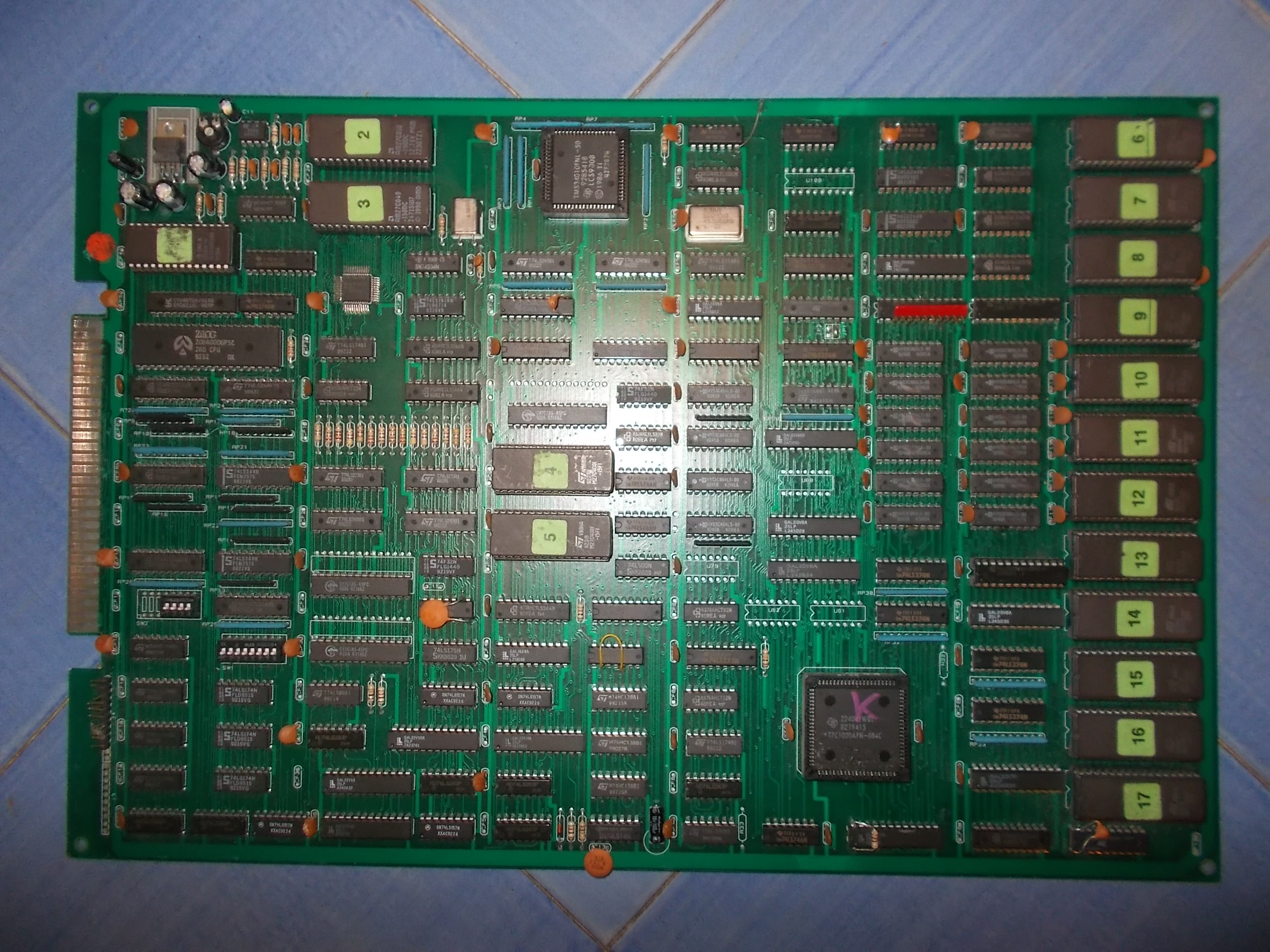
The bootleg I received for repair was the Yawdim one with no Midway logo on title screen :
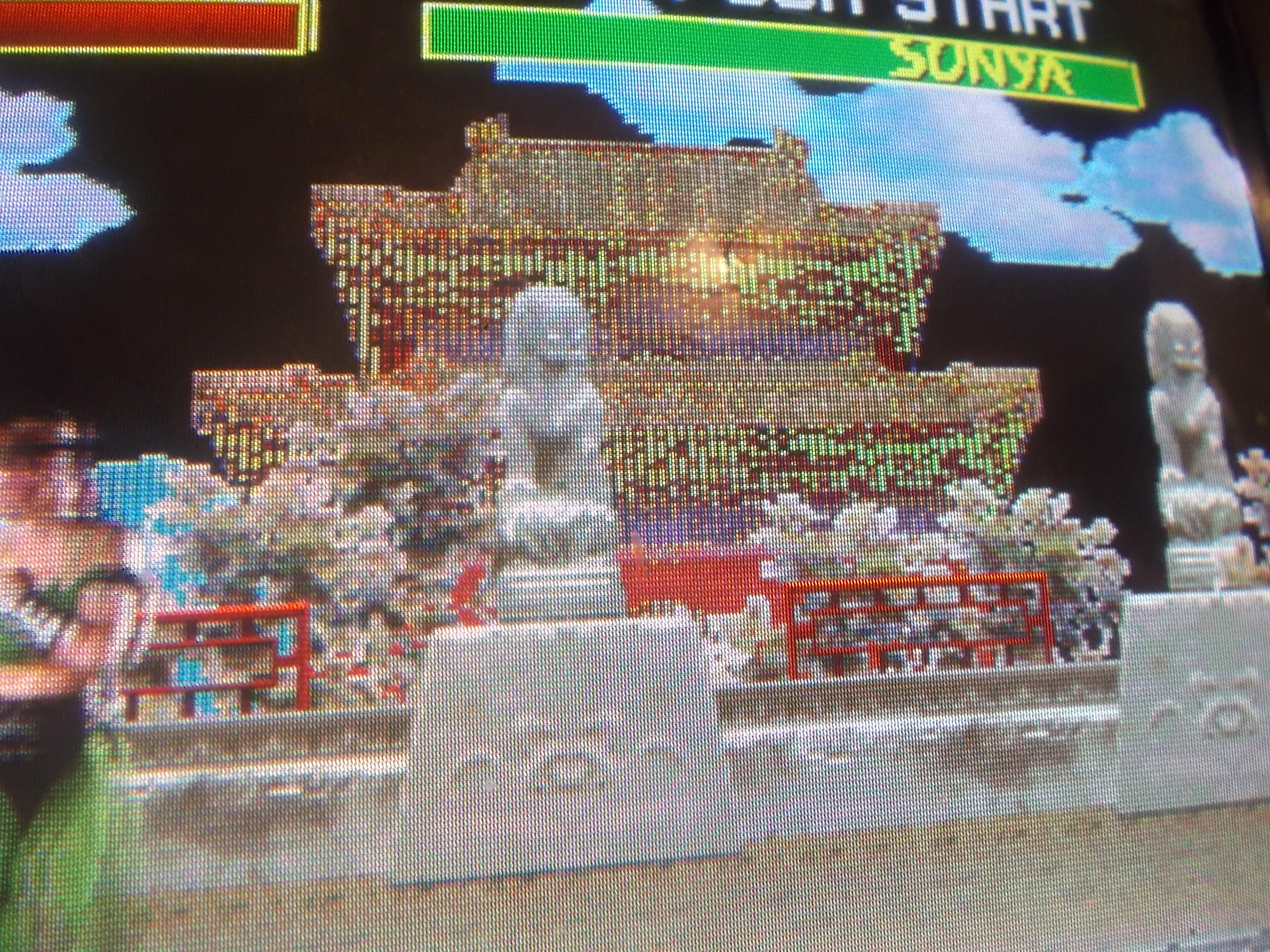
It was fully playable but some backgrounds graphics were wrong :
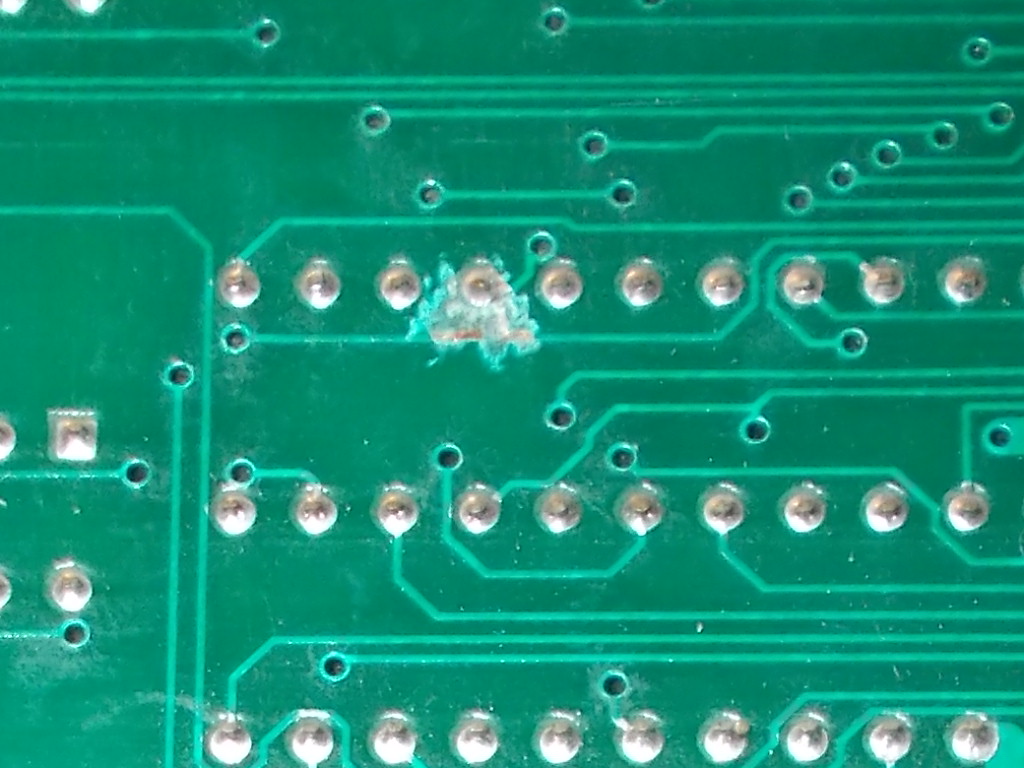
As usual I did a visual inspection of PCB and found on solder side a scratch that apparently had severed a trace:
The involved area was the one populated by some 64K x 4-bit dynamic RAM so this was relevant to the kind of fault :
Checking with my multimeter confirmed the trace was really broken so I patched it, this restored background graphics and fixed the board:
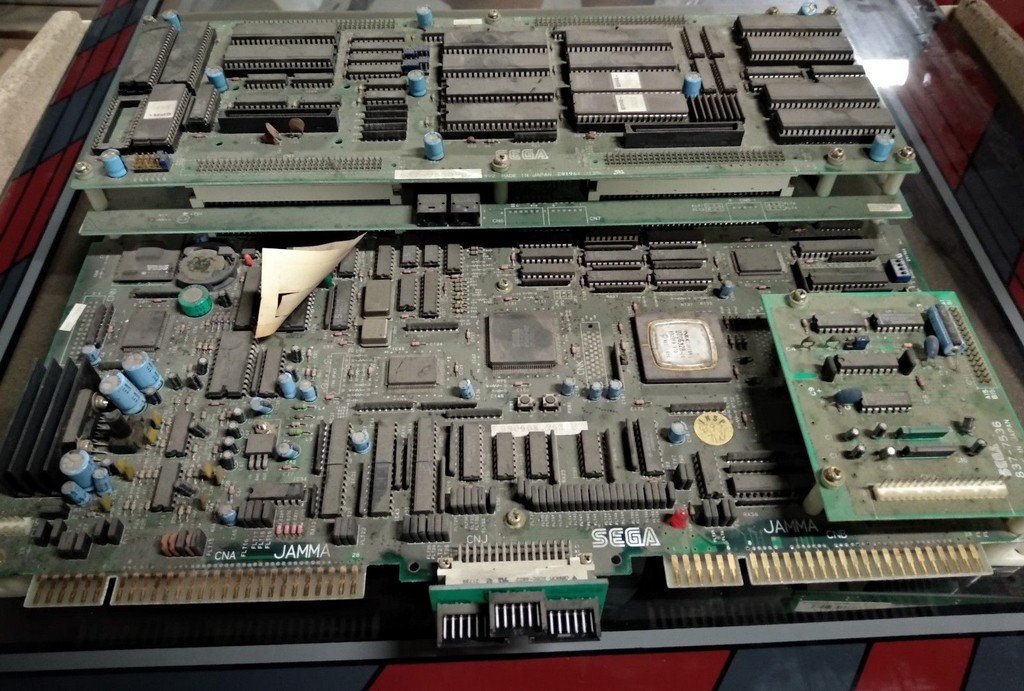
Got this game from a friend who took out the board out of a rusty cabinet.
The game needed badly a clean, so I dismounted everything before attempting to turn it on and washed everything carefully.
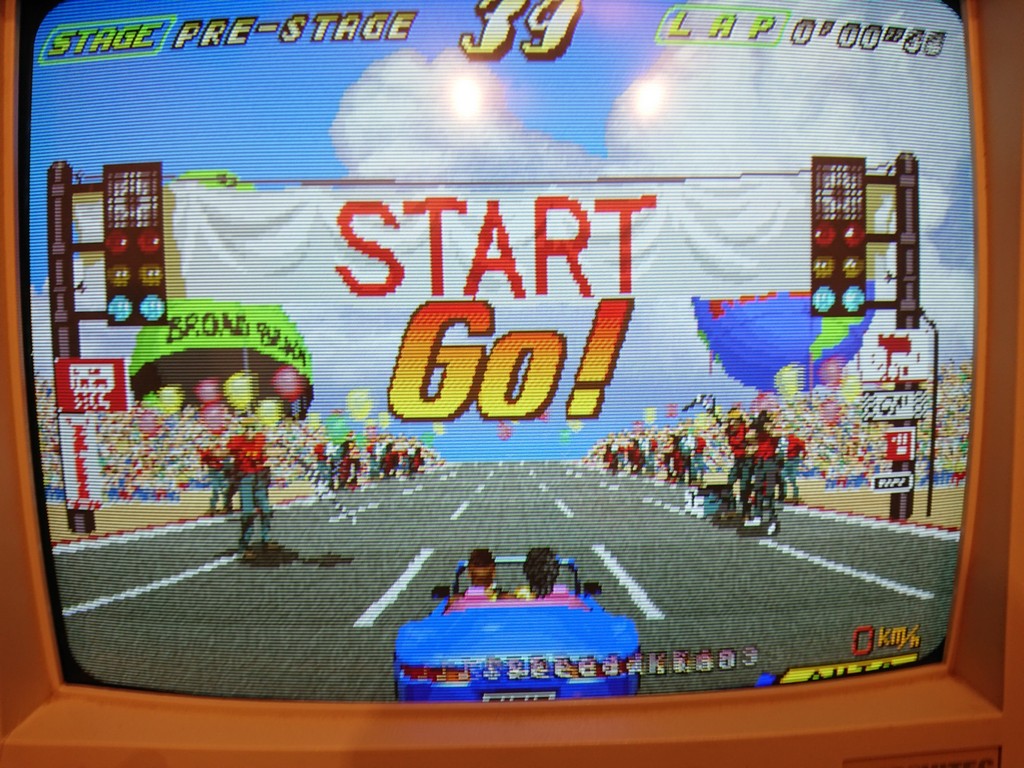
The game has two jamma connectors for player 1 ( Monitor A,left connector looking at the above picture) and player 2 ( Monitor B, right connector looking at the above picture). The connectors share same power lines, so you can connect wherever you want to play as P1 or P2.
Unfortunately board was not working correctly, it showed from a brief moment a garbled text about network connection and then nothing happened.
I decided to start dumping the program maskroms and found immediately one branded SEGA MPR-15539 which had some internal connection problems.
The other one , same type and capacity was dumped good.
After burning a new program rom on a 27c400 ( 4mbit maskrom pinout eprom), game booted perfectly although without any sound.
There was not even a noise coming from amplifier so I decided to desolder it and found immediately the problem
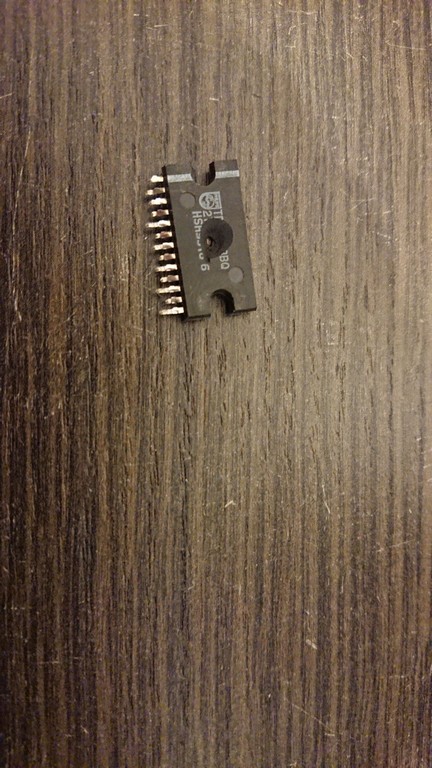
The amplifier was litterally blown
From Mame source I could get the right one to order, a TDA1518AQ, replaced it and finally the game had sound.
Unfortunately some tracks sounded bad with wrong samples.
There were other SEGA branded maskroms used as PCM samples, I read both of them ( 16mbit maskroms) and one of them , IC1, had A16 internally broken.
After buring a new 27c160 eprom with IC1 data, game sounded perfectly again.
No other problems were found
I will share the pinout of the board to play it on a different cabinet than the original one with a filter board ( the manual has only the schematics of the filter board unfortunately).
Game is Jamma as stated, so all power, video and audio pins are the same.
Board is using the following digital pins: on component side pin 22 is for shift up and pin 22 for shift down. On solder side, pin 22 is to select DJ Music or radio, pin 22 and pin 23 to move forward or backward the selection of musics. This is valid for both P1 and P2 connectors
There is an AMP connector in the middle used to drive lamps but I haven’t yet figured out the pinout and to me is not very interesting.
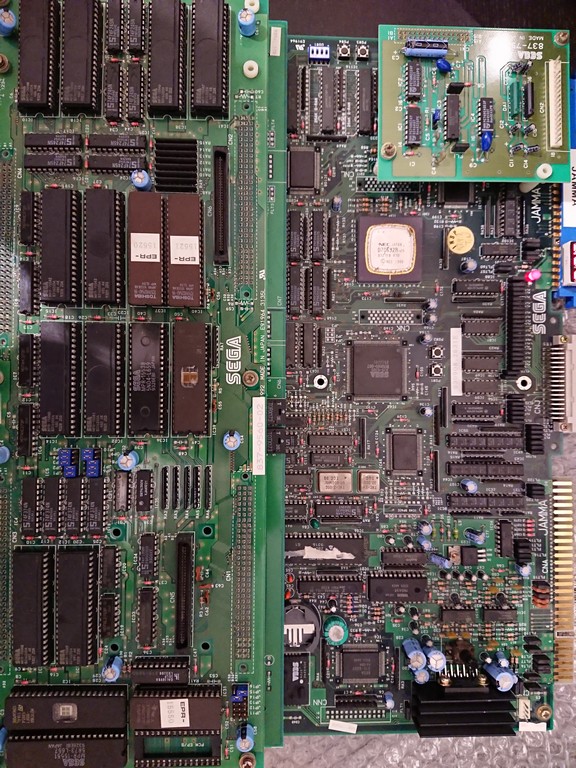
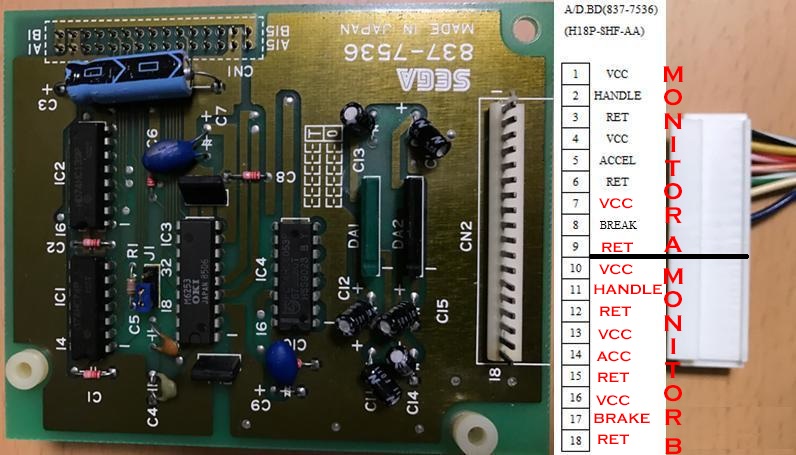
The most interesting part is the analogue controls which is handled but the daughter board 837-7636 which is in common with all Sega System 32 driving games.
I found a partial pinout on a japanese website and decided to expand it with Outrunner pinout